
If you’ve ever tried to drive a long screw into tough wood, you know how frustrating it can be. The screw stops turning, your arm gets tired, and the drill starts making a strange noise. That’s where an impact driver comes in. This powerful tool can make even the hardest fastening jobs easy. But how does an impact driver work? What makes it different from a regular drill? And is it worth adding one to your toolbox? This guide will answer all your questions, explain the technology, and help you use it safely and effectively—even if you’re new to power tools.
What Is An Impact Driver?
An impact driver is a handheld power tool designed to drive screws and bolts with high torque. Unlike a standard drill, it combines rotational force with rapid concussive blows (impacts). This unique action helps it drive fasteners quickly and with less effort, especially in hard materials like dense wood or metal.
Impact drivers are popular in construction, woodworking, and DIY projects. They are smaller and lighter than most drills, but deliver much more torque. That means they can handle stubborn screws or long lag bolts that might stall a regular drill.
The Core Working Principle: Impact And Rotation
The secret of an impact driver lies in its impact mechanism. While a normal drill turns a bit smoothly and steadily, an impact driver adds a “hammering” force as it turns. Let’s break down the process step by step:
- Rotational Force: Just like a drill, an impact driver spins a bit to drive a screw.
- Hammering (Impact) Action: When the screw meets resistance, the tool’s internal mechanism starts to deliver rapid, strong impacts along the direction of rotation.
- Alternating Motion: This combination of turning and hammering helps “shock” the screw into moving, even if it’s stuck or under heavy load.
This action is similar to using a wrench with a hammer to loosen a tight bolt. Each impact helps overcome resistance, making it much easier to drive fasteners into tough materials.
Inside The Tool: How The Impact Mechanism Works
Understanding the internal mechanism will help you see why impact drivers are so effective. Here’s what happens inside:
Main Components
- Motor: Usually electric (corded or cordless), powers the tool.
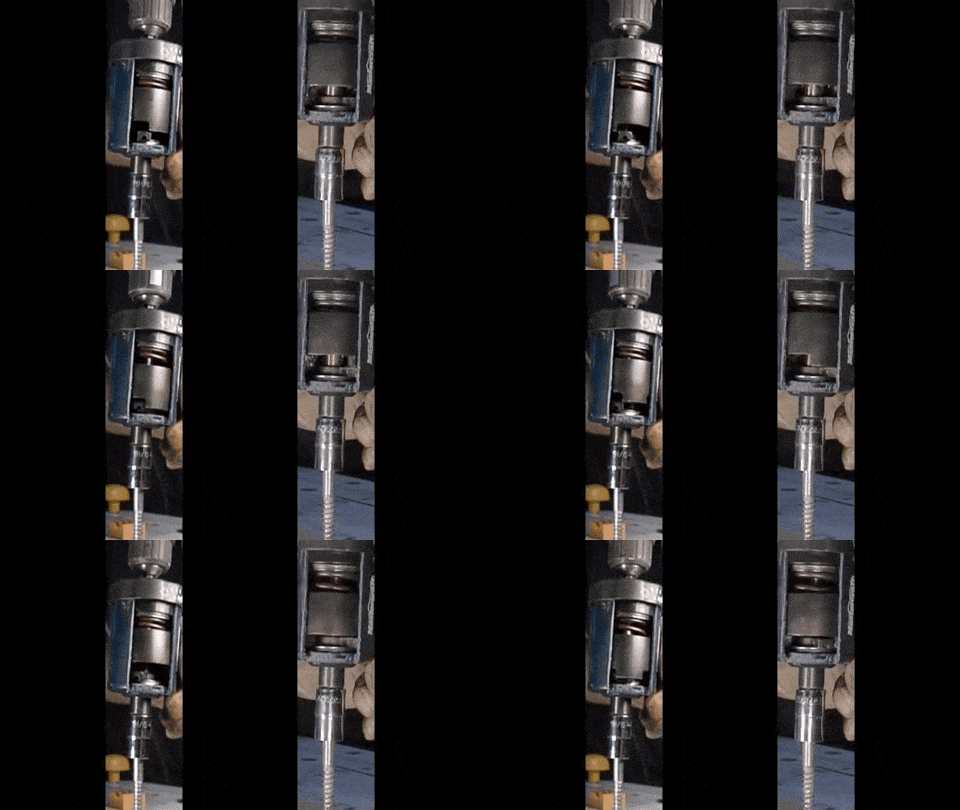
- Spring-loaded Hammer: Spins with the motor, and is connected to a spring.
- Anvil: Connected to the bit holder, receives the force from the hammer.
- Cam Mechanism: Controls the engagement and release between the hammer and anvil.
Sequence Of Action
- Normal Rotation: When there is little resistance, the hammer and anvil spin together. The tool operates quietly, like a drill.
- High Resistance: When the screw gets hard to turn, the hammer “slips” over the anvil, compressing a spring.
- Impact Delivery: The spring releases, snapping the hammer against the anvil. This delivers a strong, sudden force to the bit.
- Repeat: This process happens up to 50 times per second. So, the bit gets hundreds or thousands of impacts every minute.
This mechanism multiplies the torque (twisting force) delivered to the screw, but without making your wrist absorb the shock. That’s why impact drivers feel easier to use, even for difficult jobs.
Key Differences: Impact Driver Vs Drill
Many people confuse impact drivers with drills. Both look similar and spin a bit, but their performance and uses are quite different. Here’s a side-by-side comparison:
| Feature | Impact Driver | Drill/Driver |
|---|---|---|
| Torque Output | High (up to 200 Nm or more) | Moderate (30–60 Nm typical) |
| Action | Rotational + Impact | Smooth Rotation Only |
| Bit Holder | 1/4″ Hex Quick Release | 3-jaw Chuck (accepts round & hex bits) |
| Main Use | Driving screws, bolts, lag fasteners | Drilling holes, light screwdriving |
| Control | Less precise, more power | More control, less power |
| Noise Level | Loud (impacts) | Quieter |
The main takeaway: Use a drill for making holes and lighter screwdriving. Use an impact driver for tough fastening jobs.

Main Features Of An Impact Driver
When you pick up an impact driver, you’ll notice some features that set it apart from other tools:
- Compact Design: Short body, often lighter than drills.
- 1/4-inch Hex Chuck: Accepts only hex-shank bits for quick changes.
- Variable Speed Trigger: Controls both speed and power.
- High Torque Output: Can drive long screws and lag bolts with ease.
- No Clutch: Unlike many drills, there’s no adjustable clutch, so the tool delivers full power.
- LED Light: Many modern models include a built-in light to help you see your work.
These features make the impact driver both powerful and easy to use, especially for repetitive jobs.
What Is Torque, And Why Does It Matter?
Torque is a measure of twisting force. It’s what turns a screw or bolt. The higher the torque, the more force the tool can deliver to move stubborn fasteners.
- Impact drivers can deliver 2-3 times more torque than standard drills.
- Typical cordless impact drivers offer 120–200 Nm (Newton-meters) of torque.
- Cordless drills usually deliver 30–60 Nm.
High torque is why impact drivers can drive long screws into hard wood, or remove stuck bolts, without stalling or slipping.
How Does An Impact Driver Make Driving Screws Easier?
The combined action of rotation and impact makes a big difference when working with tough materials. Here’s how:
- Prevents Cam-Out: The impacts help keep the bit engaged with the screw head, reducing slipping (“cam-out”).
- Reduces Effort: You don’t need to push as hard, because the tool does the work.
- Less Wrist Strain: The impacts are absorbed by the tool, not your wrist. That means less fatigue.
- Faster Work: Screws go in quickly, even in dense wood or metal.
- Better Results: Less risk of stripping screws or damaging materials.
This is why professionals and DIYers often prefer impact drivers for heavy fastening tasks.
Types Of Impact Drivers
There are several types of impact drivers, each designed for specific needs:
1. Cordless Impact Drivers
- Battery powered (usually 18V or 20V)
- Most popular type for both pros and home users
- Offer good power, mobility, and convenience
- Run time depends on battery size (Ah rating)
2. Corded Impact Drivers
- Plugged into a wall outlet
- Provide continuous power, never run out of battery
- Less portable, limited by cord length
- Rare today due to improvements in cordless tech
3. Hydraulic Impact Drivers
- Use oil-based hydraulic mechanism instead of metal-on-metal impacts
- Much quieter operation (up to 50% less noise)
- Smooth performance, less vibration
- More expensive, used in noise-sensitive environments
4. Pneumatic (air) Impact Drivers
- Powered by compressed air
- Used in auto shops and factories
- Deliver very high torque, but require a compressor
- Not common for home or construction use
Choosing The Right Impact Driver
If you’re considering buying an impact driver, here are the key factors to compare:
| Feature | What to Look For |
|---|---|
| Torque | Higher is better for heavy jobs (look for 140 Nm or more) |
| Voltage | 18V or 20V batteries give the best power and run time |
| Battery Capacity | Measured in amp-hours (Ah). Higher Ah = longer run time |
| Speed | Look for 2,500–3,000 RPM (revolutions per minute) |
| Impacts Per Minute | More impacts = faster driving (3,000–4,000 is common) |
| Weight | Lighter tools are less tiring for long jobs |
| Chuck Type | All modern models use 1/4″ hex quick release |
| Ergonomics | Comfortable grip, good balance, easy trigger |
| LED Light | Helps in dim work areas |
| Price/Warranty | Compare brands, check warranty length |
Pro tip: Don’t just look for the highest torque. If you mostly work with small screws, a very powerful tool can actually break them.
Common Applications For Impact Drivers
Impact drivers are not just for professionals. Here’s where they shine:
- Building decks: Driving long screws and lag bolts into wood beams
- Framing: Fastening studs and joists
- Installing cabinets: Securely driving screws into hardwood
- Automotive repairs: Removing stuck bolts (with proper sockets)
- Fencing and outdoor projects: Fastening into treated lumber or metal brackets
- DIY furniture: Assembling flat-pack furniture more quickly
They are not ideal for drilling precise holes, especially in delicate materials. For those jobs, use a drill/driver.
Limitations And When Not To Use An Impact Driver
While impact drivers are powerful, they are not always the right tool. Here are situations to avoid:
- Drilling large holes: Impact drivers can drill small holes with special bits, but struggle with big, accurate holes.
- Working with delicate materials: The high torque can split soft woods or damage thin materials.
- Precision work: No clutch means less control for delicate driving.
- Using standard drill bits: The 1/4-inch hex chuck only accepts hex-shank bits, not round shanks.
Non-obvious insight: Many beginners try to use an impact driver for every job. But for fine woodworking or drywall screws, a regular drill may give you better control and results.
Impact Driver Bits: Why The Right Bit Matters
An impact driver requires impact-rated bits. These bits are made from tougher steel and have a special design to handle the repeated impacts.
- Standard bits can break or wear out quickly in an impact driver.
- Impact-rated bits last longer and reduce the risk of snapping inside the screw head.
Pro tip: Always use the right size bit for your fastener. Using the wrong size increases the risk of cam-out and damage.
Safety Tips For Using An Impact Driver
Impact drivers are powerful tools. To use them safely:
- Wear safety glasses to protect your eyes from flying debris.
- Keep hands clear of the bit and screw.
- Use the right bit to prevent slippage.
- Start slowly to avoid sudden jumps.
- Hold the tool firmly; let the impacts do the work.
- Check your battery before starting big jobs.
- Don’t force the tool; if it’s not moving, check for the right bit or fastener size.
Common mistake: Some users push too hard, thinking it will speed up the job. Let the impact driver’s mechanism do the hard work.
Maintenance And Care For Your Impact Driver
To keep your tool running smoothly:
- Clean the chuck regularly to remove dust and debris.
- Inspect bits for wear; replace damaged or worn bits.
- Check battery contacts for corrosion (if cordless).
- Store in a dry place to prevent rust.
- Avoid dropping the tool, as impacts can damage the mechanism.
- Follow the manual for lubrication or servicing if needed.
Uncommon advice: Occasionally, check the tightness of screws and fasteners inside the tool itself. Vibration can loosen them over time.
The Science Behind The Impact: Why It Works
The impact driver’s power is due to simple physics—momentum and energy transfer. Each rapid impact transfers energy from the hammer to the anvil, which is then focused on the screw or bolt. Even if the fastener is stuck due to rust, friction, or pressure, the repeated blows can break it free or drive it in.
A typical impact driver delivers up to 3,500 impacts per minute (IPM). That’s nearly 60 impacts every second, each one helping to move the fastener a little further.
Real-world Example: Driving A 3-inch Screw Into Oak
Let’s compare a standard drill and an impact driver:
- Standard drill: May stall or strip the screw head after halfway.
- Impact driver: Drives the screw all the way in, quickly, with much less effort.
This difference is most obvious with long screws or when working with tough materials like hardwood, pressure-treated lumber, or steel brackets.
Impact Drivers And Battery Technology
Most modern impact drivers are cordless, using lithium-ion (Li-ion) batteries. Advances in battery technology have made them lighter, more powerful, and longer lasting.
- 18V or 20V batteries are now common, delivering plenty of power for most tasks.
- Higher amp-hour (Ah) ratings mean longer run times—ideal for big projects.
- Brushless motors (now common in quality models) are more efficient, giving longer life and more power per charge.
Battery tip: Always charge batteries fully before storage. If you use your tool in cold climates, keep batteries warm until use, as cold reduces performance.
Impact Driver Accessories And Attachments
You can increase the versatility of your impact driver with a range of accessories:
- Impact sockets: For automotive work (must be impact-rated)
- Nut drivers: For driving hex-head screws and bolts
- Right angle adapters: For reaching tight spaces
- Drill bit adapters: For light drilling with hex-shank bits
- Bit holders and extensions: To reach deep or awkward spots
Always use impact-rated accessories. Using regular sockets or bits can be dangerous, as they may shatter under impact force.
Environmental Impact: Are Impact Drivers Eco-friendly?
While any power tool has some environmental impact, modern impact drivers are designed to be more efficient:
- Brushless motors use less electricity and last longer.
- Rechargeable batteries reduce waste compared to older nickel-cadmium (NiCd) batteries.
- Longer tool life means fewer replacements and less landfill waste.
Proper care and recycling of batteries at the end of their life is important. Many hardware stores offer battery recycling programs.
Historical Context: From Manual To Power Impact Drivers
The idea of using impact force to turn screws isn’t new. Early manual impact drivers used a hammer blow to turn a bit for loosening stubborn screws. Today’s electric and battery-powered models use the same principle, but deliver thousands of impacts per minute—making them much faster and easier to use.
The first cordless impact drivers appeared in Japan in the 1980s and quickly gained popularity worldwide. Advances in battery and motor technology have made them an essential part of both professional and home toolkits.
Common Myths About Impact Drivers
Let’s clear up some myths:
- Myth: Impact drivers replace all drills.
- Reality: While powerful, they can’t drill large holes or do precise work like a drill/driver.
- Myth: Any bit will work.
- Reality: Only use impact-rated bits for safety and durability.
- Myth: Impact drivers damage screws.
- Reality: With the right bit and technique, they actually reduce cam-out and damage.
- Myth: They are only for professionals.
- Reality: Many DIYers find them easy to use and valuable for home projects.
Advanced Uses: Beyond Screws And Bolts
Impact drivers can do more than just drive screws. With the right attachments, they can:
- Loosen rusted nuts and bolts in cars or machinery
- Install lag bolts for heavy framing or deck building
- Remove stuck fasteners without stripping heads
- Drive large structural screws in timber framing
Non-obvious insight: Some woodworkers use impact drivers for creative tasks like building jigs or shop furniture, where power and speed are more important than precision.

Comparison With Other Power Tools
You might wonder how an impact driver stacks up against other tools.
| Tool | Main Use | Key Advantage | Limitation |
|---|---|---|---|
| Impact Driver | Driving screws/bolts | High torque, fast | Not for drilling large holes |
| Drill/Driver | Drilling, light driving | Precision, versatility | Lower torque |
| Hammer Drill | Drilling in masonry | Hammer action for concrete | Bulky, not for driving screws |
| Impact Wrench | Automotive, large bolts | Extreme torque | Heavy, expensive |
Key takeaway: Choose the tool that fits your job. Impact drivers are the best for high-torque fastening, but not for all tasks.
Innovations And The Future Of Impact Drivers
The world of power tools is always changing. Here are some trends and innovations in impact drivers:
- Brushless Motors: More efficient, longer life, and less heat.
- Smart Electronics: Some models have adjustable torque settings, Bluetooth connectivity, and automatic shutoff.
- Compact Designs: Lighter, smaller tools with the same power.
- Quieter Operation: Hydraulic models are reducing noise for sensitive environments.
- Better Batteries: Faster charging, longer run time, and more cycles.
According to a recent market report, global sales of cordless impact drivers are expected to grow by more than 6% per year through 2027 as more people discover their benefits.
If you want to explore more about the physics and history of power tools, check out this resource: Wikipedia: Impact Driver.
Frequently Asked Questions
What Is The Main Advantage Of Using An Impact Driver Over A Drill?
The biggest advantage is high torque. Impact drivers use both spinning and hammering action to drive screws and bolts much more easily, especially in tough materials. This makes them faster and less tiring to use for big fastening jobs.
Can I Use An Impact Driver For Drilling Holes?
Yes, but only for small holes and with hex-shank drill bits. Impact drivers are not designed for precise or large hole drilling. For those tasks, a regular drill or hammer drill is better.
Why Are Impact Drivers So Loud?
The noise comes from the internal hammering mechanism. Each impact creates a sharp “click” or “bang.” This is normal. If you’re sensitive to noise, look for hydraulic impact drivers, which are much quieter.
Are Impact Drivers Safe For Beginners?
Yes, if you follow basic safety rules. Wear eye protection, use the correct bit, start slowly, and let the tool do the work. Impact drivers are actually easier for many people because they require less force and reduce wrist strain.
What Kind Of Bits Should I Use With An Impact Driver?
Always use impact-rated bits. These are stronger and designed to handle the repeated impacts. Standard drill bits can break or wear out quickly in an impact driver.
Adding an impact driver to your toolbox can make tough fastening jobs easier, faster, and less tiring. With the right knowledge and a bit of practice, you’ll get professional results and enjoy working on your next project.