
Many people see a miter saw as a woodworking tool. It’s famous for making precise cuts in wood—like frames, moldings, and shelves. But sometimes, you have a metal pipe or aluminum bar and wonder, “Can a miter saw cut metal too?” This question is common among DIYers, construction workers, and even artists. The answer isn’t simple, and making the wrong choice can be dangerous or ruin your saw.
In this guide, you’ll learn what a miter saw can really do with metal. We’ll explore the science of cutting metal, the difference between metals and wood, the right blades, safety steps, and real-world examples. Whether you’re a curious beginner or an experienced builder, you’ll find practical answers—plus some tips even seasoned users often miss.
How A Miter Saw Works
To understand if a miter saw can cut metal, you first need to know how the tool functions. A miter saw has a circular blade, usually 8 to 12 inches wide, that spins quickly and lowers onto the material from above. It’s designed to make accurate crosscuts and angled cuts—hence the name “miter.”
There are three main types:
- Standard miter saw – For straight and angled cuts.
- Compound miter saw – Adds tilt for bevel cuts.
- Sliding compound miter saw – The blade moves forward and back to cut wider boards.
Most miter saws are powered by strong electric motors, spinning the blade at speeds from 3,000 to 5,000 RPM (revolutions per minute). The saw is built for stability and control, so you get clean, repeatable cuts.
But miter saws are designed for wood, which is soft compared to metal. So, does the tool have what it takes to cut hard materials like steel or aluminum? The answer depends on several factors.
What Types Of Metal Are We Talking About?
Not all metals are the same. The metal you want to cut makes a big difference in whether a miter saw is the right tool.
- Aluminum – Soft and lightweight, often used for window frames or rails.
- Brass and copper – Softer than steel, used in plumbing and decoration.
- Steel – Hard, tough, and found in pipes, rods, and construction.
- Iron – Strong and heavy, but less common in home projects.
- Stainless steel – Very tough and resistant to rust.
Each metal has unique properties. For example, aluminum is about three times softer than mild steel. Cutting aluminum is much easier and less risky than cutting steel.
Another key factor is thickness. Thin-walled pipes or sheets are easier to cut than thick, solid bars. Knowing what type and size of metal you’re working with is the first step in deciding if your miter saw can handle the job.
Can You Use The Regular Wood Blade?
The short answer is: No, you should never use a wood blade to cut metal. Standard miter saw blades have large, widely spaced teeth designed to bite into soft wood. Metal is much harder and denser. Trying to cut metal with a wood blade can cause:
- Teeth to break off
- The blade to overheat
- Sparks and flying metal pieces
- Damage to your saw’s motor
More importantly, it’s dangerous. The blade can bind in the metal, causing kickback or shattering. This can lead to injuries or damage to your tool.
For metal, you need a blade made for the job.
Choosing The Right Blade For Metal
If you want to cut metal with a miter saw, you must use a metal-cutting blade. There are several types, each with their own use:
1. Abrasive Blades
Abrasive blades look like thick, gritty discs. They’re made from composite materials with tiny grit particles. These blades grind through metal, not cut with teeth. You’ll often see them on chop saws (a tool similar to a miter saw).
- Pros: Cheap, easy to find, cuts through most metals.
- Cons: Creates lots of sparks and heat, wears down fast, rough edges.
2. Carbide-tipped Blades
Carbide-tipped blades have special metal teeth made from carbide, a super-hard material. These blades cut, not grind, so they make smoother cuts.
- Pros: Cleaner cut, lasts longer, less heat.
- Cons: More expensive, not for very thick steel, can still wear out.
3. Ferrous Vs. Non-ferrous Blades
Some blades are labeled for ferrous (iron-containing) metals, like steel, while others are for non-ferrous metals, such as aluminum or copper. This is important: using the wrong type can damage the blade or the metal.
Comparison Of Blade Types For Metal
| Blade Type | Works With | Cut Quality | Lifespan | Price Range |
|---|---|---|---|---|
| Abrasive | Most metals | Rough | Short | Low |
| Carbide-tipped (non-ferrous) | Aluminum, copper, brass | Clean | Medium | Medium-High |
| Carbide-tipped (ferrous) | Steel, iron | Smoother than abrasive | Medium | High |
Tooth Count And Design
For metal, more teeth and smaller tooth size are better. For example, a 10-inch wood blade might have 24–40 teeth. A metal-cutting blade can have 60–80 teeth or more. The teeth are shaped to avoid grabbing and to handle heat.
Blade Size And Bore
Check your saw’s manual to see what blade sizes fit. Most miter saws use 10 or 12-inch blades with a 5/8-inch arbor (the hole in the center). Never force a blade that doesn’t fit, or you risk injury.
Safety Risks Of Cutting Metal With A Miter Saw
Cutting metal is much more dangerous than cutting wood. Here’s why:
- Sparks – Metal cutting creates sparks, which can start fires.
- Heat – The blade and metal get hot quickly.
- Sharp edges – Metal shards can cut your hands or eyes.
- Noise and vibration – Cutting metal is much louder and shakes more.
- Blade shattering – If the wrong blade is used, it can break apart at high speed.
Before you cut, always think about safety. Many experts recommend using a chop saw or a dedicated metal saw instead. But if you must use a miter saw, take the following steps.
Essential Safety Precautions
- Wear eye and ear protection. Sparks and metal chips can cause blindness or hearing loss.
- Wear gloves. Choose snug-fitting gloves to protect your hands from sharp edges.
- Use a face shield. Safety glasses are good, but a full shield is better.
- Clamp your metal. Never hold the piece with your hand. Use a strong clamp to keep it stable.
- Check for flammable items. Move sawdust, gasoline, and other flammable things far away.
- Let the blade stop fully. Don’t lift the saw until the blade has stopped spinning.
- Cut slowly. Don’t force the blade—let it do the work.
- Ventilate the area. Metal dust can be harmful to breathe.
Pro tip: Keep a fire extinguisher nearby. Even a small spark can ignite dust or debris.
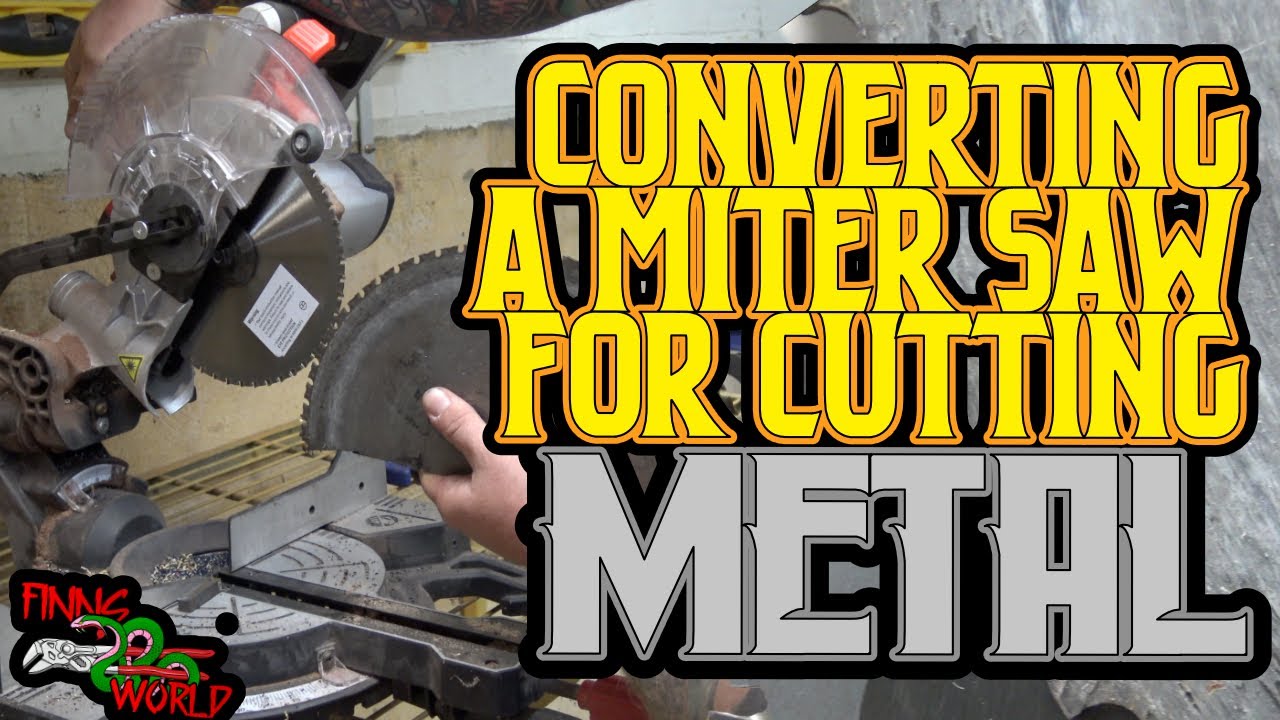
Can All Miter Saws Cut Metal?
Not every miter saw is built the same. Some can handle metal, while others can be damaged or even destroyed. Let’s look at the main differences.
Motor Power
Cutting metal needs more power than wood. Cheaper saws may stall or burn out. Most miter saws have motors from 10 to 15 amps. For metal, a higher-amp motor is better.
Blade Speed (rpm)
Most miter saws spin at 3,800–5,000 RPM, which is ideal for wood but too fast for some metals. High speed can overheat the blade or the metal, leading to warping or blade failure. Some high-end miter saws have variable speed controls, which help with different materials.
Saw Construction
Metal cutting creates more vibration and stress. If your saw is lightweight or made from plastic, it may not hold up. Heavy-duty saws with metal bases are safer.
Dust Collection
Most miter saws have a dust bag for wood chips. This won’t work for metal, and metal chips can even clog the dust port. Always remove the bag before cutting metal.
What Metals Are Safe To Cut With A Miter Saw?
With the right blade and safety steps, a miter saw can cut some metals, but not all. Here’s a quick guide:
- Aluminum: Yes, with a non-ferrous carbide-tipped blade.
- Copper/Brass: Yes, with the same blade as aluminum.
- Thin steel (under 1/8 inch): Possible with a ferrous metal blade, but not recommended for many cuts.
- Thick steel or stainless steel: Not recommended. Use a chop saw or angle grinder instead.
Examples Of Projects
- Aluminum angle for window frames
- Brass tubing for lamps
- Thin steel conduit for electrical work
Trying to cut thick rebar, iron rods, or steel bars will likely ruin your saw and blade.
Miter Saw Vs. Chop Saw: Which Is Better For Metal?
You might wonder why people use chop saws for metal instead of miter saws. Here’s the difference:
- Miter saw – Designed for wood, with precise angles and cleaner cuts.
- Chop saw – Built for metal, with abrasive blades, slower speeds, and more robust construction.
Miter Saw Vs. Chop Saw Comparison
| Feature | Miter Saw | Chop Saw |
|---|---|---|
| Primary Use | Wood | Metal |
| Blade Speed | High (3,800–5,000 RPM) | Lower (1,400–2,500 RPM) |
| Cut Quality | Very clean (wood), clean (aluminum) | Rougher (abrasive wheel) |
| Angle Cuts | Yes (precise) | Usually no |
| Cost | Medium to high | Medium |
Pro tip: If you cut metal often, invest in a chop saw or a specialized metal saw. If you only cut metal occasionally, a miter saw with the right blade can work for small jobs.
Step-by-step: How To Cut Metal With A Miter Saw
If you decide to cut metal with your miter saw, follow these steps:
- Read your saw’s manual. Not all saws are rated for metal. Check the warranty.
- Buy the right blade. Choose a high-quality blade for the metal you want to cut.
- Remove the wood dust bag. Metal chips can cause fires if caught in wood dust.
- Secure the metal. Use a strong clamp to keep the metal from moving.
- Wear safety gear. Gloves, eye protection, and earplugs are a must.
- Start the saw and let it reach full speed.
- Lower the blade slowly onto the metal. Do not force it.
- Complete the cut and let the blade stop. Do not lift the saw while the blade is spinning.
- Unclamp and check the cut. Remove sharp edges with a file if needed.
Advanced tip: For cleaner cuts, apply a little cutting fluid (not oil) to the blade or metal. This reduces heat and helps the blade last longer.
Common Mistakes When Cutting Metal With A Miter Saw
Many users make avoidable errors when trying to cut metal. Here are the most common:
- Using a wood blade. This is dangerous and ruins the blade.
- Forcing the cut. This overheats the blade and can cause kickback.
- Not clamping the workpiece. The metal can fly out, causing injury.
- Ignoring sparks and fire risk. Even small sparks can cause big fires.
- Cutting thick steel. Most miter saws are not built for heavy metals.
- Skipping safety gear. Never cut metal without protection.
When Should You Not Use A Miter Saw For Metal?
There are times when using a miter saw is a bad idea:
- Cutting thick or hardened steel
- Needing many cuts in a row
- If your saw is lightweight or old
- If you have no proper metal-cutting blade
- If you cannot remove flammable dust or items nearby
In these cases, choose a chop saw, angle grinder, or bandsaw made for metal.
Real-life Experiences: What Do Users Say?
In many online forums and workshops, users share their experiences. Here’s what people often report:
- Cutting aluminum with a carbide-tipped blade works well for DIY projects.
- Making a few cuts in thin steel is possible, but the blade wears out quickly.
- Most miter saws make a lot of noise and sparks when cutting metal.
- Some brands warn that using their saws on metal voids the warranty.
- After cutting metal, the saw needs a thorough cleaning to remove chips and dust.
Non-obvious insight: Even if a cut goes smoothly, tiny metal shavings can get into the bearings or motor of your saw, shortening its life. Always clean your saw after cutting metal.
Caring For Your Miter Saw After Cutting Metal
Metal cutting is hard on tools. To keep your saw in top shape:
- Blow out the saw with compressed air. Focus on the motor vents, blade guard, and base.
- Wipe down the surface. Metal dust can cause rust or damage plastic parts.
- Check the blade. Inspect for chips, dullness, or missing teeth.
- Oil moving parts. Prevents rust from metal dust.
- Reinstall wood blade for next use. Never use the same blade for wood and metal.
Regular maintenance extends your saw’s life and keeps it safe for future jobs.
Alternatives To Cutting Metal With A Miter Saw
If you find your miter saw is not ideal, consider these tools:
- Chop saw: Designed for metal, safer and more powerful.
- Angle grinder: Good for rough, fast cuts.
- Metal bandsaw: Clean, accurate cuts, quieter operation.
- Hacksaw: Manual, for small jobs and detailed work.
- Reciprocating saw: For demolition and fast, rough cuts.
Each has strengths and weaknesses. The best choice depends on the size, type, and volume of metal you need to cut.

Expert Recommendations
Professional builders and tool experts generally agree:
- Use a miter saw for metal only if you have the right blade and take all safety steps.
- For frequent metal cutting, buy a dedicated metal saw.
- If you must cut metal with a miter saw, stick to aluminum or non-ferrous metals.
- Never cut thick steel or iron with a regular miter saw.
For more detailed tool advice, see this Wikipedia article on miter saws.

Frequently Asked Questions
Can Any Miter Saw Cut Metal?
Not all miter saws can cut metal safely. It depends on the saw’s power, blade speed, and build quality. Always check your manual first. Even with the right blade, older or less powerful saws may overheat or get damaged.
What Is The Best Blade For Cutting Metal On A Miter Saw?
A carbide-tipped blade made for non-ferrous metals (like aluminum) is best for most projects. For steel, use a blade labeled for ferrous metals. Never use a wood blade. Abrasive blades also work but make rough cuts and wear out fast.
Is It Safe To Cut Steel With A Miter Saw?
Cutting thin steel is possible but not recommended for most miter saws. The process creates sparks, noise, and heat, which can damage the saw or cause injury. For thick or many steel cuts, use a chop saw or angle grinder.
How Can I Reduce Sparks When Cutting Metal?
Use a sharp, high-quality blade and cut slowly. Clamp the workpiece tightly. For aluminum and non-ferrous metals, there will be fewer sparks. For steel, some sparks are unavoidable, so keep the area clear and have a fire extinguisher nearby.
Will Cutting Metal Damage My Miter Saw?
Cutting metal puts extra stress on the motor, bearings, and blade. Metal chips can get inside the saw, causing wear or short circuits. Always clean your saw well after cutting metal and avoid cutting thick steel.
Final Thoughts
A miter saw can cut metal—but only with the right blade, the right type of metal, and careful safety steps. For best results, stick to aluminum, brass, or copper and use a carbide-tipped, non-ferrous blade. Cutting steel is riskier and can wear out your saw fast. Remember, safety comes first: wear protective gear, clamp your work, and clear the area of flammable materials. If you need to cut metal often, invest in a tool made for the job. With the right approach, your miter saw can be a flexible tool for more than just wood.