
The Cummins X12 engine has become a trusted choice for many fleet managers, owner-operators, and technicians. Its reputation for durability and performance is well-deserved, but to keep this engine running smoothly, you must pay close attention to one vital detail: oil capacity. Getting the oil level right is not just about pouring in a set number of liters or quarts—it’s about understanding what the engine needs, why it matters, and how various factors can change the amount required.
Many drivers and mechanics believe oil capacity is a simple number from a manual. In reality, several variables affect it: your engine’s configuration, the type of oil filter you use, the application (on-road, off-road, vocational), and even the region’s climate. If you miss these details, you risk engine wear, higher maintenance costs, and even costly downtime. In this guide, you’ll find a complete, clear explanation of Cummins X12 oil capacity. We’ll break down the 12 critical factors every X12 owner or technician should know, offer practical advice, share data-backed tables, and answer the most common questions. By the end, you’ll understand far more than just a number—you’ll know how to keep your engine healthy for the long haul.
1. Factory-recommended Oil Capacity
The factory-recommended oil capacity is the first number most people look for. For the standard Cummins X12 diesel engine, the official specification is 40 quarts (37.9 liters) for a typical oil and filter change. This figure includes the oil held in the pan and the filter, assuming a standard configuration.
Why is this number so important? Using less oil than recommended can lead to poor lubrication and premature engine wear. Too much oil can cause aeration (mixing of oil and air), which also harms the engine. Oil doesn’t just lubricate; it also cools and cleans internal engine parts, helping to carry away heat and contaminants. If you run with less oil than specified, the system won’t be able to absorb and remove enough heat, especially under heavy loads or in hot weather.
Always check the operator’s manual for your specific X12 model, as small updates or regional versions may have minor differences. The 40-quart recommendation ensures that all internal parts receive proper lubrication, cooling, and cleaning from the oil. Don’t forget that the recommended capacity is calculated based on a new engine with a clean, empty oil filter and pan. If your engine has been rebuilt or modified, verify the correct capacity with a trusted Cummins source.
2. Oil Pan Size Variations
Not all Cummins X12 engines use the same oil pan. Depending on the truck manufacturer or application, your engine might have a shallow or deep sump oil pan. These pans hold different amounts of oil, which directly affects the total capacity.
- Shallow pans are usually found in low-clearance vehicles, holding around 36-38 quarts. These are often used in trucks that need to maximize ground clearance, such as delivery vehicles or certain transit buses.
- Deep pans are more common in vocational trucks, dump trucks, or off-road applications, holding up to 42-45 quarts. A deep pan can help keep oil cooler and cleaner in severe-duty cycles, and is better for engines that often run at high power or idle for long periods.
Always identify your pan type before adding oil. An easy way is to check the part number stamped on the pan or consult your truck’s build sheet. If you don’t have easy access to this information, visually inspect the pan depth or ask a qualified technician for help.
Never assume the pan matches the factory configuration—many trucks are customized at the dealer or body-builder stage.
A common mistake, especially in fleet environments, is to assume all trucks with an X12 have the same pan. In reality, even trucks from the same year and model line may have different oil pans depending on their intended use.
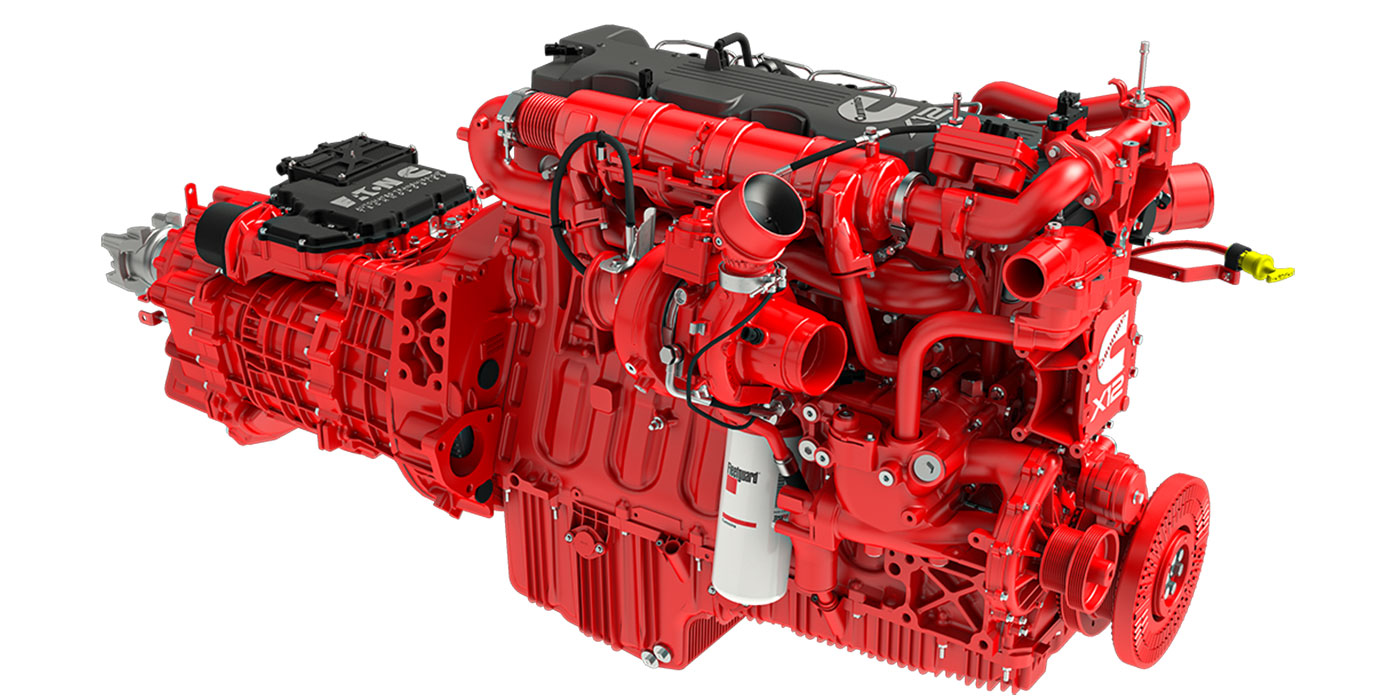
3. Oil Filter Size And Type
The oil filter also affects total oil capacity. The standard X12 filter holds about 2-3 quarts of oil. However, some vehicles use extended-life filters or bypass filter systems. These can increase the oil needed during a change.
- Standard filter: Adds about 2 quarts.
- Extended-life filter: Can hold up to 3 quarts. These filters are designed to go longer between changes and have more capacity to trap contaminants.
- Bypass system: May add another 1-2 quarts. Bypass filters clean a portion of oil at a time, removing fine particles and extending oil life.
If you change to a larger or dual-filter setup, always adjust your fill volume. Failing to do so can leave your engine low on oil, even if the pan is full. Another detail many overlook: some aftermarket filters are physically larger or smaller than the OEM part. Always check the filter’s specifications.
If you’re unsure about your filter’s impact on capacity, fill to the low end of the recommended range, run the engine, and then top off as needed using the dipstick. Never risk running with too little oil because of a filter mismatch.
4. Engine Application: On-highway Vs. Vocational
The application—how you use your X12—makes a difference in oil needs. On-highway tractors typically use the base oil capacity, but vocational trucks (like concrete mixers, dumpers, refuse trucks) often require more due to:
- Severe-duty cycles (frequent stops, idling): These cycles put more stress on the engine and oil, increasing contamination and breakdown.
- Additional filtration systems: More filters or larger filters increase total oil volume.
- Larger or deeper oil pans: These are chosen to increase oil life and improve engine cooling.
For example, an X12 in a refuse truck might need 42-45 quarts at each change. That’s because refuse trucks spend much of their time idling, which doesn’t circulate oil as effectively and leads to quicker contamination. Always check with the truck body manufacturer or Cummins dealer for the correct specification for your specific use.
Some vocational trucks may also have extra oil cooling systems or auxiliary components, which can slightly increase the oil needed. These features are often missed when estimating oil capacity.
5. Oil Change Intervals And Capacity Planning
Understanding oil change intervals is critical for oil capacity planning. The X12 engine’s interval can vary:
- Standard duty: Up to 60,000 miles (96,000 km) between changes with approved oils and filters.
- Severe duty: May require changes every 25,000-35,000 miles.
If you extend intervals, you may benefit from using a larger oil capacity (where possible) and premium filters. More oil means more dilution of contaminants, which can protect the engine longer. But never add more oil than the pan and filter are designed for.
It’s also important to remember that longer intervals require careful monitoring of oil quality. An oil analysis program can help track when oil actually needs to be changed, instead of relying only on mileage. This allows some fleets to safely extend oil change intervals and lower costs.
As a practical tip, keep track of oil additions between changes. If you’re topping up more than expected, that could be a sign of leaks or engine wear.
6. Oil Type: Conventional, Synthetic, Or Blend
The type of oil you use (conventional, synthetic, or blend) does not directly change the capacity, but it affects how well the oil performs in your engine.
- Synthetic oils last longer, resist breakdown, and may allow for longer intervals. They also provide better protection under extreme temperatures and heavy loads.
- Blends combine conventional and synthetic properties. They offer some benefits of synthetic at a lower cost.
- Conventional oil is less expensive but needs more frequent changes. It may be suitable for engines that have regular, short service intervals.
Although the fill amount stays the same, synthetic oil can handle higher temperatures and more stress—helpful if your X12 operates in tough conditions. For example, fleet managers operating in mountainous regions or with heavy loads often prefer synthetic oil for its stability.
When changing oil types, always flush the system if required and check that the new oil meets Cummins’ approval. Mixing incompatible oils can reduce effectiveness and void your warranty.
7. Regional And Climate Considerations
Climate can impact your oil choice and, sometimes, your capacity. In very cold regions, thinner oil (like 5W-40 synthetic) flows better, while in hot regions, heavier oil (like 15W-40) is preferred.
Some fleet managers in extreme climates may use pan heaters or insulated pans, which can slightly alter the oil volume needed. Always fill to the dipstick’s full mark, not just by measurement alone, to account for temperature-related expansion or contraction.
For example, in regions with frequent sub-zero starts, oil thickens and may not circulate fast enough. Using the right viscosity and allowing for oil expansion can prevent dry starts and early engine wear. In hot climates, check oil more frequently, as high temperatures can increase oil consumption and volatility.
A non-obvious insight: when operating in areas with large temperature swings, oil level should be checked when the engine is at a similar temperature to when you filled it, to avoid under- or overfilling due to thermal expansion.
8. Oil Capacity Differences By Model Year
Model year changes sometimes bring small modifications in the X12’s oil system. For example:
- 2017-2019 X12 engines: Often use the standard 40-quart pan.
- 2020-present X12 engines: Some have improved sump designs and may recommend 41-42 quarts due to emissions system changes.
Later model years may also come with upgraded oil coolers, different filter housings, or slight tweaks to the lubrication system to meet tighter emissions rules. These changes, while small, can impact the total oil volume.
When servicing newer engines, always check the latest Cummins documentation. Using the wrong capacity can void warranties or lead to performance issues. If unsure, the Cummins QuickServe Online resource is regularly updated with the latest specs.
9. Draining And Refilling: Getting Accurate Measurements
Many technicians overfill or underfill because they do not drain the engine fully. Proper procedure matters:
- Warm up the engine to operating temperature. This thins the oil and helps contaminants suspend in the oil for removal.
- Shut down and wait 5-10 minutes for oil to settle.
- Remove the drain plug and let oil flow until it slows to a drip. Don’t rush this step; patience ensures more old oil is removed.
- Replace the filter (it holds oil too). If you skip the filter, capacity changes.
- Reinstall the plug and fill with the recommended capacity.
- Start the engine, let it idle for 2-3 minutes, shut down, and recheck the dipstick.
If the system was not fully drained, you may need less oil. If you changed pans or filter size, adjust the fill as needed. Always trust the dipstick as the final judge.
A good practice: after the oil change, check the oil level again after the first day of operation. Sometimes, air pockets or oil settling can slightly change the level, especially with new filters.
10. Effects Of Overfilling Or Underfilling
Both overfilling and underfilling the X12 can cause real damage:
- Overfilling: Leads to foaming, pressure build-up, oil leaks, and blown seals. Aerated oil cannot lubricate well, and excess pressure may damage gaskets or seals.
- Underfilling: Causes poor lubrication, increased friction, higher engine temperatures, and possible failure. Low oil levels can also cause the oil pump to draw air, leading to engine knock or bearing damage.
If you are unsure, always add oil in smaller increments, then check the dipstick. Never run the engine above or below the full mark. When in doubt, consult a Cummins-certified technician for advice.
Remember, it’s better to spend a few extra minutes checking than to risk thousands of dollars in engine repairs.
11. Troubleshooting Oil Consumption Issues
Some X12 owners notice higher-than-expected oil consumption. This can be due to:
- Worn piston rings or valve guides: These allow oil to enter the combustion chamber and burn off.
- Turbocharger leaks: Oil can leak into the intake system and be lost.
- Blow-by: Combustion gases leaking past piston rings push oil out.
- Incorrect fill level: Overfilling can cause oil to be pushed out through the breather.
To fix these issues:
- Start with a leak check—inspect the turbo, filter, and pan. Look for wet spots or drips under the engine.
- Monitor oil use per 1,000 miles (normal is up to 1 quart per 1,000 miles for a new or hard-worked engine).
- If consumption is high, consult a Cummins-certified technician. Early detection prevents costly repairs.
A small but common oversight: check that the breather system isn’t clogged. If it is, pressure can build up and force oil out through seals.
12. Maintenance Tips For Optimal Oil System Health
Keeping your Cummins X12 oil system in top shape goes beyond just filling with the right amount. Follow these tips for best results:
- Use only API CK-4 or FA-4 certified oils approved for the X12.
- Replace the oil filter at every oil change. Old filters can clog and reduce oil flow.
- Inspect for leaks at every service. Oil leaks can develop slowly and become serious if ignored.
- Record oil changes and consumption in your maintenance log. This helps track trends and spot problems early.
- Use a quality oil analysis program to detect problems early. Regular analysis can reveal coolant leaks, fuel dilution, or early bearing wear.
- Keep the breather and PCV system clean for proper ventilation. Clogged breathers can cause pressure buildup and oil leaks.
One advanced tip: check the oil cooler for leaks during routine maintenance. A leaking cooler can mix oil and coolant, causing engine damage if not caught early.
Comparison: Oil Capacity By Pan And Filter Type
To help you visualize the impact of different pan and filter combinations, here’s a summary:
| Pan Type | Filter Type | Total Capacity (Quarts) | Use Case |
|---|---|---|---|
| Standard | Standard | 40 | On-highway |
| Deep Sump | Extended-life | 44 | Vocational/Severe Duty |
| Shallow | Standard | 37 | Low-clearance trucks |
| Standard | Bypass System | 42 | Fleets extending service intervals |
Data Table: Oil Change Intervals And Average Consumption
Engineers and fleet managers often want to plan for oil purchases and maintenance. Here’s a look at typical oil change intervals and average oil consumption for the X12:
| Application | Interval (Miles) | Average Consumption (Quarts/1,000 Miles) |
|---|---|---|
| On-highway | 60,000 | 0.7 |
| Vocational (Severe Duty) | 30,000 | 1.2 |
| Regional | 45,000 | 0.9 |
Comparison: X12 Vs. Similar Cummins Engines
To see how the X12 stacks up, compare its oil capacity to other Cummins engines:
| Engine | Oil Capacity (Quarts) | Common Application |
|---|---|---|
| X12 | 40-45 | Regional, Vocational |
| X15 | 48-56 | Heavy-duty On-highway |
| ISX12 | 40-44 | Regional, Refuse |
Non-obvious Insights Beginners Miss
- Oil filter changes affect capacity more than you think. If you skip changing the filter, you need less oil—but you also lose protection. Always change the filter with the oil, and adjust your fill accordingly. A new filter can trap more contaminants and keep the oil cleaner for longer.
- Not all X12 engines are built the same. Many trucks arrive from the dealer with non-standard pans or filtration setups based on the buyer’s needs. Always check your specific truck’s configuration, not just the engine model. Sometimes, aftermarket upgrades or local modifications can change oil volume by several quarts.
Another insight: The oil capacity listed in the manual is often for a “dry fill”—if you don’t fully drain the engine or replace the filter, you’ll need less. Always confirm by checking the dipstick after filling.

Common Mistakes To Avoid
- Guessing oil capacity: Never rely on memory or hearsay. Always check the manual and configuration. Each truck could be different.
- Ignoring the dipstick: The dipstick is your final authority. After refilling, run the engine and let it settle, then check the level. Don’t assume based on the amount you poured in.
- Mixing oil types: While blends are sometimes allowed, don’t mix brands or types unless approved by Cummins. Incompatible oils can cause foaming or reduced lubrication.
- Skipping the filter: Changing only the oil but not the filter leaves old contaminants in the engine. This can undo the benefits of fresh oil.
Practical Example: Step-by-step Oil Change On A Cummins X12
Let’s say you have a 2021 Cummins X12 with a standard pan and filter. Here’s how to do a proper oil change:
- Warm up the engine to operating temperature. This ensures the oil drains out smoothly and brings contaminants into suspension.
- Park on level ground and shut off the engine.
- Wait five minutes for oil to settle.
- Remove the drain plug and let oil drain fully (about 10-15 minutes). Take this time to inspect the old oil for unusual color or metal particles.
- Replace the oil filter with an approved Cummins filter. Lubricate the new filter’s seal with a little clean oil before installing.
- Reinstall the drain plug and torque to spec. A loose plug can cause leaks; overtightening can strip the threads.
- Add 40 quarts of API CK-4 oil. Pour slowly to avoid air pockets.
- Start the engine, idle for 2-3 minutes, shut off, and check for leaks around the filter and drain plug.
- After 5 minutes, check the dipstick. Add oil in small amounts until the level reaches the “full” mark.
- Record the service in your logbook. Note the oil type, filter part number, and any observations.
This method ensures your X12 gets exactly what it needs—no more, no less. Rechecking the oil level after the first drive is a good habit, as some air may work its way out of the system.
Environmental And Cost Considerations
Using the correct oil capacity isn’t just about engine health—it’s about sustainability and cost. Overfilling wastes oil, increases disposal costs, and harms the environment. Underfilling can lead to early engine failure, creating unnecessary waste. Using the right amount, and the right oil, saves money and protects your investment.
Consider using an oil analysis program. These services (like those from Cummins or third-party labs) test your used oil for contaminants, wear metals, and chemical breakdown. This allows you to safely extend intervals, reduce oil changes, and cut costs without risking your engine.
Reducing oil changes by even a small percentage across a large fleet can translate to significant cost savings and less environmental impact. Proper oil management also helps meet environmental regulations and sustainability goals.
External Reference For Further Learning
For the most up-to-date specifications and recommendations, always check the official Cummins X12 documentation on the Cummins QuickServe Online website.
Frequently Asked Questions
What Is The Standard Oil Capacity For A Cummins X12 Engine?
The standard oil capacity for most Cummins X12 engines is 40 quarts (37.9 liters) with a standard oil filter. However, always check your truck’s configuration, as deeper pans or larger filters may require more.
Does The Oil Filter Size Affect The Total Oil Capacity?
Yes, the oil filter size can change the total oil needed during a change. Larger or dual filters may add 1-3 extra quarts. Always adjust your fill amount if you change filter types.
How Do I Know If My X12 Has A Shallow Or Deep Oil Pan?
Check your engine’s build sheet or look for a part number on the oil pan. You can also measure the depth. Shallow pans are about 5-6 inches deep, while deep pans are usually 7-8 inches or more.
Can I Use Synthetic Oil In The Cummins X12, And Does It Change Capacity?
You can use synthetic oil if it meets Cummins’ API CK-4 or FA-4 specs. Synthetic oil does not change the fill capacity but may allow for longer oil change intervals.
What Should I Do If I Overfill My Cummins X12 Engine?
If you overfill, drain the excess oil immediately. Running with too much oil can cause foaming, leaks, or engine damage. Always fill in small increments and use the dipstick to confirm the correct level.
Keeping your Cummins X12 properly filled and maintained is one of the most important things you can do for engine health, efficiency, and long-term savings. By understanding these 12 key factors, you’ll avoid common mistakes and keep your engine running strong—mile after mile.