
Pressure washing is one of the most effective ways to bring a deck back to life. Over time, decks collect dirt, mold, mildew, and stains from both weather and daily use. If you want your outdoor space to look fresh and last longer, learning how to pressure wash a deck the right way is essential.
Many people worry about damaging wood or using the wrong tools, but with the right guidance, you can achieve professional results without stress or costly mistakes.
This guide will walk you through every step of the process. You’ll learn how to pick the right pressure washer, prepare your deck, clean thoroughly, and finish with the best maintenance tips. Along the way, you’ll discover insights that most beginners miss—like why the angle of your spray matters, and how weather can affect your results.
Whether you’re a first-timer or want to improve your technique, you’ll find everything you need to safely and effectively pressure wash your deck.
Understanding Pressure Washing And Your Deck
Before grabbing any equipment, it’s important to understand what pressure washing does and how it affects different types of decks.
Pressure washing uses a high-powered stream of water to remove dirt, algae, mold, and old finishes from surfaces. This works well for cleaning decks, but wood and composite materials can be sensitive to too much pressure or the wrong cleaning solutions.
Deck types generally fall into two main categories: natural wood and composite. Natural wood (like cedar, redwood, or pressure-treated pine) looks beautiful but can be damaged if washed incorrectly. Composite decks (made from wood fibers and plastic) are more durable but still need gentle care.
A common mistake is using maximum pressure, which can gouge wood and force water deep into the fibers. This leads to warping, splintering, and even rot. For composite decks, too much force can strip away the protective coating. That’s why selecting the right pressure and technique is critical.
Choosing The Right Pressure Washer
The pressure washer you use can make or break your project. There are two main types: electric and gas-powered.
| Pressure Washer Type | Typical PSI Range | Best For | Pros | Cons |
|---|---|---|---|---|
| Electric | 1,300–2,000 PSI | Small–medium decks, light cleaning | Lightweight, quiet, easy to use | Less power, shorter hoses |
| Gas-powered | 2,000–3,000+ PSI | Large decks, heavy stains | More powerful, faster cleaning | Heavier, louder, needs fuel |
PSI (pounds per square inch) measures pressure strength. For most wood decks, 500 to 1,200 PSI is enough. Composite decks usually need 500–600 PSI. Going higher increases the risk of damage.
GPM (gallons per minute) tells you how much water flows through the machine. More GPM means faster cleaning, but for decks, 1.4–2.0 GPM is usually enough.
Nozzle choice matters too. Nozzles are color-coded:
- Red (0°): Never use—too powerful, can cut wood.
- Yellow (15°): For tough stains, use with care.
- Green (25°): Good for general deck cleaning.
- White (40°): Safest for all deck materials.
Key insight: Many beginners think more power is better. In reality, using a lower PSI with a wider-angle nozzle (like green or white) is safer and just as effective.
Safety Gear And Preparation
Pressure washing can be dangerous if you aren’t careful. Water jets can cause injury, and cleaning chemicals can irritate skin and eyes. Always wear:
- Closed-toe shoes (preferably non-slip)
- Long pants and sleeves
- Safety goggles
- Gloves
Remove any furniture, plants, or décor from the deck. Cover nearby plants or delicate surfaces with plastic sheeting. Check the deck for loose boards, nails, or screws—fix these before washing.
If you have electrical outlets or fixtures on the deck, cover them with waterproof tape or plastic bags. Wet wood can be slippery, so plan to work in sections and keep pets and children away.
Inspecting And Sweeping The Deck
Before pressure washing, give your deck a close inspection. Look for:
- Loose boards or railings
- Protruding nails or screws
- Rot, mold, or deep stains
Make any repairs first. Pressure washing can make existing problems worse. Sweep the deck thoroughly to remove leaves, dirt, and debris. This prevents clogs and helps the pressure washer do a better job.
Pro tip: Don’t skip the sweeping step. Even small stones or grit can become projectiles under high pressure, damaging the wood surface.
Choosing And Using Deck Cleaner
Pressure washing alone often isn’t enough for mold, mildew, or greasy stains. A good deck cleaner helps lift dirt and kills fungus.
Types of deck cleaners:
- Oxygenated bleach: Safe for wood and the environment; good for mold and mildew.
- Sodium hypochlorite (household bleach): Strong, but can harm plants and lighten wood.
- Commercial deck wash: Comes ready-to-use for all deck types.
- Eco-friendly cleaners: Made for sensitive areas, safe for plants and pets.
Read the label and follow all instructions. Most cleaners are applied with a garden sprayer or the soap dispenser on your pressure washer.
Key insight: Let the cleaner soak for 10–15 minutes, but never let it dry on the deck. This gives time to loosen dirt without staining the wood.
How To Pressure Wash A Deck: Step-by-step
Now you’re ready to start cleaning. Here’s a detailed process to get professional results.
1. Set Up Your Pressure Washer
- Connect the water supply and make sure the hose is free from kinks.
- Attach the correct nozzle (green or white is best for decks).
- If using detergent, fill the soap dispenser and set to low pressure.
Check: Test the pressure on a small, hidden section first. Adjust PSI or move to a wider nozzle if the spray marks the wood.
2. Apply Deck Cleaner
- Spray cleaner evenly over the deck, working in small sections.
- Use a stiff-bristle brush to scrub especially dirty or stained areas.
- Allow cleaner to soak for the time suggested on the label (usually 10–15 minutes).
3. Rinse With Pressure Washer
- Switch to a rinse nozzle (25° or 40°).
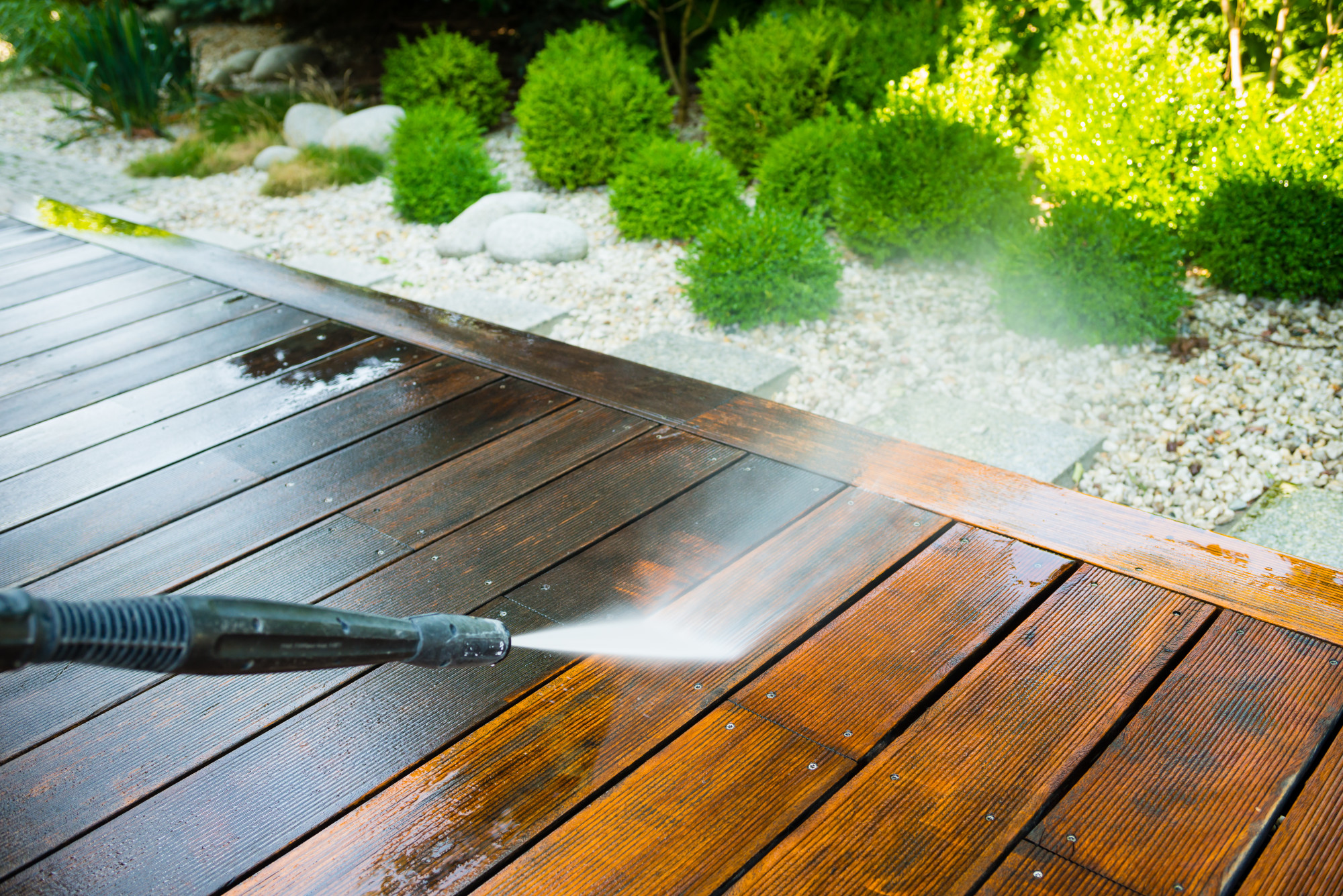
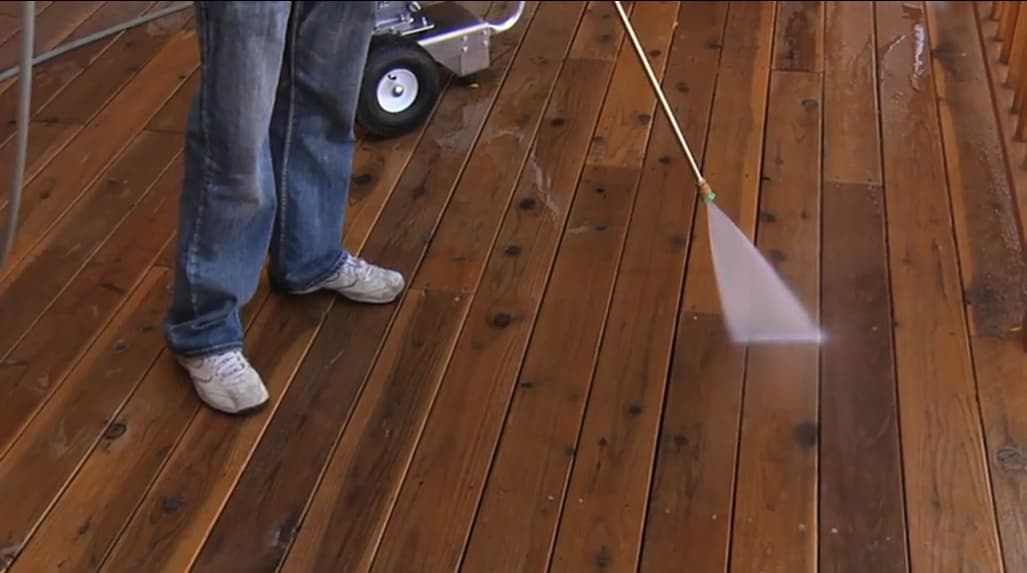
- Hold the wand 12–18 inches from the surface.
- Spray with the wood grain, using smooth, overlapping strokes.
- Work in sections, moving slowly for even cleaning.
Important tip: Never hold the nozzle too close or stay in one spot—this causes lines and gouges. Always keep the wand moving.
4. Tackle Tough Stains
For stubborn spots, you may need a second pass. Use a lower pressure and scrub by hand with the brush before rinsing again. Avoid using high pressure directly on problem areas.
5. Clean Railings And Steps
Railings and steps collect grime too. Use a gentler spray (40° nozzle) and lower pressure. For tight corners, clean by hand with a brush or sponge.
6. Final Rinse And Dry
After cleaning, rinse the entire deck with clean water. Let the deck dry for at least 48 hours before replacing furniture or applying sealant.
Common Mistakes To Avoid
Even experienced DIYers can make errors. Here are mistakes to watch for:
- Using too much pressure: This can splinter wood and strip away finishes.
- Holding the nozzle too close: Causes gouges and visible marks.
- Skipping deck cleaner: Leaves behind mold and stains.
- Not rinsing enough: Cleaner residue can damage wood and attract dirt.
- Washing in direct sunlight: Cleaner dries too fast, causing streaks.
- Not repairing first: Pressure can make loose boards or nails worse.
Non-obvious insight: Always check local water restrictions or environmental rules. Some communities regulate outdoor water use or chemical runoff.
When To Pressure Wash Your Deck
Decks should be pressure washed at least once a year, usually in spring or early summer. If your deck is under trees, near water, or gets heavy use, you may need to clean it twice a year.
Look for these signs:
- Slippery surface (mold/mildew)
- Faded or dirty appearance
- Stubborn stains or algae growth
Don’t pressure wash after recent rain or before a forecasted storm. The deck needs to dry completely for best results and to avoid mold.
Deck Maintenance After Pressure Washing
Pressure washing is only part of good deck care. After your deck is clean and dry, consider these steps:
Sealing And Staining
Sealing protects wood from water, UV rays, and weather. Most experts recommend sealing every 1–3 years. Choose a sealant designed for your deck material.
- Clear sealers: Show natural wood but offer less UV protection.
- Toners/semi-transparent stains: Add color and block sun damage.
- Solid stains: Best coverage, but hide wood grain.
Apply sealant with a brush, roller, or sprayer. Follow drying times on the product label.
Regular Cleaning
Sweep leaves and dirt weekly. Clean up spills quickly to prevent stains. Keep gutters and nearby plants trimmed to reduce debris on the deck.
Repair And Inspection
Check for loose boards, nails, or rot at least twice a year. Address any problems right away to avoid bigger repairs.
Comparing Cleaning Methods
Pressure washing isn’t the only way to clean a deck. Here’s a look at how it compares to other methods:
| Cleaning Method | Effectiveness | Deck Safety | Time Needed | Skill Level |
|---|---|---|---|---|
| Pressure washing | Very high | Safe if done correctly | 1–3 hours | Moderate |
| Scrubbing by hand | Medium | Very safe | 3–6 hours | Easy |
| Deck cleaning machine | High | Safe for all decks | 2–4 hours | Moderate |
| Hose and broom | Low | Very safe | 2–4 hours | Easy |
Pressure washing is fastest and most thorough, but hand scrubbing is safest for old or delicate wood. You might combine methods for best results.
Special Considerations For Composite Decks
Composite decks are made from wood fibers and plastic. They’re more resistant to rot, but they can still stain and collect mold. Use these tips:
- Stick to 500–600 PSI maximum.
- Use only deck cleaners labeled safe for composite.
- Don’t use bleach; it can damage surface color.
- Always rinse thoroughly.
Note: Some composite decks have warranties that can be voided by improper cleaning. Always check manufacturer guidelines before starting.
How Weather And Timing Affect Results
Weather plays a big role in deck cleaning. Aim for a dry, mild day (60–80°F/15–27°C) with no rain in the forecast for 48–72 hours. High humidity slows drying, and direct sun can cause streaks or cleaner to dry too fast.
Early morning or late afternoon is ideal. If possible, avoid windy days—spray drift can affect nearby plants or surfaces.
Non-obvious insight: Early spring is best because pollen and sap are easier to remove before they bake onto the wood in summer heat.

Renting Vs. Buying A Pressure Washer
If you don’t own a pressure washer, you have options:
| Option | Upfront Cost | Long-term Value | Best For |
|---|---|---|---|
| Renting | $40–$100 per day | One-time or annual use | Infrequent cleaning, no storage space |
| Buying | $100–$400+ | Multiple uses per year | Regular cleaning, large property |
| Hiring a pro | $200–$500 per job | Expert results, no effort | Busy homeowners, complex decks |
Renting is a good way to try pressure washing without investment, but frequent cleaners may save money by buying their own. Hiring a professional is best for very large or damaged decks.
Environmental And Safety Tips
Pressure washing can impact the environment, especially if chemicals wash into drains or yards. Use these safe practices:
- Choose eco-friendly cleaners.
- Block drains and direct runoff away from plants.
- Avoid using bleach near water sources.
- Store chemicals safely, away from children and pets.
Wear safety gear, keep cords and hoses out of walkways, and never point the pressure washer at people or animals.
For more safety advice, check resources from the EPA Safer Choice program.
Troubleshooting Common Problems
If you notice streaks, rough patches, or damage after washing, here’s what to do:
- Streaks or lines: Sand lightly with fine-grit sandpaper, then reseal.
- Fuzzy wood fibers: Let dry, then sand smooth before sealing.
- Missed spots: Clean again by hand with a brush, not more pressure.
- Water spots: Usually disappear after full drying.
If your deck still looks dirty after cleaning, check your technique, cleaner type, and whether you used enough soaking time.
Frequently Asked Questions
How Often Should I Pressure Wash My Deck?
Most decks need pressure washing once a year, usually in spring or early summer. High-traffic or shaded decks may need cleaning twice a year to prevent mold and buildup.
Can I Pressure Wash A Painted Or Stained Deck?
Yes, but use low pressure and a wide-angle nozzle to avoid stripping the paint or stain. Test in a small area first. You may need to repaint or restain after cleaning if the finish is old.
What If My Deck Has Deep Stains Or Mold?
Apply a specialized deck cleaner and scrub with a stiff brush before rinsing with the pressure washer. For very stubborn stains, you might need two treatments or a commercial wood brightener.
Is Pressure Washing Safe For All Types Of Wood?
Most pressure-treated woods, cedar, and redwood can be pressure washed, but always use the lowest effective pressure. Old or softwoods may be damaged by too much force. Composite decks require even lower pressure.
Should I Seal My Deck After Pressure Washing?
Yes, sealing helps protect against moisture, sun, and dirt. Wait at least 48 hours after washing to let the wood dry completely before applying sealant or stain.
Pressure washing can turn a tired, dirty deck into a fresh, inviting space in just a few hours. By following these steps—choosing the right equipment, preparing carefully, and using smart techniques—you’ll get a clean deck without damage. Remember, slow and steady is better than rushing, and regular care will keep your deck looking great for years.
With a little effort, you can enjoy your outdoor space safely and proudly all season long.