
A table saw is one of the most useful and powerful tools in any woodworking shop. With its spinning blade, adjustable fence, and flat tabletop, it can help you make fast, precise, and repeatable cuts in wood, plywood, and even some plastics.
But using a table saw is not only about pushing wood through a blade—it’s about safety, accuracy, and knowing how to get the most out of this tool. This guide will walk you through everything you need to know to use a table saw with confidence, whether you’re a beginner or looking to sharpen your skills.
Understanding The Table Saw
Before you turn on the machine, it’s important to know the parts and features of a table saw. Most table saws have a flat tabletop, a circular saw blade that rises from the center, and a motor that powers the blade. You’ll also find a fence (which helps guide your material for straight cuts) and a miter gauge (for angled cuts).
There are different types of table saws. Benchtop table saws are small and portable, great for small spaces or job sites. Contractor table saws are a bit bigger, often used by professionals for their balance of power and mobility. Cabinet table saws are heavy, powerful, and precise, often found in serious woodworking shops.
Safety features matter too. Modern saws may have riving knives (reduce kickback), blade guards, and flesh-sensing technology that stops the blade if skin is detected.
Setting Up Your Table Saw
A table saw must be set up correctly for accurate, safe cutting. Here are the main steps:
1. Choose A Stable Surface
Place your saw on a solid, level floor. This prevents vibration and keeps your cuts accurate. If your saw is portable, lock the wheels before cutting.
2. Check The Blade
Use a sharp, clean blade that matches your cutting needs. For ripping wood, a 24-tooth blade works well; for fine crosscuts, a 60-tooth blade is better. Make sure the blade is tight and spins freely.
3. Align The Fence
The fence should be parallel to the blade. Misalignment can cause burning or kickback. Use a tape measure or ruler to check the distance between the fence and the blade at both the front and back of the table.
4. Install Safety Devices
Attach the blade guard and riving knife if your saw has them. These help protect your hands and prevent accidents.
5. Set Up Dust Collection
If possible, connect a vacuum or dust collector. Fine sawdust can be a health hazard and makes your workspace messy.
6. Check Electrical Connections
Use a grounded outlet and avoid extension cords if possible. Make sure your power source matches the saw’s requirements.

Table Saw Safety Basics
Using a table saw safely is the most important part of woodworking. More injuries happen on table saws than any other woodworking tool. Here’s how to protect yourself:
1. Wear Safety Gear
Always wear safety glasses or goggles. Hearing protection is smart too, as table saws are loud. Avoid loose clothing, jewelry, and tie back long hair.
2. Stand In The Right Position
Stand to the side of the blade, not directly behind it. This keeps you out of the path of any kickback.
3. Use Push Sticks And Blocks
When cutting narrow pieces, never put your hands close to the blade. Use a push stick or push block to move the material safely.
4. Check The Wood First
Look for nails, screws, or knots in your wood. These can damage the blade or cause the wood to jump.
5. Keep The Area Clean
Sawdust, offcuts, and tools should not be on the saw table. A clear workspace helps you focus and move safely.
- Never Remove Small Cutoffs Near the Blade Until It Stops
Wait for the blade to come to a full stop before reaching near it.
7. Don’t Reach Over The Blade
Plan your cuts so your hands never pass over or behind the spinning blade.
8. Disconnect Power For Adjustments
If you change the blade or adjust the saw, unplug it first.
Table Saw Accidents: Quick Data
The U.S. Consumer Product Safety Commission estimates over 30,000 table saw injuries happen every year. Most are hand and finger injuries, often caused by not using safety devices or by working too fast.
Types Of Cuts You Can Make
A table saw is more than just a tool for straight cuts. You can make several types of cuts, each with its own technique.
1. Rip Cuts
Cutting along the length of the board, following the grain. The fence is used as a guide.
2. Crosscuts
Cutting across the grain. The miter gauge helps keep the angle accurate.
3. Miter Cuts
Angled cuts made across the width of the wood. Adjust the miter gauge to the angle you need.
4. Bevel Cuts
Cuts made with the blade tilted from vertical. The blade angle is adjusted, often for making joints or decorative edges.
5. Dado Cuts
Wide, flat-bottomed grooves. These are made with a special dado blade set and are used for joints like shelves.
6. Rabbet Cuts
Notches along the edge of a board, commonly for joining pieces at right angles.
7. Kerf Cuts
A series of shallow cuts, often for bending wood or removing waste.
Common Table Saw Cuts: Comparison
Here’s a quick look at how basic cuts compare:
| Cut Type | Direction | Guide Used | Typical Use |
|---|---|---|---|
| Rip Cut | With grain | Fence | Resizing boards |
| Crosscut | Across grain | Miter Gauge | Shortening boards |
| Miter Cut | Angled across grain | Miter Gauge | Frames, trim |
| Bevel Cut | Angled edge | Fence | Joints, details |
| Dado Cut | Across grain | Fence/Miter Gauge | Shelves, joints |
| Rabbet Cut | Edge of board | Fence | Box joints |
Step-by-step: Making A Basic Cut
Let’s walk through the steps for a simple rip cut, as it’s the most common table saw cut.
1. Measure And Mark
Use a tape measure and pencil to mark your cut line on the wood.
2. Set The Fence
Adjust the fence so the distance from the blade to the fence matches your cut width. Lock the fence in place.
3. Set Blade Height
The blade should be about 1/8 inch (3 mm) higher than the wood you’re cutting.
4. Check Blade And Fence Alignment
Make sure the fence is parallel to the blade. This avoids binding and burning.
5. Position The Board
Place the wood flat on the table, tight against the fence.
6. Turn On The Saw
Stand to the side of the blade, not directly behind. Let the blade reach full speed.
7. Feed The Wood Through
Use both hands to guide the wood, keeping it flat and against the fence. For narrow cuts, use a push stick.
8. Finish The Cut
Keep pushing until the piece is fully past the blade. Don’t pull it back through the saw.
9. Turn Off The Saw
Wait for the blade to stop before removing offcuts or making adjustments.
Two beginner mistakes:
- Failing to keep the board tight against the fence (causes crooked cuts or kickback).
- Pushing too fast or too slow (can lead to burning or rough edges).
How To Make Accurate Crosscuts
Crosscuts are used to shorten boards or cut them into sections. Here’s how to do it right:
1. Use The Miter Gauge
Never use the fence for crosscuts—it’s unsafe. Insert the miter gauge into the slot and set the desired angle.
2. Mark Your Cut
Align your pencil mark with the blade.
3. Position The Board
Hold the wood firmly against the miter gauge. Keep hands away from the blade path.
4. Make The Cut
Push the miter gauge forward smoothly, keeping the wood steady.
5. Finish And Remove
Pull the miter gauge back before removing the wood.
Pro tip: For repeatable cuts, clamp a stop block to the fence (but never trap wood between the stop and blade).
Using The Fence And Miter Gauge
The fence and miter gauge are your guides for accurate, safe cutting.
- The Fence: Best for straight, long rip cuts. Always lock it down before cutting.
- The Miter Gauge: Used for angled or crosscuts. Never use the fence and miter gauge together, as this can cause binding and kickback.
For beginners, it’s tempting to guide wood by hand. Resist this. The guides are more accurate and much safer.
Adjusting Blade Height And Angle
Changing the blade height affects the cut’s safety and quality. A blade set too high can be dangerous; too low can burn the wood.
- For most cuts, set the blade just above the wood’s thickness.
- For bevel cuts, use the tilt adjustment. Most table saws tilt left up to 45°.
- Always make adjustments with the saw unplugged.
Choosing The Right Blade
Not all blades are the same. Choosing the right one makes a big difference.
- Rip Blade: 24–30 teeth, cuts fast but rough.
- Crosscut Blade: 60–80 teeth, cleaner cuts across grain.
- Combination Blade: 40–50 teeth, handles most jobs well.
- Dado Blade: Wide, for grooves.
A dull blade is dangerous and leaves rough edges. Change or sharpen blades when you see burning, chipping, or slow cutting.
Blade Types And Uses
| Blade Type | Teeth Count | Best For | Cut Quality |
|---|---|---|---|
| Rip Blade | 24–30 | Fast cuts with grain | Rough |
| Crosscut Blade | 60–80 | Smooth cuts across grain | Fine |
| Combination | 40–50 | General purpose | Good |
| Dado Set | Varies | Grooves, dados | Flat-bottom |
Making Advanced Cuts
After you master basic ripping and crosscutting, you can try more advanced cuts.
Bevel Cuts
Set the blade angle using the tilt wheel. Lock it at the desired degree. Be sure to use a push stick and keep hands clear, as the blade’s angle makes kickback more likely.
Dado And Rabbet Cuts
Install a dado blade or use repeated passes with a regular blade. Dado cuts are for grooves (like shelf slots), rabbets for notches along edges. Always check your saw’s manual before using dado blades, as not all saws support them.
Cutting Small Or Thin Pieces
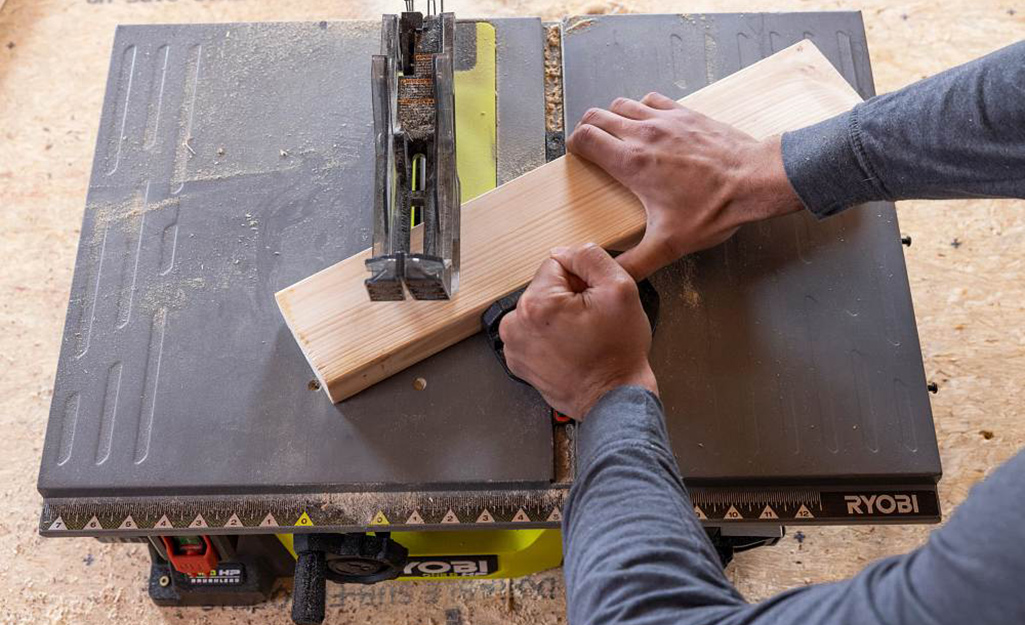
Use auxiliary fences or sleds to support small pieces. Never try to cut tiny strips freehand, as your hands will get too close to the blade.
Using Jigs For Safety And Accuracy
A jig is a helper device that makes special cuts safer and more repeatable. Here are three popular ones:
- Crosscut Sled: Rides in the miter slots, holds wood firmly, and keeps hands away from the blade.
- Featherboard: Presses wood against the fence, preventing kickback and keeping cuts consistent.
- Push Block: Especially for narrow rips, protects your hands and gives better control.
Building simple jigs from scrap wood can improve your safety and results. Many woodworkers use jigs daily.
Maintenance And Troubleshooting
A well-maintained table saw lasts for years and cuts better. Here’s how to keep yours in top shape:
- Clean the Tabletop: Wipe off dust and pitch. A smooth table helps wood move easily.
- Lubricate Moving Parts: Use silicone spray or dry lube on gears and trunnions.
- Check Blade for Damage: Look for missing teeth, warping, or dullness.
- Inspect Cords and Switches: Replace damaged cords or loose switches right away.
- Align the Fence and Miter Gauge: If cuts aren’t straight, check guides for play or misalignment.
Common Table Saw Problems And Fixes
| Problem | Possible Cause | Solution |
|---|---|---|
| Burn marks on wood | Dull blade, slow feed, misaligned fence | Sharpen blade, increase feed rate, realign fence |
| Rough edges | Wrong blade type, dull blade | Use proper blade, replace or sharpen |
| Kickback | Wood pinched, misaligned fence, no riving knife | Realign fence, use riving knife, check technique |
| Blade stalls | Too thick material, dull blade, motor issue | Use sharp blade, check motor, reduce cut depth |
Non-obvious tip: If your saw leaves burn marks on one side only, your fence or miter slot may not be parallel to the blade. Small adjustments can make a big difference.

Essential Accessories
A few accessories make table saw use safer and easier:
- Push sticks and push blocks: Keep hands away from the blade.
- Featherboards: Hold wood against the fence.
- Zero-clearance inserts: Reduce tear-out and keep small pieces from falling into the blade opening.
- Outfeed tables or rollers: Support long boards as they exit the saw.
- Digital angle gauge: For precise blade tilting.
Many beginners forget about dust collection. Sawdust is not just messy—it can affect your health and the saw’s performance.
Avoiding Common Mistakes
Even experienced woodworkers sometimes make avoidable mistakes. Here are a few to watch for:
- Measuring from the wrong side of the blade: Always account for the blade’s thickness (kerf) in your measurements.
- Forgetting to lock the fence: A loose fence will drift, ruining cuts and causing kickback.
- Cutting warped or wet wood: This can bind the blade or cause the board to twist unexpectedly.
- Rushing the cut: Slow, steady pressure is safer and gives smoother results.
- Using the wrong blade: The right blade makes work faster, cleaner, and safer.
Non-obvious insight: Always check the blade’s rotation direction before cutting. Installing a blade backwards is a common beginner error and results in burning, chipping, and dangerous cuts.
Tips For Better Results
- Mark your waste side, so you know where to cut.
- Let the blade do the work; don’t force the wood.
- Make a test cut on scrap before working on your final piece.
- Store blades clean and dry to prevent rust.
- Keep your table saw covered when not in use to protect from dust and moisture.
When To Upgrade Your Table Saw
As your skills grow, you may outgrow your first table saw. Signs it’s time to upgrade:
- You need more power for hardwoods.
- The table is too small for your projects.
- Fence or miter gauge is loose and can’t be adjusted.
- You want advanced features like digital readouts or flesh-sensing safety.
When you upgrade, look for heavy, stable saws, a strong fence, and easy blade changes. For in-depth buying advice, visit the Wood Magazine Table Saw Guide.
Frequently Asked Questions
How Do I Choose The Right Table Saw For My Needs?
Think about the type of work you’ll do, your space, and your budget. For small home shops, a benchtop or contractor saw is fine. For heavy use or large projects, a cabinet saw offers better accuracy and power.
What Is Table Saw Kickback And How Can I Prevent It?
Kickback is when the wood is thrown back at you by the spinning blade. It happens if the wood pinches the blade or twists. Prevent it by keeping the fence parallel, using a riving knife, and never standing directly behind the blade.
Can I Cut Metal Or Plastic On A Table Saw?
Some plastics can be cut with a fine-tooth blade, but most table saws are not made for metal. Cutting metal can damage the blade and is dangerous unless your saw is rated for it.
How Often Should I Change The Blade?
Change the blade if you see burning, rough edges, or slow cutting. For frequent use, check the blade monthly. Always use the correct blade for your material.
Is A Table Saw Safe For Beginners?
Yes, if you follow safety rules and start slow. Always use safety devices, push sticks, and keep your focus on the saw. Never rush, and ask for help if you’re unsure.
Using a table saw opens up a world of possibilities in woodworking. With the right setup, good habits, and some practice, you can make accurate, safe cuts every time. Remember, safety comes first—never cut corners, and you’ll enjoy years of creative and productive woodworking.