
Using safety wire pliers can seem confusing at first, but learning the right way to use them is a critical skill for anyone working with machinery, aircraft, motorcycles, or racing vehicles. These unique pliers help prevent bolts, nuts, and fasteners from loosening due to vibration or movement.
If you’ve ever wondered how mechanics keep important parts secure, you’ve probably seen safety wiring in action. Mastering this tool is not just about following steps—it’s about understanding why and when safety wire is used, and applying the method correctly to ensure safety and reliability.
This guide will walk you through everything you need to know about using safety wire pliers. You’ll learn what these pliers do, the types of safety wire you’ll need, and the step-by-step process for using them. We’ll also cover real-world examples, advanced tips, and mistakes to avoid.
Whether you’re a beginner or an experienced technician, this article will help you use safety wire pliers with confidence and precision.
What Are Safety Wire Pliers?
Safety wire pliers are special pliers designed to twist and cut safety wire quickly and evenly. Unlike regular pliers, they have a locking mechanism and a spiral action that lets you twist the wire simply by pulling a handle. This design saves time and ensures consistent twists, which are important for the wire to do its job.
Safety wire pliers are sometimes called twisting pliers or lock wire pliers. They are most often used in aviation, motorsports, and industrial maintenance. Their main purpose is to twist safety wire around fasteners to prevent them from coming loose.
A typical safety wire plier has these features:
- Locking jaws to grip the wire tightly
- A pull handle for twisting
- A cutting edge to trim excess wire
- A spring-loaded return for easy handling
The pliers come in various sizes, usually ranging from 6 to 9 inches. Smaller pliers are good for tight spaces, while larger ones are better for thicker wire and heavy-duty jobs.
Why Is Safety Wiring Important?
Loose bolts or nuts can lead to dangerous failures in machinery, engines, or vehicles. Safety wiring is a trusted method to make sure fasteners stay in place. It’s not just about adding wire—it’s about using a technique that “locks” the fastener so it cannot turn unless the wire is removed.
Key reasons for safety wiring:
- Prevents accidents caused by loose parts
- Meets industry standards in aviation, racing, and manufacturing
- Easy to inspect visually for security
- Inexpensive and reliable compared to high-tech locking devices
For example, in aviation, every critical bolt on an aircraft engine must be safety wired. In motorcycle racing, brake caliper bolts are often safety wired to prevent failure at high speed.
Types Of Safety Wire
Choosing the right safety wire is as important as using the right technique. The wire’s strength, diameter, and material all affect how well it works.
Common Wire Materials
- Stainless steel: Most popular due to corrosion resistance and strength. Used in aircraft, marine, and motorsport.
- Monel: Highly resistant to corrosion; used for special applications, especially in marine environments.
- Copper: Sometimes used for non-critical or low-temperature applications.
Typical Wire Diameters
Wire diameter affects how easy the wire is to twist and how much force it can handle. Common sizes are:
| Diameter (Inches) | Common Use |
|---|---|
| 0.020″ | Light-duty, electronics, small fasteners |
| 0.025″ | General aviation, motorcycle fasteners |
| 0.032″ | Most common for aviation and motorsport |
| 0.041″ | Heavy-duty, large bolts, industrial machinery |
When in doubt, check the manufacturer’s manual or industry standards for the correct size.
How To Choose The Right Wire
- For aircraft and racing applications, 0.032” stainless steel is usually required.
- For electronics or delicate work, choose 0.020” or 0.025”.
- For large bolts or extreme environments, use 0.041” or special alloys like Monel.
Pro tip: Never use safety wire that is rusty, kinked, or previously used.
Parts Of Safety Wire Pliers
Knowing the parts of your pliers helps you use them correctly and avoid mistakes.
| Part | Function |
|---|---|
| Jaws | Grip and hold the wire tightly |
| Locking Mechanism | Keeps the jaws closed during twisting |
| Pull Handle | Twists the wire evenly when pulled |
| Wire Cutter | Cuts wire after twisting |
| Return Spring | Opens pliers automatically for easier handling |
Familiarize yourself with these parts before starting any safety wire job.
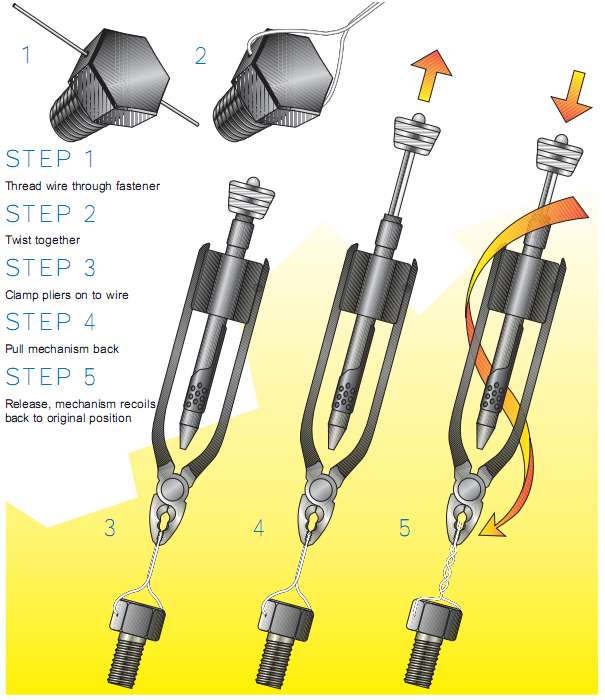
How Safety Wire Pliers Work
The unique design of safety wire pliers allows for quick and uniform wire twists. Here’s how they function:
- Grip the wire: Place the wire between the jaws and squeeze the handles. The locking mechanism holds the wire firmly.
- Twist by pulling: Pull the knob at the end of the handles. As you pull, the pliers spin and twist the wire evenly.
- Cut the wire: Use the built-in cutter to trim excess wire.
This method is much faster and more consistent than twisting wire by hand.
Step-by-step: How To Use Safety Wire Pliers
Let’s break down the process so you can follow along, even if you’re new to the tool.
1. Prepare Your Tools And Work Area
- Gather your safety wire pliers, the correct size of safety wire, and a pair of side cutters.
- Clean the fasteners and the area around them. Dirt or oil can cause problems.
- Make sure the fasteners have pre-drilled holes for the wire. If not, use a drill to create holes.
2. Cut The Right Length Of Wire
- Measure enough wire to pass through all fasteners and leave extra for twisting (usually 6-8 inches).
- Cut with the pliers’ built-in cutter or separate side cutters.
3. Insert Wire Through The Fastener
- Thread the wire through the pre-drilled hole in the bolt or nut.
- Pull the wire through until both ends are even.
4. Form The First Twist
- Cross the wire ends over each other so they overlap.
- Grip the overlapped section with the jaws of the pliers, close the handles, and lock them.
5. Twist The Wire
- Pull the pliers’ knob to start twisting. The jaws will spin, creating even coils.
- Twist until you have 6-8 tight, uniform coils per inch. This is the recommended twist density for most jobs.
Tip: Don’t over-twist. Too many twists can weaken the wire.
6. Route The Wire To The Next Fastener (if Needed)
- After twisting, route one end of the wire to the next bolt or nut that needs to be secured.
- Pass the wire through the second fastener’s hole and repeat the twisting process.
7. Finish And Cut The Wire
- When you reach the last fastener, twist the remaining wire and cut it.
- Tuck the cut end under the wire or against the fastener to avoid sharp edges.
8. Inspect Your Work
- Check that the wire is tight, with no slack.
- Make sure the wire prevents the fastener from turning counterclockwise (loosening).
- Ensure no sharp ends are sticking out.
Common Safety Wiring Patterns
There are several ways to apply safety wire, depending on how many bolts you need to secure and their arrangement.
Single Wire Method
Used for small, low-torque fasteners. The wire passes through one bolt and is twisted, then anchored to a fixed point.
Double Twist Method
Most common. The wire passes through two or more bolts, twisting between each one. This creates a “double helix” look.
Daisy Chain Method
For a row of bolts, such as on a valve cover. The wire is looped and twisted from one bolt to the next, creating a chain.
Example: Double Twist On Two Bolts
- Pass the wire through the first bolt’s hole.
- Twist the wire together for an inch.
- Route one end to the second bolt, pass it through, and twist again.
- Cut and secure the end.
This method “locks” both bolts together, so neither can turn without breaking the wire.
Real-world Example: Motorcycle Brake Caliper Safety Wiring
If you ride motorcycles, especially on the track, you may need to safety wire your brake caliper bolts. Here’s how:
- Remove the bolt and drill a small hole through the head.
- Reinstall the bolt and torque to the manufacturer’s spec.
- Thread 0.032” stainless wire through the hole.
- Use safety wire pliers to twist 6-8 coils per inch.
- Anchor the wire to a nearby fixed point, such as another caliper bolt.
- Trim and tuck the wire end.
A properly wired bolt will not loosen even under intense vibration.
Safety Wire Dos And Don’ts
Even experienced users sometimes make mistakes with safety wire. Here’s what to remember:
Do:
- Use the correct wire size and material.
- Twist evenly; aim for 6-8 twists per inch.
- Anchor wire so it prevents loosening.
- Trim and tuck sharp ends.
Don’t:
- Use wire that is too thin or too thick for the job.
- Over-twist, which can make the wire brittle.
- Leave wire ends sticking out.
- Use damaged or old wire.
Advanced Tips For Using Safety Wire Pliers
Some techniques can make your safety wiring faster and more reliable:
- Practice on scrap bolts before working on real parts. This helps you learn the feel and avoid mistakes.
- Start the first twist by hand before using the pliers. This gives you better control and a neater finish.
- Use needle-nose pliers to tuck sharp wire ends under existing wire.
- Check industry standards for your application. For example, the FAA has specific rules for safety wiring in aviation.
- Change your wire direction to always resist loosening, not tightening.
Insight: Beginners often twist too close to the fastener. Leave a small gap (about 1/16 inch) for the wire to flex without breaking.

Troubleshooting Common Problems
If your safety wire keeps breaking, or doesn’t hold bolts tight, check these issues:
- Wire breaks during twisting: You might be using old wire or twisting too tightly. Use fresh wire and reduce the number of twists per inch.
- Wire is loose: Make sure you’re pulling the wire tight before twisting, and anchor the wire securely.
- Wire comes undone: Check that you’re routing the wire so it prevents loosening, not tightening.
- Jaws slip: Clean the pliers’ jaws, and make sure you’re locking them properly.
Maintaining Your Safety Wire Pliers
A well-kept tool works better and lasts longer. Here’s how to maintain your pliers:
- Clean the jaws after each use to remove wire fragments and oil.
- Lubricate the moving parts (handle, locking mechanism, and return spring) with a light machine oil.
- Sharpen the cutting edge if it becomes dull.
- Store pliers in a dry place to prevent rust.
Well-maintained pliers will twist wire smoothly and cut cleanly.
Comparison: Safety Wire Pliers Vs. Regular Pliers
Many people wonder if they can use regular pliers instead. Here’s a comparison:
| Feature | Safety Wire Pliers | Regular Pliers |
|---|---|---|
| Twist Uniformity | High | Low |
| Speed | Fast | Slow |
| Ease of Use | Easy | Requires Skill |
| Built-in Cutter | Yes | No |
| Locking Mechanism | Yes | No |
Insight: While regular pliers can be used in an emergency, they won’t produce the uniform twists or speed needed for professional work.
Where Safety Wire Pliers Are Used
Safety wire pliers have a wide range of uses:
- Aviation: Securing bolts on engines, landing gear, and flight controls.
- Motorsport: Locking brake, suspension, and drivetrain fasteners.
- Industrial machinery: Preventing nuts and bolts from working loose due to vibration.
- Bicycles: Securing critical parts on race bikes or mountain bikes.
- DIY projects: Anywhere vibration is a risk.
Advanced note: Some industries require documentation and inspection of all safety-wired fasteners.
Choosing The Best Safety Wire Pliers
When buying safety wire pliers, consider these factors:
- Size: 6-inch for small spaces, 9-inch for heavy-duty.
- Quality: Look for hardened jaws and a smooth twisting action.
- Cutting ability: Make sure the cutter is sharp and can handle your wire size.
- Comfort: Ergonomic handles reduce hand fatigue.
Popular brands include Milbar, Proto, and Knipex. If you’re just starting, a mid-priced set is usually a good balance between cost and quality.
Safety Wire Standards And Regulations
Different industries have standards for how safety wire must be applied.
- FAA (aviation): Advisory Circular AC 43.13-1B covers safety wiring for aircraft.
- Motorsport: Sanctioning bodies like the FIM and AMA require safety wiring for certain fasteners.
- Manufacturing: Many companies have their own internal standards.
Important: Always check the latest standards before starting work. For more details, refer to the official FAA AC 43.13-1B.
Mistakes To Avoid
- Wrong wire size: Too thick is hard to twist; too thin can break.
- Improper twist direction: Wire must resist loosening, not tightening.
- Not trimming ends: Exposed wire can cause injury.
- Skipping inspection: Always check your work before using the equipment.
- Using damaged wire: Old or kinked wire is weak.
Beginners often overlook twist direction—always double-check before finishing.
Safety Precautions
- Wear safety glasses when cutting or twisting wire.
- Keep hands clear of sharp wire ends.
- Dispose of wire scraps properly to avoid injuries.
- Don’t reuse wire—always use fresh wire for each job.
Frequently Asked Questions
What Is The Purpose Of Safety Wire Pliers?
Safety wire pliers are used to twist and secure safety wire around fasteners. The main purpose is to prevent bolts and nuts from loosening due to vibration or movement. They make the twisting process faster, more uniform, and safer than using regular pliers.
Can I Use Regular Pliers Instead Of Safety Wire Pliers?
You can, but it’s not recommended. Regular pliers do not twist wire as evenly or as quickly. Safety wire pliers have a special mechanism for consistent twists and a built-in cutter, making them much better for the job.
What Size Wire Should I Use For Safety Wiring?
The most common size is 0.032” stainless steel for aviation and motorsport. For small fasteners, use 0.020” or 0.025”. For heavy-duty jobs, use 0.041”. Always check your industry’s standards for the correct size.
How Many Twists Per Inch Should I Make?
Aim for 6 to 8 twists per inch. This gives enough strength without making the wire brittle. Too many twists can weaken the wire, while too few may not hold fasteners securely.
Is Safety Wiring Required By Law?
In some industries, like aviation, safety wiring is required by law or industry standards. In motorsport, it’s often required by racing organizations. Always check regulations before starting work.
Learning how to use safety wire pliers is a valuable skill that adds real safety to your work. By following the correct steps and understanding the “why” behind each part of the process, you’ll be able to secure fasteners with confidence.
Remember to practice, check your work, and never rush safety wiring. With time, you’ll find that using safety wire pliers becomes second nature—and your equipment will be safer for it.