
The Nissan Titan stands out among full-size pickup trucks for its rugged build, reliable performance, and powerful engines. Whether you use your Titan for heavy-duty work or daily driving, routine maintenance is essential for keeping it running smoothly. One of the most critical aspects of maintenance is managing your engine oil—specifically, knowing your truck’s oil capacity, using the right type of oil, and following proper procedures for oil changes. This guide offers a detailed look at the Nissan Titan oil capacity, why it matters, and everything else you need to know to keep your Titan’s engine healthy.
Understanding Oil Capacity: Why It’s Important
Oil capacity is more than just a number—it’s about engine health and longevity. The engine oil in your Nissan Titan lubricates moving parts, reduces friction, and helps dissipate heat. Using too little oil can lead to poor lubrication, overheating, and serious engine damage. On the other hand, overfilling can cause foaming, increased pressure, and even oil leaks. Knowing the exact oil capacity for your Titan’s engine ensures you’re giving your vehicle the protection it needs.
Many truck owners overlook that oil capacity can vary by model year, engine size, and even by whether the oil filter is changed during the oil change. It’s not a one-size-fits-all answer—details matter.
A helpful example: If you accidentally add just half a quart too much oil, you might not notice a problem right away. But over time, this extra oil can get churned by moving engine parts, creating foam. Foamy oil loses its ability to lubricate, and that can lead to engine wear or even failure. On the other hand, running your engine with less oil than required means parts like bearings, camshafts, and pistons aren’t getting enough protection. This can cause increased friction, more heat, and eventually, expensive repairs.
Many people also don’t realize that some oil is used up between changes. Small leaks or evaporation can lower your oil level over time, which is why checking the dipstick regularly is a smart habit. It’s not just about refilling; it’s about always having the right amount of oil circulating in your engine.
Nissan Titan Engine Variants And Their Oil Capacities
The Nissan Titan has used different engines over the years, each with its specific oil requirements. Here’s how they break down:
1. 5.6l V8 (vk56de) – 2004–2015
This was the original powerhouse engine for the Titan. The oil capacity for this engine is:
- 7.0 quarts (6.6 liters) with filter change
This capacity applies to most 2004–2015 models. If you skip replacing the oil filter, the amount is slightly less, but changing the filter is always recommended.
It’s worth noting that even within this engine generation, there may be slight differences depending on the trim or special editions. Always double-check with your VIN or manual if your truck is a rare model.
2. 5.6l V8 (vk56vd) – 2016–2023
Nissan updated the Titan’s engine for more power and efficiency. The newer 5.6L V8 (VK56VD) requires:
- 7.0 quarts (6.6 liters) with filter change
Despite the engine redesign, the oil capacity remains the same as the previous generation.
This engine includes features like direct injection and variable valve timing, which place extra demands on oil quality. Using the correct amount and type of oil is more important than ever for these advanced engines.
3. 5.0l Cummins V8 Turbo Diesel – 2016–2019 (titan Xd Only)
The Titan XD offered a diesel option for a few years. Its oil needs are different:
- 12.0 quarts (11.4 liters) with filter change
Diesel engines need more oil due to their size and higher operating temperatures.
For diesel owners, remember that the extra oil also means more time spent draining and refilling during changes. It’s not unusual for a diesel oil change to take longer, and you’ll need a bigger drain pan. Diesel engines also generate more soot and contaminants, so using high-quality oil and filters is crucial.
4. 5.6l V8 (vk56vd) – 2024 And Newer
The most recent Titans continue with the 5.6L V8 engine. The oil capacity remains:
- 7.0 quarts (6.6 liters) with filter change
Nissan’s consistency here helps make oil maintenance straightforward for owners of newer Titans.
Nissan Titan Oil Capacity By Model Year And Engine
To help you find your specific oil capacity, here is a summary:
| Model Year | Engine Type | Oil Capacity (with filter) |
|---|---|---|
| 2004–2015 | 5.6L V8 (VK56DE) | 7.0 quarts (6.6 L) |
| 2016–2023 | 5.6L V8 (VK56VD) | 7.0 quarts (6.6 L) |
| 2016–2019 | 5.0L Cummins V8 Diesel | 12.0 quarts (11.4 L) |
| 2024–present | 5.6L V8 (VK56VD) | 7.0 quarts (6.6 L) |
If you have a Titan with an engine swap or modifications, capacities may change. Always check with a mechanic if your setup isn’t stock.
Recommended Oil Types For The Nissan Titan
Choosing the correct engine oil type is as important as knowing the right capacity. Nissan recommends using SAE 0W-20 or 5W-30 for most gasoline engines, depending on your climate and driving style.
- SAE 0W-20: Offers improved fuel efficiency and cold-weather performance. Used in newer models.
- SAE 5W-30: Common for older models and heavy-duty conditions.
- Diesel Engines (5.0L Cummins): Requires SAE 10W-30 specifically formulated for diesel engines.
Always check your owner’s manual for the recommended oil type, as using the wrong oil can reduce engine life and void your warranty.
A real-world example: If you live in a place with cold winters, using 0W-20 will help your engine start more easily and protect it during those first minutes of driving. On the other hand, if you’re towing a trailer in a hot climate, 5W-30 might be better for engine protection.
Synthetic Vs. Conventional Oil
Many Titan owners ask whether to use synthetic oil or conventional oil. Synthetic oils offer better protection, especially in extreme temperatures and heavy-duty use. While conventional oil is acceptable in some older models, most experts recommend synthetic oil for modern Titans, especially if you tow, haul, or drive in hot climates.
Synthetics resist breakdown at high temperatures and keep their viscosity in freezing weather. For example, if you use your Titan for commercial work or regular road trips, synthetic oil can keep your engine cleaner and extend its life. While it costs more, you may also be able to go slightly longer between changes if your driving is mostly highway.
A detail beginners often miss: If you switch to synthetic oil, you can’t ignore the filter. Cheap or old filters can restrict oil flow, even with high-quality oil, so always upgrade both together.
How To Check Oil Level And Top Up Correctly
Even after filling with the correct oil capacity, it’s important to check your oil level regularly. Here’s how to do it right:
- Park the truck on a level surface and turn off the engine.
- Wait at least 5–10 minutes for the oil to settle.
- Pull out the dipstick, wipe it clean, reinsert it fully, then pull it out again.
- The oil should be between the “MIN” and “MAX” marks on the dipstick.
- If it’s low, add oil in small amounts, checking the level each time.
Never overfill—oil expands when hot, and overfilling can cause damage.
A practical tip: Always check your oil level before a long trip or heavy towing. Carry a small funnel and a quart of the correct oil in your truck, just in case.
A less obvious insight: Sometimes, the oil can look clean and still be low. Don’t judge oil level by color alone—always use the dipstick for accuracy.

Credit: wolfchasenissan.com
Oil Change Intervals For The Nissan Titan
Changing your oil on time is key to engine health. Nissan recommends:
- Every 5,000 miles (8,000 km) or 6 months for regular driving
- Every 3,000 miles (5,000 km) if you tow, haul, or drive in severe conditions
Modern synthetic oils can sometimes last longer, but sticking to these intervals is safest. For diesel engines, follow the same guideline unless your owner’s manual states otherwise.
Some drivers try to extend oil changes to 10,000 miles because of synthetic oil marketing. However, short trips, stop-and-go traffic, or dusty roads can break down oil faster than expected. For maximum engine life, don’t gamble—follow the stricter schedule.
An extra tip: Reset your maintenance reminder light after each oil change. This helps you track when the next one is due.
Step-by-step: How To Change Oil In A Nissan Titan
Changing your own oil saves money and helps you understand your truck better. Here’s a practical guide:
Tools And Materials Needed
- Correct amount of engine oil (see above)
- New oil filter (always replace with oil change)
- Oil drain pan
- Wrench or socket set
- Funnel
- Clean rags
- Gloves
A torque wrench is also helpful for tightening the drain plug to the right setting.
Oil Change Steps
- Run the engine for a few minutes to warm up the oil (it flows out more easily).
- Park on a level surface, turn off the engine, and engage the parking brake.
- Place the oil drain pan under the oil pan drain plug.
- Remove the drain plug with a wrench. Let oil drain completely (about 10–15 minutes).
- Replace the drain plug and tighten securely (do not overtighten).
- Remove the old oil filter using an oil filter wrench. Lubricate the rubber gasket of the new filter with a bit of oil, then install by hand.
- Add new oil through the oil filler cap using a funnel.
- Start the engine and let it run for 1–2 minutes. Check for leaks.
- Turn off the engine, wait a few minutes, and recheck the oil level. Top up if needed.
If your Titan has a skid plate, you may need to remove it for easier access to the drain plug and filter. Always replace the skid plate securely after finishing.
Oil Change Tips
- Dispose of old oil properly—never pour it down the drain. Many auto parts stores recycle oil for free.
- Always use a new oil filter with every oil change.
- Hand-tighten the oil filter; over-tightening can cause leaks.
Here’s an extra tip: Smear a thin layer of new oil on the filter’s rubber gasket before installing. This helps create a good seal and makes removal easier next time.
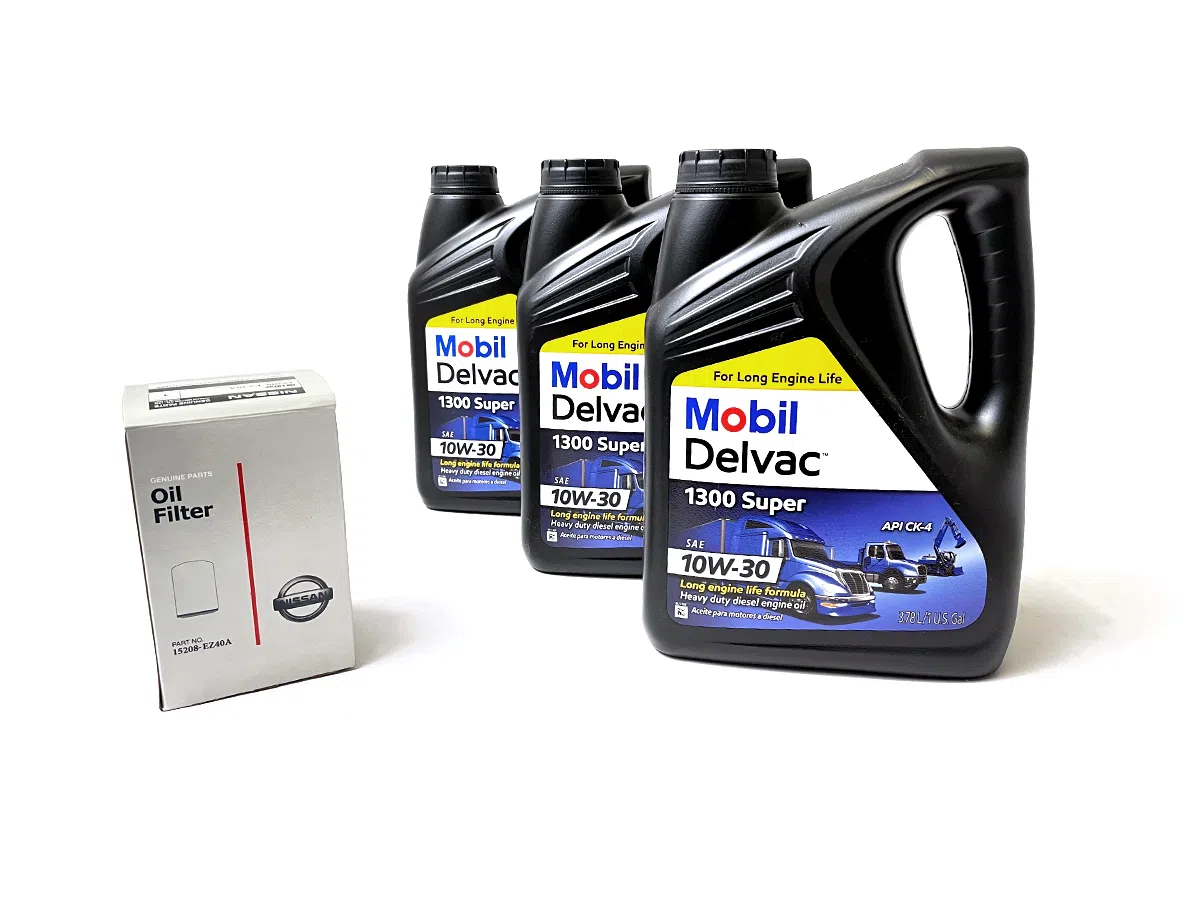
Credit: www.z1offroad.com
Oil Filter Type And Importance
Using the correct oil filter is crucial for keeping your engine clean. Nissan Titans use different filter types depending on engine and model year. Always match the filter to your VIN or consult your owner’s manual.
A high-quality oil filter removes contaminants, metal particles, and sludge, protecting your engine from premature wear. Cheap filters may not provide enough filtration.
Here’s a quick comparison of OEM vs. aftermarket oil filters for the Nissan Titan:
| Filter Type | Filtration Quality | Service Life | Cost |
|---|---|---|---|
| OEM Nissan Filter | High | 5,000–7,500 miles | Medium |
| Premium Aftermarket | High | 5,000–10,000 miles | Medium–High |
| Budget Aftermarket | Lower | 3,000–5,000 miles | Low |
A less obvious insight: Some premium aftermarket filters offer features like synthetic filter media or silicone anti-drainback valves. These help keep oil in the filter when your engine is off, reducing wear at start-up.
Nissan Titan Oil Pan And Drain Plug: What You Should Know
The oil pan and drain plug are often overlooked, but they are essential for a leak-free oil change. The drain plug should always be tightened to the manufacturer’s torque specification—usually between 25–30 ft-lbs. Over-tightening can strip the threads, while under-tightening can cause leaks.
If you notice oil spots under your Titan, check the oil pan and plug for signs of damage or worn gaskets. Replacing a damaged drain plug is cheap insurance against future leaks.
A common mistake: Reusing the old drain plug washer. For just a few dollars, a new washer can prevent leaks and headaches. Some auto parts stores even include a new washer with oil filter kits.
If your drain plug is hard to remove, do not force it. Stuck plugs may need professional attention to avoid stripping or cracking the oil pan.
Common Problems And Mistakes With Titan Oil Changes
Even experienced owners can make mistakes when changing oil. Here are some to avoid:
- Overfilling or underfilling oil: Always measure carefully; check with the dipstick after filling.
- Not replacing the oil filter: Old filters can clog and reduce oil flow.
- Using the wrong oil type: Always match the oil to your engine and climate.
- Forgetting to install the drain plug gasket: This can cause leaks.
- Mixing oil brands or types: Stick with one quality oil per change.
- Improper disposal of old oil: Always recycle responsibly.
A less obvious mistake is not warming up the engine before draining oil. Cold oil drains slowly and can leave more residue inside.
Another detail: Double-check that the old oil filter’s gasket comes off with the filter. If it sticks to the engine, installing the new filter over it can cause leaks almost immediately.
How Oil Quality And Capacity Affect Performance
The right oil capacity and quality affect more than just engine life—they also impact fuel economy, power, and even emissions. Low or dirty oil increases friction, making your engine work harder and burn more fuel. Overfilled oil can create excess pressure, blowing seals and causing leaks.
Regularly using the correct oil type and capacity ensures your Titan runs at its best, with smooth acceleration and reliable towing power. It also keeps your emissions system working properly.
A detail many overlook: Consistent oil changes with high-quality oil can reduce engine noise, especially during cold starts. You may notice your engine sounds smoother and quieter.
Nissan Titan Oil Capacity Compared To Other Trucks
How does the Nissan Titan stack up against other full-size pickups? Here’s a quick look:
| Truck Model | Engine | Oil Capacity |
|---|---|---|
| Nissan Titan | 5.6L V8 | 7.0 quarts (6.6 L) |
| Ford F-150 | 5.0L V8 | 7.7 quarts (7.3 L) |
| Ram 1500 | 5.7L V8 HEMI | 7.0 quarts (6.6 L) |
| Chevrolet Silverado 1500 | 5.3L V8 | 8.0 quarts (7.6 L) |
| Toyota Tundra | 5.7L V8 | 7.4 quarts (7.0 L) |
As you can see, the Titan’s oil capacity is similar to other trucks in its class, making it competitive for both maintenance costs and performance.
A practical takeaway: If you own multiple trucks from different brands, don’t assume the oil capacity is the same. Even small differences matter when it comes to engine health.
How To Extend The Life Of Your Titan’s Engine
Proper oil maintenance does more than just prevent breakdowns. It extends the life of your engine, improves resale value, and ensures reliable performance. Here are practical tips:
- Use only the recommended oil type and capacity.
- Stick to a consistent oil change schedule.
- Check the oil level monthly, especially if you tow or haul heavy loads.
- Replace your oil filter with every oil change.
- Listen for unusual engine noises—tapping or knocking can signal low oil.
An often-missed tip: If you drive in dusty or off-road conditions, you may need more frequent oil changes due to increased contamination.
Another detail: Keep records of all oil changes, including date, mileage, and type of oil used. This not only helps you stay on schedule but also boosts your truck’s value if you ever sell it.

Credit: www.youtube.com
How To Find Your Titan’s Oil Specs
If you’re unsure about your exact oil needs, you can always consult:
- Your owner’s manual (kept in the glove box)
- The label under the hood
- Nissan dealership or service center
- Reliable online resources like Wikipedia
Always verify your information, especially if your Titan has a rebuilt or swapped engine.
Sometimes, local Nissan parts departments can look up your truck’s oil and filter specs by your VIN, which is handy if you’ve lost your manual.
Frequently Asked Questions
How Often Should I Change The Oil In My Nissan Titan?
You should change the oil every 5,000 miles or 6 months, whichever comes first. If you tow, haul, or drive in extreme conditions, change it every 3,000 miles. Always replace the oil filter with each oil change.
What Happens If I Overfill The Oil In My Titan?
Overfilling can cause oil foaming, increased pressure, oil leaks, or even engine damage. If you overfill, drain the excess oil and check the dipstick to ensure the level is correct.
Can I Use Synthetic Oil In My Nissan Titan?
Yes, synthetic oil is recommended for most modern Titans. It provides better protection, especially in extreme temperatures or heavy-duty use. Check your owner’s manual for the recommended oil specification.
Does The Oil Capacity Include The Filter?
Yes, the listed oil capacities include a new oil filter. If you don’t change the filter, the capacity is slightly less, but it’s always best to replace the filter with every oil change.
Where Can I Find More Information About Nissan Titan Maintenance?
You can find detailed information in your owner’s manual, from a Nissan dealership, or trusted online sources like Wikipedia. These resources provide accurate and up-to-date maintenance guidelines.
Taking care of your Nissan Titan’s oil needs is one of the simplest ways to ensure strong performance and a long engine life. By understanding your truck’s oil capacity, using the right oil and filter, and following proper maintenance steps, you’re investing in years of reliable driving.
Whether you do your own oil changes or trust a mechanic, being informed puts you in control of your Titan’s health.