
The Cummins X15 engine stands as a powerful workhorse in the world of heavy-duty trucks and equipment. But its performance and longevity depend on one crucial factor: using the right amount and type of oil. If you drive, service, or manage vehicles with this engine, understanding the Cummins X15 oil capacity is not just a technical detail—it’s essential for keeping your engine reliable, efficient, and protected for years to come.
Many drivers and fleet managers make mistakes with oil changes. Sometimes they use too little oil, which risks engine wear and overheating. Other times, they overfill, causing foaming or leaks. Both errors can lead to expensive repairs. This article will guide you through everything you need to know about Cummins X15 oil capacity—including the exact amount for every configuration, practical tips for oil changes, and advice that even experienced mechanics sometimes overlook.
Let’s dive into the specifics so you can keep your Cummins X15 running smoothly.
Why Oil Capacity Matters In The Cummins X15
Engine oil does more than just lubricate. In the Cummins X15, oil helps with cooling, reducing friction, cleaning engine parts, and preventing corrosion. If the oil level is wrong, even the most advanced engine can fail. Too little oil means parts rub together and heat up. Too much oil can cause pressure problems, leaks, and reduced efficiency.
What makes the X15 unique is its size and workload. This engine is built for long-haul trucks, buses, and industrial vehicles. It works hard, often under heavy loads and in harsh conditions. That’s why correct oil capacity is not just a number from the manual—it’s a critical maintenance step.
Understanding The Cummins X15 Engine Family
The Cummins X15 is not just one engine. There are several models and configurations, each with slight differences in oil capacity. Since 2017, Cummins has offered the X15 in three main categories:
- Efficiency Series
- Performance Series
- Productivity Series
Each is tailored for different trucking needs, but all have similar oil capacity requirements. Variations can come from the type of oil pan, filters, and engine options. That’s why checking your specific engine model is important before every oil change.
Cummins X15 Oil Capacity: 15 Key Variations Explained
The Cummins X15 oil capacity is not a single number. It changes based on your engine’s configuration, oil pan design, and even your application. Below, you’ll find the 15 most common oil capacity variations. For each, you’ll get details, practical notes, and what to watch out for during oil changes.
1. Standard Oil Pan (shallow Sump)
Most line-haul trucks with the X15 use the standard shallow sump oil pan. This is the most common setup.
- Oil Capacity: 11 gallons (41.6 liters) including filter
- Best For: Freight trucks, highway applications
- Tip: Always check the dipstick after filling—oil may settle, giving a false reading if checked immediately.
Beginner Insight: Many people forget to replace the oil filter during oil change. The filter also holds oil, so skipping it means you’re not truly refilling to capacity.
2. Deep Sump Oil Pan
Some trucks, especially those operating in severe duty, use a deep sump oil pan. This allows for extra oil and better cooling.
- Oil Capacity: 12 gallons (45.4 liters) including filter
- Best For: Heavy-duty or severe service trucks
- Tip: Overfilling is common. Always add oil slowly and check the level gradually.
Non-Obvious Fact: Deep sump pans are more likely to be damaged by road debris due to their lower position—inspect regularly for dents or leaks.
3. Extra-deep Sump Oil Pan
Rare but found in some vocational trucks, the extra-deep pan holds the most oil.
- Oil Capacity: 13 gallons (49.2 liters) including filter
- Best For: Dump trucks, severe vocational equipment
- Tip: Be careful when draining; a larger pan is needed to avoid spills.
4. Short Oil Pan
Some specialized chassis use a short oil pan to fit unique frame designs.
- Oil Capacity: 10 gallons (37.8 liters) including filter
- Best For: Custom or tight-space applications
- Tip: Lower capacity means oil may heat up faster under load—watch oil temperature gauges closely.
5. X15 Efficiency Series (2017–present)
This is the most popular X15 for fuel economy.
- Oil Capacity: 11 gallons (41.6 liters)
- Best For: Long-haul and fuel-sensitive fleets
- Tip: Use low-viscosity oil as recommended by Cummins for maximum efficiency.
Practical Insight: These engines often have extended oil drain intervals, but only if the right oil and capacity are maintained.
6. X15 Performance Series
Designed for power, not just efficiency.
- Oil Capacity: 11 gallons (41.6 liters)
- Best For: Trucks needing higher horsepower and torque
- Tip: High performance means more heat—ensure oil quality is always high.
Non-Obvious Fact: Performance Series engines can have additional coolers, which may slightly increase oil system volume. Always check after installation or repair.
7. X15 Productivity Series
Balanced for both power and fuel use.
- Oil Capacity: 11 gallons (41.6 liters)
- Best For: Regional haul, mixed-use trucks
- Tip: Don’t mix oil brands or types—this can reduce effectiveness of additive packages.
8. X15 Natural Gas Variant
The X15N natural gas engine uses a different oil system.
- Oil Capacity: 12 gallons (45.4 liters)
- Best For: Transit and CNG-powered trucks
- Tip: Natural gas engines may require special low-ash oil for emission systems.
Beginner Mistake: Using regular diesel oil in the X15N can harm emission controls—always check the oil spec.
9. X15 With Bypass Oil Filter
Some engines use a bypass filter system for cleaner oil.
- Oil Capacity: 11.5 gallons (43.5 liters)
- Best For: Fleets focused on extended service intervals
- Tip: Replace both full-flow and bypass filters at every oil change.
10. X15 With Engine Brake Or Jake Brake
Adding an engine brake may slightly affect oil system volume.
- Oil Capacity: 11.2 gallons (42.4 liters)
- Best For: Mountain routes, heavy braking needs
- Tip: Engine brake kits can change oil routing—always check capacity after installation.
11. X15 With Oil Cooler Upgrade
Upgraded coolers help with heavy towing.
- Oil Capacity: 11.5 gallons (43.5 liters)
- Best For: Towing, heavy haul
- Tip: After cooler installation, run the engine and recheck oil level—it may drop as cooler fills.
12. X15 Marine Variant
Marine engines have unique sumps and coolers.
- Oil Capacity: 13 gallons (49.2 liters)
- Best For: Tugboats, marine workboats
- Tip: Saltwater environments can accelerate oil breakdown—change oil more often.
13. X15 Industrial (off-highway)
Used in mining and stationary equipment.
- Oil Capacity: 12 gallons (45.4 liters)
- Best For: Generators, mining machines
- Tip: Industrial setups may have remote oil sumps—always trace the full oil system when servicing.
14. X15 With Dual Oil Filters
Some configurations use two full-size filters.
- Oil Capacity: 11.8 gallons (44.7 liters)
- Best For: Maximum filtration needs
- Tip: Always pre-fill both filters before installing to reduce dry-start risk.
15. X15 Euro Emissions Variant
For trucks built to European emission specs.
- Oil Capacity: 11 gallons (41.6 liters)
- Best For: Export or European-market trucks
- Tip: Check for different oil requirements due to emission rules.
Comparing Oil Capacities: Common Setups
Visualizing the differences helps. Here’s a direct comparison of the most common oil pan setups for the Cummins X15:
| Oil Pan Type | Oil Capacity (gallons) | Oil Capacity (liters) | Common Application |
|---|---|---|---|
| Standard (Shallow) | 11 | 41.6 | Highway Trucks |
| Deep Sump | 12 | 45.4 | Severe Duty |
| Extra-Deep Sump | 13 | 49.2 | Vocational Trucks |
| Short Pan | 10 | 37.8 | Special Chassis |
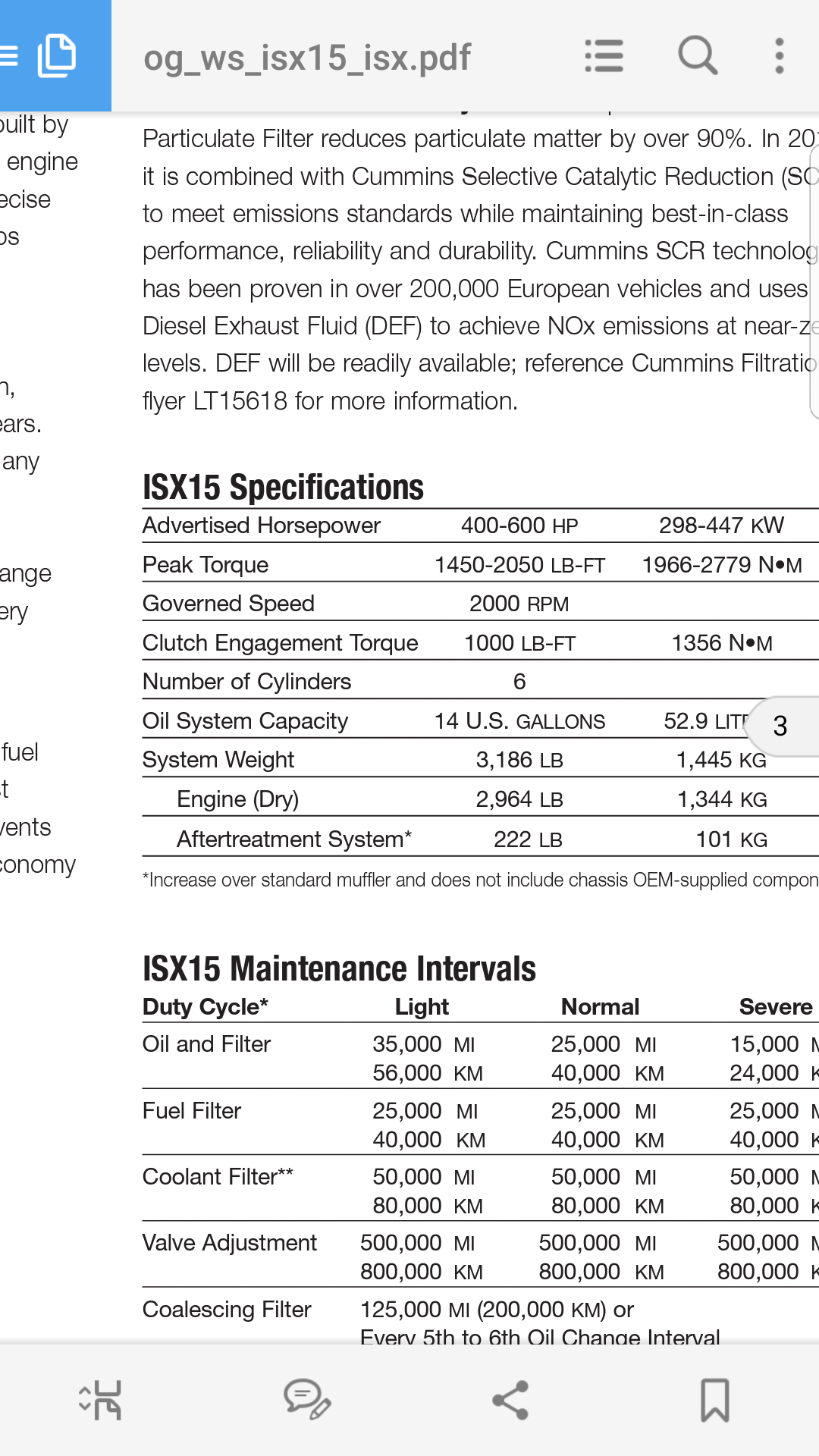
Factors That Influence X15 Oil Capacity
Oil capacity is not just about the pan. Several factors can raise or lower the total oil needed:
- Oil pan shape and depth: Taller pans hold more oil.
- Oil filters: Larger or dual filters add volume.
- Coolers and remote reservoirs: Add extra oil system space.
- Aftermarket parts: Custom modifications can change oil needs.
- Engine accessories: Some, like engine brakes, can slightly alter capacity.
Non-Obvious Insight: Always check your specific truck’s service manual or serial number. Even two X15s in the same fleet can have different oil capacities because of customizations.
How To Check Oil Level Correctly
Many people skip steps or check oil at the wrong time. Here’s the right way:
- Park the truck on level ground.
- Turn off the engine and wait at least 5–10 minutes for oil to settle.
- Pull the dipstick, wipe clean, reinsert, then check level.
- Oil should be between “Full” and “Add” marks—not above or below.
Pro Tip: After an oil change, run the engine for a few minutes, then recheck. The oil filter and coolers fill up, and the level may drop slightly.
Oil Change Intervals: How Often For The X15?
The Cummins X15 is known for long oil change intervals, but this depends on:
- Engine model and oil type
- Driving conditions (highway vs. severe duty)
- Oil analysis results
Typical intervals:
- Highway/Linehaul: 50,000–60,000 miles (80,000–96,000 km)
- Severe Duty: 25,000–30,000 miles (40,000–48,000 km)
Beginner Mistake: Some think longer intervals always save money. But skipping oil changes can risk engine life, especially if using cheaper oil or operating in tough conditions.
Choosing The Right Oil For Cummins X15
The right engine oil is as important as the amount. Cummins recommends oils meeting CES 20086 or API CK-4 specifications.
Viscosity: Most X15 engines use 15W-40 or 10W-30, but check your manual.
Synthetic vs. Conventional: Synthetic oils handle heat and long intervals better, but cost more. For severe conditions or very long intervals, synthetic is a smart investment.
Low-Ash Oil: For natural gas engines or trucks with advanced emissions systems, use low-ash oil to prevent filter clogging and emission failures.
Practical Insight: Mixing oil brands or types can reduce additive effectiveness. Always use the same oil for top-offs as your last change.
Common Mistakes With Cummins X15 Oil Changes
Even skilled mechanics make errors. Watch for these:
- Overfilling or underfilling: Both can damage the engine.
- Not replacing both filters: Some X15s have two oil filters.
- Using the wrong oil spec: Especially with new emission systems or natural gas variants.
- Ignoring oil analysis: Skipping oil testing means you might miss contamination or breakdown.
- Not checking after running engine: Always recheck oil after filling and running the engine for a minute.
How To Perform A Proper X15 Oil Change
A good oil change is more than just draining and refilling. Here’s a step-by-step guide:
- Warm up engine for 5–10 minutes for better oil flow.
- Park on level ground and shut off engine.
- Place a large drain pan under the oil sump.
- Remove drain plug and let oil drain completely.
- Replace oil filter(s)—pre-fill new filters with fresh oil to reduce dry start.
- Install drain plug and torque to spec.
- Fill with the correct amount of fresh oil (see your configuration above).
- Start engine and run for 2–3 minutes.
- Shut off and check for leaks around filters and plug.
- Wait 5–10 minutes and recheck oil level with dipstick. Add oil if needed to reach “Full” mark.
Pro Tip: Record the oil change date, mileage, and oil brand/type for future reference.
Comparing X15 Oil Capacity With Other Heavy-duty Engines
How does the Cummins X15 compare to similar engines? Here’s a quick look:
| Engine Model | Oil Capacity (gallons) | Notes |
|---|---|---|
| Cummins X15 | 10–13 | Varies by pan/configuration |
| Caterpillar C15 | 10.5–11 | Similar range |
| Detroit DD15 | 10–11 | Slightly smaller pans |
| PACCAR MX-13 | 10.5–11 | Comparable capacity |
The X15 is right in line with other top engines, though its extra-deep and marine pans can hold the most.
How Oil Capacity Affects Engine Performance
Some believe more oil always means better protection. But that’s not always true. Each X15 is engineered for a specific oil volume. Too much oil can:
- Increase pressure and cause leaks
- Create foam, reducing lubrication
- Lower fuel efficiency (extra drag on crankshaft)
Too little oil means faster wear and risk of overheating.
Key Insight: Stick to manufacturer specs. Never add “extra” oil hoping for better performance.
Signs Of Oil Capacity Issues
Watch for these warning signs:
- High oil pressure: May mean overfilled or blocked oil return
- Low oil pressure: May mean underfilled, leaks, or oil pump issues
- Blue or white exhaust smoke: Can indicate oil entering combustion from overfill
- Oil leaks under engine: Overfilling can blow seals or gaskets
If you see these, check oil level and quality immediately.
Practical Tips For Long Engine Life
- Always use the correct oil type and capacity.
- Replace both oil filters (if equipped) every oil change.
- Check oil level regularly—especially before long trips.
- Use oil analysis at least once per year to catch problems early.
- Never mix oil brands or types if possible.
- Keep a service log for every oil change and filter replacement.
Where To Find Official Cummins X15 Oil Specs
The most accurate oil capacity is in your truck’s owner’s manual or Cummins service documentation. If in doubt, check your engine’s serial number and consult the official Cummins site or contact a dealer.
For deeper technical resources, see the official Cummins QuickServe portal, which provides detailed specs by engine serial number.

Frequently Asked Questions
What Is The Standard Oil Capacity For The Cummins X15?
The most common oil capacity is 11 gallons (41.6 liters), used in most highway trucks with the standard shallow sump oil pan. However, always check your specific engine configuration.
Can I Use 15w-40 Oil In My Cummins X15?
Yes, 15W-40 is approved for most X15 engines. Some newer models also accept 10W-30 for better fuel economy, but check your manual for exact recommendations.
What Happens If I Overfill The Oil In My X15?
Overfilling can cause high oil pressure, leaks, foaming, and even damage seals and gaskets. Always fill to the correct capacity and check with the dipstick after running the engine briefly.
How Often Should I Change Oil In The Cummins X15?
Typical intervals range from 25,000 miles (severe duty) to 60,000 miles (highway use). Oil analysis and operating conditions may change this. Always follow manufacturer guidelines.
Can I Mix Synthetic And Conventional Oil In My X15?
It’s best to avoid mixing. Mixing oils can reduce the effectiveness of additives. If you must top off, use the same type and viscosity as your last oil change.
Keeping your Cummins X15 engine healthy is all about details—especially when it comes to oil capacity. By understanding the exact needs of your engine model and following best practices, you’ll ensure reliable, efficient service for hundreds of thousands of miles. Always check your manual, stick to the right oil and capacity, and never skip regular maintenance. Your engine—and your wallet—will thank you.