
Owning a Jeep Grand Cherokee is about more than just enjoying off-road adventures and city drives. To keep your Grand Cherokee running smoothly, it’s important to know the right oil capacity for your engine. Using the correct amount of oil can prevent engine damage, improve performance, and extend your vehicle’s life.
However, many drivers don’t realize that oil capacity varies by engine type, year, and even the way you drive. Understanding these details not only saves you money but also helps you avoid costly engine repairs.
What Is Oil Capacity And Why Does It Matter?
Oil capacity is the total amount of engine oil your vehicle needs for safe and efficient operation. For the Jeep Grand Cherokee, this number can be different from one model or engine to another. Engine oil lubricates moving parts, reduces heat, and removes dirt. If you use too little oil, your engine parts can wear out quickly due to friction. If you overfill, the excess oil can cause leaks and damage internal seals.
Many people don’t realize that the Grand Cherokee’s oil capacity is not a “one size fits all” number. Always check your owner’s manual or the oil cap under your hood for the correct specification. In some cases, you might need a little extra oil if you drive in extreme heat or tow heavy loads.
Jeep Grand Cherokee Oil Capacity By Engine Type
The Jeep Grand Cherokee has used several engine types over its long history. Each one has a specific oil capacity, and using the correct amount is key.
3.6l Pentastar V6
This engine is popular in many recent Grand Cherokee models. The 3.6L Pentastar V6 typically needs about 6.0 quarts (5.7 liters) of oil with a filter change. Always use oil that meets Chrysler’s MS-6395 standard for best performance.
5.7l Hemi V8
The 5.7L HEMI V8 is known for its power and towing ability. It requires 7.0 quarts (6.6 liters) of oil with a filter change. Choosing synthetic oil can help this engine last longer, especially if you drive in tough conditions.
6.4l Srt Hemi V8
For drivers who want high performance, the 6.4L SRT HEMI V8 is a favorite. This engine needs 7.0 quarts (6.6 liters) of oil, just like the 5.7L, but always check your manual for the correct oil type and viscosity.
3.0l Ecodiesel V6
The 3.0L EcoDiesel V6 is designed for fuel efficiency. It requires 8.0 quarts (7.6 liters) of oil with a filter change. Diesel engines often need more oil because of their higher working pressures.
Older Engines (4.0l I6, 4.7l V8)
If you have an older Grand Cherokee, you might have a 4.0L Inline-6 or a 4.7L V8. The 4.0L I6 takes about 6.0 quarts (5.7 liters), while the 4.7L V8 uses around 6.0 quarts (5.7 liters) as well.
Hybrid And 4xe Models
Newer Grand Cherokee 4xe plug-in hybrid models often use engines based on the 2.0L turbocharged I4. These typically need 5.5 quarts (5.2 liters), but always confirm with your specific year and trim.
Model Year Differences
Jeep has updated the Grand Cherokee many times since its launch in 1993. Oil capacities have changed, especially as new engines and technologies appeared.
- 1993–1998: Most models used the 4.0L I6 (6.0 quarts) or 5.2L V8 (5.0 quarts).
- 1999–2004: Choices included the 4.0L I6 (6.0 quarts), 4.7L V8 (6.0 quarts), and 4.7L High Output (6.0 quarts).
- 2005–2010: Engines included the 3.7L V6 (5.0 quarts), 4.7L V8 (6.0 quarts), 5.7L HEMI (7.0 quarts), and 6.1L SRT8 (7.0 quarts).
- 2011–2021: Most models switched to the 3.6L Pentastar V6 (6.0 quarts), 5.7L HEMI (7.0 quarts), 6.4L SRT V8 (7.0 quarts), and 3.0L EcoDiesel (8.0 quarts).
- 2022–present: Includes the 3.6L V6, 5.7L V8, 2.0L Turbo 4xe (5.5 quarts), and 3.0L EcoDiesel.
Older models may have different oil needs due to design and age. Always double-check with your manual or a trusted mechanic.
Oil Capacity Comparison By Engine And Year
Here is a quick reference comparing oil capacities for popular Jeep Grand Cherokee engines across different years:
| Engine | Years Used | Oil Capacity (Quarts) |
|---|---|---|
| 4.0L Inline-6 | 1993–2004 | 6.0 |
| 4.7L V8 | 1999–2010 | 6.0 |
| 5.7L HEMI V8 | 2005–present | 7.0 |
| 6.4L SRT V8 | 2012–present | 7.0 |
| 3.6L Pentastar V6 | 2011–present | 6.0 |
| 3.0L EcoDiesel V6 | 2014–present | 8.0 |
| 2.0L Turbo 4xe | 2022–present | 5.5 |
How To Check Your Jeep Grand Cherokee’s Oil Level
Knowing the oil capacity is important, but you also need to check your oil level regularly. This helps you spot leaks, burning oil, or other problems before they cause engine damage.
- Park on Level Ground: Make sure your car is on a flat surface for an accurate reading.
- Turn Off the Engine: Wait at least 5 minutes after turning off the engine. This lets oil settle in the pan.
- Find the Dipstick: Pop your hood and look for the yellow or orange dipstick handle.
- Wipe and Re-insert: Pull out the dipstick, wipe it clean, then push it back in all the way.
- Check the Level: Pull the dipstick out again and look at the oil level between the “MIN” and “MAX” marks.
- Add Oil If Needed: If the oil is below “MIN,” add small amounts and recheck.
Non-obvious Tips
- If your Grand Cherokee has an electronic oil sensor (common in newer models), you can check the oil level from the dashboard menu.
- Always use the same type of oil (conventional or synthetic) already in your engine. Mixing oils can reduce performance.
Choosing The Right Oil For Your Grand Cherokee
Oil capacity is only part of the story. The type and grade of oil you use can make a big difference.
Viscosity
Viscosity is how thick or thin the oil is. Most Jeep Grand Cherokees use 5W-20 or 0W-20 for the 3.6L V6, and 5W-20 or 5W-30 for V8 engines. For diesel engines, always use oil that meets FCA’s MS-12991 standard.
Synthetic Vs. Conventional
- Synthetic oil lasts longer, handles high temperatures better, and protects your engine more effectively. It is often recommended for newer models or heavy towing.
- Conventional oil is cheaper but requires more frequent changes.
Oem Vs. Aftermarket
OEM (Original Equipment Manufacturer) oils meet all Jeep requirements. Aftermarket oils can be fine, but always check the label for the right specifications.
Oil Filter
Always change the oil filter when you change your oil. Using a high-quality filter prevents dirt from circulating in the engine.
Oil Change Intervals For The Grand Cherokee
How often should you change your oil? This depends on your engine, oil type, and how you drive.
- Standard interval: Jeep often recommends every 7,500 miles (12,000 km) or once a year, whichever comes first, for most engines using synthetic oil.
- Severe conditions: If you often tow, drive off-road, or in very hot/cold weather, change oil every 5,000 miles (8,000 km) or even sooner.
Some newer models have an oil life monitor that tells you when to change oil. Always follow this if your car has it.
Common Mistakes
- Waiting too long between oil changes can cause sludge and engine wear.
- Overfilling oil can foam, reduce lubrication, and trigger warning lights.
- Not replacing the oil filter means dirty oil circulates in the engine.
Signs You Need An Oil Change
Even if you know your oil capacity and follow the schedule, watch for these warning signs:
- Engine noise: Tapping or knocking sounds mean low oil or dirty oil.
- Oil smell inside the cabin: Could mean a leak or burning oil.
- Excess exhaust smoke: Especially bluish smoke, shows oil burning.
- Warning lights: If the oil pressure or check engine light comes on, check your oil immediately.
How To Change Oil In A Jeep Grand Cherokee
Changing oil at home can save money and help you learn more about your vehicle. Here’s how to do it safely:
- Gather Supplies:
- Correct amount and grade of oil
- New oil filter
- Oil catch pan
- Wrench for oil drain plug
- Funnel
- Gloves and rags
- Warm Up the Engine: Let it run for a few minutes to thin the oil.
- Lift the Vehicle: Use ramps or jack stands for access.
- Remove the Drain Plug: Place the catch pan, loosen the plug, and let oil drain.
- Replace Oil Filter: Use the wrench to remove the old filter, rub fresh oil on the new filter’s gasket, and install it.
- Replace Drain Plug: Tighten securely but don’t overtighten.
- Add New Oil: Pour in the correct amount with a funnel.
- Check Level: Start engine for 30 seconds, wait, and check the dipstick. Add oil if needed.
- Dispose of Old Oil: Take used oil to a recycling center.
Practical Tips
- Always wear gloves to avoid burns or skin contact with oil.
- Record the mileage and date of your oil change for future reference.
How Oil Capacity Affects Engine Performance
Many drivers overlook how oil capacity can impact their Grand Cherokee’s performance.
- Too Little Oil: Starves the engine, causes friction, and raises heat. This can quickly ruin bearings and pistons.
- Too Much Oil: Can foam and lead to leaks or even blown seals.
- Right Capacity: Ensures all moving parts are lubricated, the engine stays cool, and the oil filter works properly.
If you notice that your oil gets dirty quickly or the level drops fast, it might signal engine wear or leaks. Early attention can prevent bigger problems.

Oil Capacity And Towing/off-road Use
If you use your Grand Cherokee for towing or frequent off-road driving, oil capacity and quality become even more important.
- Towing puts extra stress on the engine, making oil break down faster.
- Off-roading can cause oil to pick up dust and debris, needing more frequent changes.
- Consider using high-mileage or synthetic oils for better protection.
Some drivers think adding extra oil for towing is smart, but it can actually cause problems. Stick to the recommended capacity, but check the oil more often.
Oil Additives: Do You Need Them?
The market is full of oil additives that promise better performance or longer engine life. For most Grand Cherokees, using a high-quality oil that meets Jeep’s standards is enough. Additives can sometimes cause more harm than good, especially if they change the oil’s viscosity or chemistry.
However, for older engines with leaks or burning oil, certain additives may help. Always check with a professional before adding anything new to your oil.
Understanding Oil Specs And Labels
When you buy oil for your Grand Cherokee, you’ll see many labels:
- API: The American Petroleum Institute sets oil quality standards. Look for “API Certified” or “API SN” for most modern engines.
- ILSAC: For fuel-saving oils, the ILSAC mark is important.
- MS-6395 / MS-12991: These are Chrysler’s standards for gasoline and diesel engines. Make sure your oil meets these.
A common mistake is buying cheaper oil that doesn’t meet these specs. While it might save a little money now, it can cost you much more in engine repairs later.
Common Questions About Jeep Grand Cherokee Oil Capacity
Many owners wonder about special cases or odd situations with oil capacity. Here are some less obvious things to know:
- After engine rebuilds, oil capacity may increase slightly due to new parts or larger oil filters.
- If you change the oil cooler or lines, always check oil level after the first drive. Sometimes extra oil stays in the system.
- Cold climates can make oil thicker. Use the recommended “W” grade for your region.
Oil Capacity And Warranty
Using the correct oil capacity and type is not just about performance—it can affect your Jeep warranty. Dealers may deny engine claims if you use the wrong oil or overfill. Always keep records of your oil changes, including receipts and mileage.
Owner’s Manual Vs. Online Resources
Some websites post different numbers for oil capacity. Always trust your owner’s manual first, or ask a certified Jeep technician. If you need more details, the official Jeep website is a reliable source.
For reference, see the official Jeep Grand Cherokee maintenance guide on the Jeep Maintenance Page.
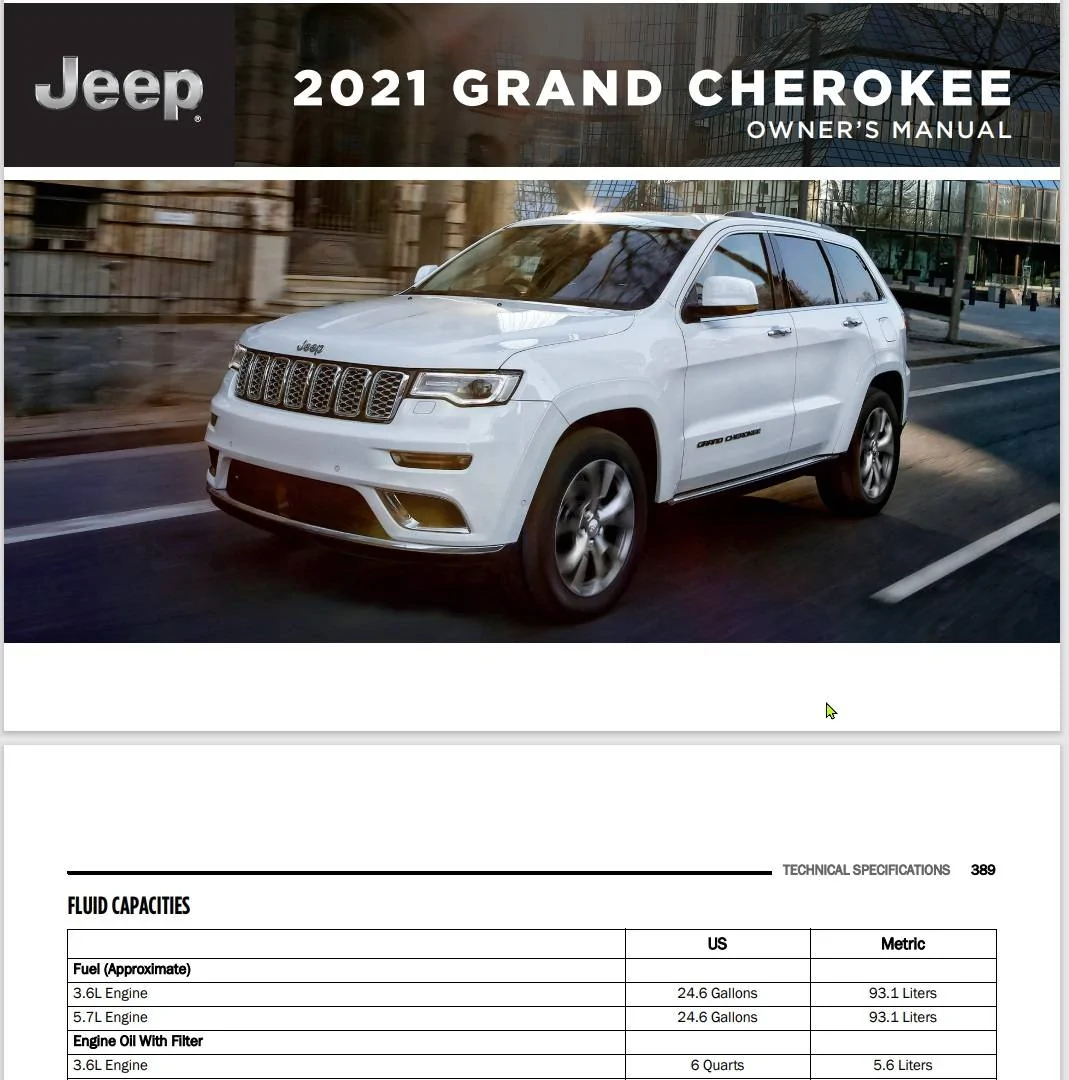
Oil Capacity Table For Recent Jeep Grand Cherokee Engines
To help you quickly find the right oil capacity for your Grand Cherokee, here’s a table with recent engine options:
| Model Year | Engine | Oil Capacity (Quarts/Liters) | Oil Type |
|---|---|---|---|
| 2022–2024 | 3.6L V6 | 6.0 / 5.7 | 0W-20 Synthetic |
| 2022–2024 | 5.7L V8 | 7.0 / 6.6 | 5W-20 Synthetic |
| 2022–2024 | 2.0L Turbo 4xe | 5.5 / 5.2 | 0W-20 Synthetic |
| 2022–2024 | 3.0L EcoDiesel | 8.0 / 7.6 | 5W-40 Synthetic Diesel |
High Mileage Grand Cherokees: Special Considerations
If your Grand Cherokee has over 100,000 miles, you may need to change your oil habits:
- Use high-mileage oils that contain seal conditioners to reduce leaks.
- Check oil level more often—older engines sometimes burn or leak oil.
- Shorten oil change intervals to keep the engine clean.
Some high-mileage owners notice oil capacity drops over time due to sludge buildup. A professional engine flush can help restore normal oil flow.
What To Do If You Overfill Or Underfill Oil
Mistakes happen, and sometimes you add too much or too little oil.
- Overfilled: If you put in too much oil, drain the excess as soon as possible. Driving with too much oil can foam, leading to poor lubrication and engine damage.
- Underfilled: If you add too little, top up immediately. Running low on oil can destroy your engine quickly.
If you’re unsure, a quick visit to a mechanic is cheaper than a new engine.
Diy Or Professional Oil Changes?
You can change your Grand Cherokee’s oil yourself or use a professional service. Doing it at home saves money and lets you control the process. However, professionals have the right tools, and some newer models require computer resets after an oil change.
When To Choose Diy
- You have basic tools and experience.
- Your model year does not need special resets.
When To Choose A Shop
- You want fast, clean service.
- Your Grand Cherokee has a warranty, and you want records for claims.
- Your model has a complex underbody shield or electronic oil monitoring system.

Environmental Concerns: Disposing Used Oil
Never pour used oil down the drain or on the ground. Used oil contains harmful chemicals and can pollute water. Most auto parts stores or recycling centers will take old oil for free.
Cost Of Oil Changes For Jeep Grand Cherokee
The cost of an oil change depends on engine size, oil type, and where you live.
- DIY oil change: $40–$70 for oil and filter.
- Dealer or shop: $80–$160, especially for synthetic oil or diesel engines.
- Diesel engines: Usually cost more due to higher oil capacity and special filters.
Paying more for synthetic oil or a quality filter often pays off by extending engine life.
Frequently Asked Questions
What Happens If I Use Less Oil Than The Recommended Capacity?
If you use less oil than your Grand Cherokee’s engine needs, parts may not get enough lubrication. This causes overheating, faster wear, and can even destroy the engine. Always fill to the correct level shown in your manual.
Can I Use A Different Oil Type If The Recommended One Is Not Available?
It’s best to use the exact oil type and grade listed in your manual. If you must use a different type for a short time, make sure it meets the minimum specs (API, viscosity). Switch back to the recommended oil as soon as possible.
How Do I Know If My Grand Cherokee Has An Electronic Oil Sensor?
Most 2014 and newer Grand Cherokees have electronic oil sensors. You can check oil level from the dashboard menu—look for “Vehicle Info” or “Oil Life. ” Check your manual for exact steps.
Is It Safe To Switch From Conventional To Synthetic Oil?
Yes, it is safe to switch to synthetic oil in your Grand Cherokee. Synthetic oil offers better protection and longer life. Just make sure to use the correct viscosity and change the oil filter at the same time.
How Often Should I Check My Oil Level?
Check your oil at least once a month, or before long trips. For older or high-mileage Grand Cherokees, check every other fuel fill-up. Regular checks help you catch leaks or low oil before they become serious problems.
Taking care of your Jeep Grand Cherokee’s oil needs is one of the simplest ways to protect your investment. Whether you drive a classic model or the latest hybrid, knowing your oil capacity and following the right maintenance steps will keep your engine running strong for years to come.