
Many people who work with wood, metal, or construction tools face a common question: Should I buy a chop saw or a circular saw? At first glance, these two saws might seem similar—they both cut materials using a spinning blade. But when you look closer, each tool has unique strengths and weaknesses. The choice you make can affect how fast you work, the quality of your cuts, and even your safety. Whether you’re a hobbyist, a DIY homeowner, or a professional contractor, understanding the differences will help you buy the right tool and get the best results.
This article takes a deep dive into the chop saw vs circular saw debate. You’ll learn how each saw works, their main uses, what they can and can’t do, and which jobs suit them best. We’ll cover design, power, accuracy, safety, and costs. To make things clearer, you’ll see side-by-side tables and real-world examples. By the end, you’ll have enough knowledge to choose the saw that fits your needs, budget, and skill level—no matter if you’re cutting wood studs for a shed or slicing steel pipe for a big project.
What Is A Chop Saw?
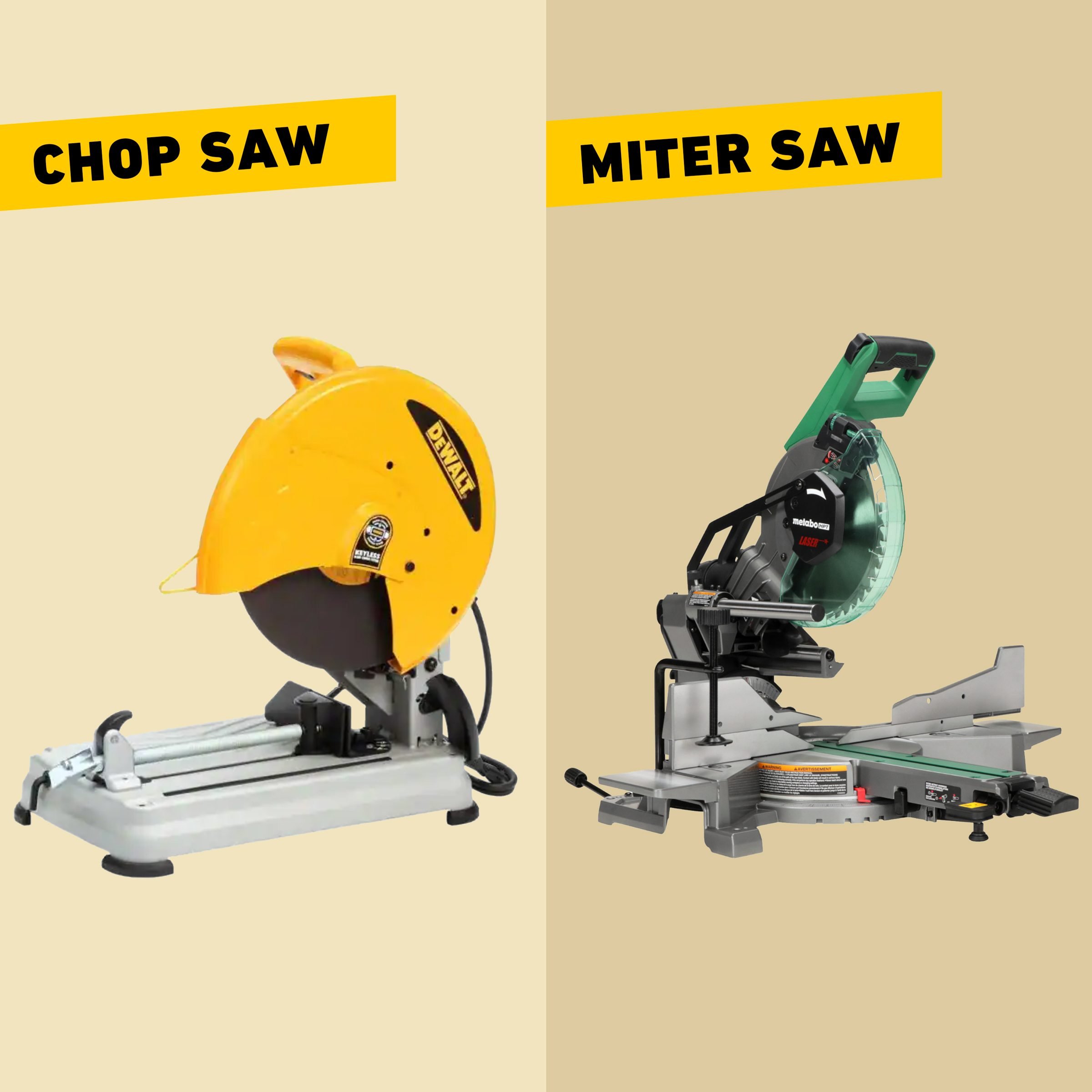
A chop saw is a power tool built mainly for making straight, quick cuts in hard materials. It is sometimes called a cut-off saw or abrasive saw. The design is simple: a large round blade, mounted on a fixed arm, moves down in a straight line to cut through the material placed on its base.
Key Features
- Fixed arm and base: The blade only moves up and down, not side to side.
- Large blade size: Usually 12 to 15 inches in diameter.
- Abrasive or carbide-tipped blade: Abrasive blades cut metal, while carbide-tipped blades can cut wood.
- Powerful motor: Most chop saws have motors between 1,300 and 2,400 watts.
- No bevel or miter cuts: The saw only makes 90-degree cuts (straight up and down).
- Guarded blade: For safety, the blade is usually covered until it is lowered.
Typical Uses
- Cutting metal pipes, rods, and rebar.
- Slicing steel studs or aluminum channels.
- Chopping through hard plastics.
- Making straight cuts in wood, but less common than metal.
Chop saws are common in construction sites, metal workshops, and anywhere fast, straight cuts are needed on tough materials.
Example
Imagine a worker needs to cut 30 pieces of steel pipe, each exactly 18 inches long. With a chop saw, they can line up the pipe, pull down the blade, and finish the task in minutes, with every cut being straight and accurate.
What Is A Circular Saw?
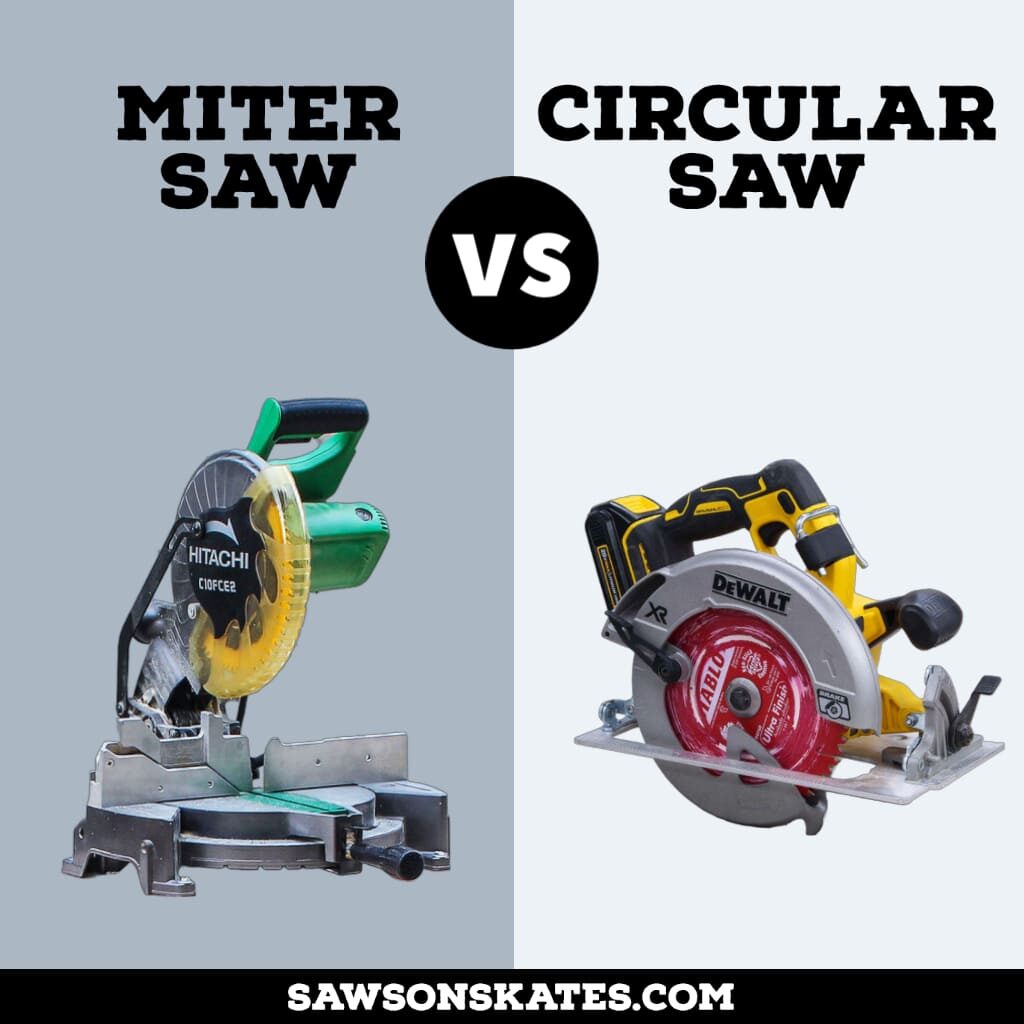
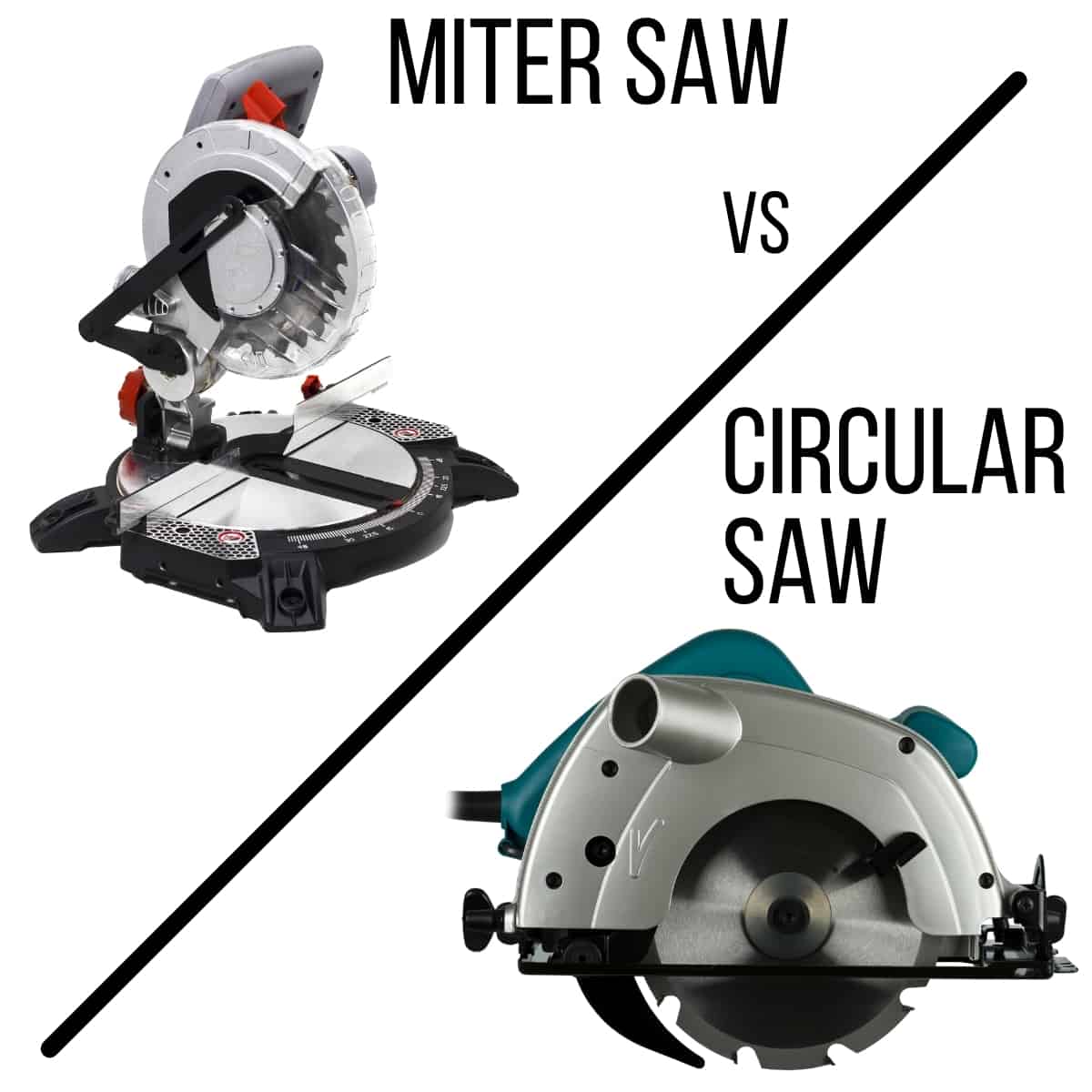
A circular saw is one of the most versatile tools in woodworking and construction. It is a handheld power saw with a spinning, round blade. Unlike a chop saw, you move the saw through the material instead of moving the material into the blade.
Key Features
- Portable and lightweight: Most models weigh between 7 and 12 pounds.
- Blade sizes: Common sizes are 6.5 to 7.25 inches, but some go up to 10 inches.
- Variety of blades: Wood, metal, masonry, and plastic blades are all available.
- Adjustable depth and angle: You can set the depth of the cut and tilt the base for beveled (angled) cuts.
- Corded or cordless: Battery-powered models offer extra freedom.
Typical Uses
- Cutting plywood, 2×4 lumber, and sheet goods.
- Making long, straight cuts (ripping).
- Cutting at angles (bevel cuts).
- Cross-cutting boards or trimming doors.
- Cutting metal, tile, or plastic with special blades.
Circular saws are favorites for carpenters, remodelers, and DIYers because they can handle many different jobs.
Example
Suppose you’re building a bookshelf and need to cut several plywood sheets into different shapes. With a circular saw, you can make long, straight cuts, as well as angled cuts, right on your driveway or in your garage.
Design Differences
Understanding how these saws are built helps you see why they work best for different jobs.
| Feature | Chop Saw | Circular Saw |
|---|---|---|
| Blade Movement | Up and down only | Moves along material |
| Portability | Usually stationary | Handheld, easy to carry |
| Blade Size | 12–15 inches | 6.5–7.25 inches (common) |
| Material Support | Material placed on base | Material often clamped or free |
| Cutting Angles | Only 90° | 0–45° (bevel cuts possible) |
| Dust Collection | Rarely included | Often included or attachable |
| Weight | 30–50 pounds | 7–15 pounds |
One non-obvious insight: Chop saws are not designed for cutting curves or for work that needs high accuracy on small parts. Circular saws, with the right guide, can make both straight and angled cuts, even for tricky shapes.
Power And Performance
The kind of motor and power output affect how each saw handles tough jobs.
Chop Saw Power
Chop saws almost always use high-wattage motors (sometimes called direct-drive motors). These motors can spin the blade at speeds of 3,800–4,000 RPM, which is necessary for slicing through metal. The power also makes them less likely to stall when hitting dense material.
- Most chop saws plug into a 120V or 220V outlet.
- They can cut through steel, iron, and other metals, sometimes up to 4 inches thick.
- Abrasive blades create sparks and heat, but do not get dull as quickly as toothed blades on metal.
Circular Saw Power
Circular saws are available as both corded and cordless models. Corded saws (120V, 10–15 amps) deliver more consistent power, while cordless saws give you more freedom but may struggle on thick hardwood.
- Typical blade speed is 4,000–5,500 RPM.
- Good for wood up to 2.5 inches thick in a single pass.
- With the right blade, can cut thin metal or tile, but more slowly than a chop saw.
Expert insight: For long, repeated cuts in metal, a chop saw’s motor will last longer and overheat less than a circular saw’s. But if you need to move around a lot, a cordless circular saw makes life easier.
Types Of Blades
Both saws use circular blades, but there are key differences in design and use.
Chop Saw Blades
- Abrasive wheels: Look like thick, gritty disks with no teeth. Used for metal and masonry. Wear down over time.
- Carbide-tipped toothed blades: For wood or softer metals. Last longer but cost more.
- Blade size: Usually 14 inches, sometimes 12 or 15 inches.
Circular Saw Blades
- Toothed blades: Most common, for wood. Number of teeth affects smoothness (24 teeth for rough cuts, 60+ for fine cuts).
- Specialty blades: For metal, plastic, or tile. Usually smaller in diameter.
- Blade size: 6.5 and 7.25 inches are standard for most projects.
Pro tip: Blade choice can dramatically change the cut quality. For example, a fine-toothed circular saw blade can make clean plywood cuts with almost no splinters.
Cutting Accuracy And Quality
How straight, smooth, and accurate are the cuts? This is where the saws differ most.
Chop Saw Accuracy
Chop saws are designed to make precise, repeatable straight cuts at 90 degrees. The fixed arm and sturdy base help ensure each cut is consistent. This is perfect for jobs like cutting dozens of steel studs to the same length.
Downside: The saw cannot make angled or beveled cuts, and the cut surface can be rough, especially on metal. Some burrs may need to be filed off after cutting.
Circular Saw Accuracy
Circular saws can be very accurate, but only if you use a guide (like a straight edge or rail). Freehand cuts may wander, especially on long boards.
- With a guide, you can cut sheet goods to within 1/16 inch of your mark.
- Bevel and miter cuts (up to 45 degrees) are possible.
- Blade quality and setup matter: A misaligned blade or bent base will cause rough or crooked cuts.
Beginner’s insight: Many first-time users don’t realize that the weight and angle of the circular saw can cause the blade to bind, especially at the end of a cut. This can ruin accuracy and even damage the workpiece.
Portability And Workspace Needs
Your workspace will also affect which saw is better for you.
Chop Saw Workspace
Chop saws are bulky and heavy. They require a sturdy workbench or stand. Once set up, they don’t move easily. You also need room for long pieces of material to stick out from the base.
- Not practical for small spaces.
- Not easy to carry to different job sites.
Circular Saw Portability
Circular saws are highly portable. You can carry them in one hand and use them almost anywhere—on a roof, in a crawlspace, or even outside on the ground.
- Ideal for moving between rooms or job sites.
- Needs less setup space.
- Works well for cutting sheets too big to fit on a workbench.
Safety Considerations
Both tools can be dangerous, but their risks are different.
Chop Saw Safety
- Sparks and hot metal: Abrasive blades create showers of sparks. Always wear safety glasses and keep flammable materials away.
- Noise: Chop saws are loud (often over 100 decibels). Ear protection is a must.
- Blade guard: Usually covers the blade, but fingers must stay clear of the cutting area.
- Kickback risk: Low, because the blade only moves up and down.
Circular Saw Safety
- Kickback: The spinning blade can grab the material and throw the saw backward. Always keep both hands on the saw.
- Dust and chips: Flying debris is common. Wear eye protection.
- Exposed blade: Part of the blade is always visible during cutting. Keep fingers well away.
- Noise: Still loud, but usually less than a chop saw.
- Common mistake: Beginners sometimes release the trigger before the blade leaves the material, causing the blade to bind and the saw to jerk.
Non-obvious tip: Using a sharp, correct blade reduces the chance of kickback and rough cuts.
Types Of Projects: Which Saw Wins?
Let’s look at which saw is better for common job types.
Building A Deck
- Circular saw: Best choice. You’ll need to cut long boards, rip planks, and make precise angle cuts for stairs.
- Chop saw: Not practical, unless you’re cutting metal railings.
Framing A House
- Circular saw: Essential for cutting wall studs, plywood sheathing, and roof rafters.
- Chop saw: Could help for metal framing, but less useful for wood.
Metalworking
- Chop saw: The clear winner. It can slice through steel, aluminum, and other metals quickly and with little effort.
- Circular saw: Only works on thin metal sheets or with special blades, and is much slower.
Remodeling A Kitchen
- Circular saw: Great for trimming cabinets, cutting countertops, and adjusting shelves.
- Chop saw: Rarely used, except for cutting metal supports.
Cutting Firewood
- Circular saw: Can cut small logs or branches, but a chainsaw is better for large pieces.
- Chop saw: Not suitable.
Cutting Pipes And Conduits
- Chop saw: Excellent for steel or aluminum pipes.
- Circular saw: Can cut PVC or plastic pipes if needed, but takes more effort.
Cost Comparison
The price of the tool—and the cost of using it over time—can be important, especially for beginners or those on a budget.
| Item | Chop Saw | Circular Saw |
|---|---|---|
| Average Tool Cost | $120–$350 | $60–$200 |
| Blade Cost | $10–$40 (abrasive) | $10–$30 (toothed) |
| Operating Cost | Higher (blades wear quickly on metal) | Lower (blades last longer on wood) |
| Maintenance | Low (cleaning, blade changes) | Low (blade changes, occasional lube) |
Pro insight: Chop saws become expensive if you cut a lot of metal, since abrasive blades wear out quickly. Circular saw blades for wood last much longer per dollar.
Pros And Cons At A Glance
To help you decide faster, here’s a side-by-side look at the main advantages and drawbacks.
| Chop Saw | Circular Saw | |
|---|---|---|
| Pros | – Fast, straight cuts in metal – Consistent accuracy – Durable for heavy use – Safer for beginners | – Highly portable – Versatile (wood, plastic, metal) – Can make long, angled cuts – Cheaper to buy and run |
| Cons | – Only straight 90° cuts – Heavy and not portable – Creates sparks (messy) – Noisy operation | – Accuracy depends on user skill – Risk of kickback – Not ideal for thick or hard metal – Blades can bind if misused |
Common Beginner Mistakes
No matter which saw you choose, these errors can lead to bad results—or even accidents.
- Wrong blade choice: Using a wood blade on metal (or vice versa) will quickly ruin the blade and may cause dangerous kickback.
- No guide or support: With circular saws, not using a straight edge leads to crooked cuts.
- Not wearing safety gear: Eye and ear protection are often ignored, leading to injuries.
- Poor material support: If the piece moves during cutting, the blade can bind or cause uneven cuts.
- Cutting too fast: Forcing the blade through the material overheats it, causes rough edges, and can damage the saw.
Experienced users always double-check blade type, use guides, and take their time—especially on long or thick cuts.
How To Choose: Key Questions To Ask Yourself
Before you buy, ask these practical questions:
- What material will I cut most? If it’s mostly metal, choose a chop saw. If it’s wood, a circular saw is better.
- Will I need to move the saw often? If yes, a circular saw is easier to carry.
- Do I need angled or beveled cuts? Only a circular saw (or a miter saw) can do these.
- How much workspace do I have? Small spaces favor a circular saw.
- How important is cut accuracy? For repeatable, straight cuts, a chop saw wins. For flexible cuts, a circular saw is best.
- What’s my budget? Chop saws cost more upfront and in blade replacements.
Real-world Scenarios
Let’s see how the choice plays out in real life.
Scenario 1: Building A Steel Fence
You need to cut dozens of steel posts and rails to size. A chop saw lets you finish the job fast, with every post the same length. A circular saw would struggle, take longer, and burn through blades.
Scenario 2: Remodeling A Living Room
You plan to cut plywood for new walls, trim doorways, and fit shelves. A circular saw is perfect: you can make straight, angled, or curved cuts, and work in tight spots.
Scenario 3: On-site Repairs
You need to cut wood boards and a few aluminum channels while working on a roof. A cordless circular saw is light, easy to carry, and cuts both materials with the right blades. A chop saw would be heavy and hard to set up on a roof.
Maintenance Tips For Both Saws
- Keep blades sharp: Replace or sharpen blades as soon as you notice rough cuts or burning.
- Clean after use: Blow out dust and debris, especially from vents and guards.
- Check alignment: For circular saws, make sure the base and blade are square.
- Lubricate moving parts: If the manual recommends it, use a light oil on hinges and pivots.
- Store safely: Keep saws dry, away from children, and unplugged when not in use.
Unexpected insight: Many chop saw users never clean the abrasive dust, which can build up and damage the motor over time. A quick vacuum after each use extends the saw’s life.
Alternatives: When You Need Something Different
Sometimes, neither a chop saw nor a circular saw is perfect. Here are a few other tools to consider:
- Miter saw: Like a chop saw, but with the ability to make angled and beveled cuts in wood. Great for trim and frame work.
- Table saw: For the straightest, longest cuts in sheet goods. Requires more space.
- Reciprocating saw: For demolition or cutting in tight spots, but not precise.
- Angle grinder: For fast, rough cuts in metal, though less accurate than a chop saw.
Choosing the right tool depends on your main project type, space, and skill level. Don’t buy a more expensive saw if a basic circular saw will do 90% of your work.
Environmental And Health Factors
Both saws create dust, noise, and sometimes fumes. Here’s what to keep in mind:
- Chop saws can produce metal dust and sparks. Always cut in a well-ventilated space.
- Circular saws throw out wood dust, which can cause breathing problems over time. Wear a dust mask, especially when cutting plywood or MDF.
- Noise: Both saws can exceed safe hearing levels. Use ear protection to avoid long-term damage.
For more on tool safety and health guidelines, see the OSHA Power Tools Safety Guide.
Frequently Asked Questions
What Is The Main Difference Between A Chop Saw And A Circular Saw?
A chop saw is designed for making straight, 90-degree cuts in hard materials like metal or thick plastic. It has a fixed arm and is usually stationary. A circular saw is handheld, portable, and can make both straight and angled cuts in wood, plastic, and some metals with the right blade.
Can I Use A Circular Saw Blade In A Chop Saw Or Vice Versa?
No, you should not swap blades between these saws. Chop saws often use abrasive wheels that are not safe in a circular saw. Likewise, circular saw blades may not fit securely or safely on a chop saw, and can be dangerous if used incorrectly.
Which Saw Is Safer For Beginners?
Chop saws are generally safer for straight cuts because the blade is guarded and only moves up and down. Circular saws require more skill to control and have a higher risk of kickback if not used properly.
Can I Use A Chop Saw For Woodworking?
You can use a chop saw with a carbide-tipped blade to cut wood, but it is limited to straight, 90-degree cuts. If you need angled or beveled cuts, a miter saw or circular saw is better suited for woodworking.
What Is The Best Saw For Home Diy Projects?
For most home DIY tasks, a circular saw is more versatile and practical. It can handle a variety of cuts in different materials, is easy to carry, and is more affordable for beginners.
Choosing between a chop saw and a circular saw is all about matching the tool to your main tasks. A chop saw makes straight, repeatable cuts in tough materials fast, while a circular saw offers flexibility, portability, and the ability to cut in many styles and locations. By knowing the strengths and limits of each saw, you can work safer, faster, and with better results—no matter your experience level.