
The Chevy Blazer is a well-known SUV that has served many drivers for decades. Whether you drive a classic model from the 1980s or a modern Blazer rolling out of the factory today, keeping your engine healthy is essential. One detail often overlooked is the oil capacity—the amount of oil your engine needs for optimal performance. Using the right amount of oil keeps your engine running smoothly, helps it last longer, and avoids costly repairs. However, oil capacity can vary greatly depending on your Blazer’s model year, engine size, and even certain trims.
Understanding your vehicle’s oil requirements is not always simple. Owners often feel confused by conflicting information or forget that the same “Chevy Blazer” badge can mean very different engines and specs over the years. This article will give you a complete, in-depth look at Chevy Blazer oil capacity—covering all generations, engines, and practical tips for real-world maintenance.
Whether you’re a new Blazer owner or have been driving one for years, you’ll find everything you need here to keep your SUV in top shape.
Why Oil Capacity Matters For Your Chevy Blazer
Many drivers know they need to change their oil, but few understand why the exact oil capacity is important. Using too little oil can lead to poor lubrication, which increases engine wear and raises the chance of overheating. On the other hand, overfilling with oil can cause high pressure, foaming, or even damage to your engine seals. The right amount of oil balances cooling, cleaning, and lubrication.
Chevy Blazers have been built with a wide range of engines—from simple four-cylinders to powerful V6s and V8s. Each engine has specific oil needs. Modern engines often have tighter tolerances, which means oil level is even more critical. Following the correct capacity helps:
- Prevent engine damage by ensuring all moving parts are lubricated.
- Keep engine temperature stable by helping oil carry heat away.
- Avoid leaks or seal problems from overfilling.
- Maintain fuel efficiency by reducing unnecessary friction.
Chevy Blazer Generations And Engine Types
The Chevy Blazer has changed a lot over the years. To understand oil capacity, it helps to first know which generation and engine you have.
First Generation (1969–1994)
The original K5 Blazer was a full-size SUV, often used off-road or for towing. Engines included inline-6, V8s, and even diesels.
Second Generation (1995–2005)
This era introduced the Chevy S-10 Blazer, a mid-size SUV. Most models had inline-4 or V6 engines.
Third Generation (2019–present)
The Blazer returned as a stylish, modern crossover. You’ll find efficient four-cylinders and strong V6 options.
Each generation and engine needs a different amount of oil, so always match the information to your specific Blazer.
Chevy Blazer Oil Capacity By Model Year And Engine
Many Blazer owners want a simple answer: How much oil does my Blazer need? The truth is, the oil capacity depends on your SUV’s engine and year. Below, you’ll find detailed breakdowns for each generation.
First Generation K5 Blazer (1969–1994)
These classic models mostly used larger, older engines. Oil capacities for common engines:
| Engine | Years Used | Oil Capacity (with filter) | Oil Type |
|---|---|---|---|
| 4.1L Inline-6 | 1969–1984 | 5 quarts (4.7 L) | SAE 10W-30 |
| 5.0L V8 | 1976–1986 | 5 quarts (4.7 L) | SAE 10W-30 |
| 5.7L V8 (350 ci) | 1969–1991 | 5 quarts (4.7 L) | SAE 10W-30 |
| 6.2L Diesel V8 | 1982–1991 | 7 quarts (6.6 L) | SAE 15W-40 Diesel Oil |
Insight: Many owners forget that older Blazers might use thicker oils (like 10W-30 or 15W-40), especially for high-mileage or diesel engines.
Second Generation S-10 Blazer (1995–2005)
These models are more common on the roads today. They use smaller, more modern engines.
| Engine | Years Used | Oil Capacity (with filter) | Oil Type |
|---|---|---|---|
| 2.2L Inline-4 | 1995–2000 | 4.5 quarts (4.3 L) | SAE 5W-30 |
| 4.3L V6 (Vortec) | 1995–2005 | 4.5 quarts (4.3 L) | SAE 5W-30 |
Practical Tip: The 4.3L V6 is by far the most common engine for this era. Even though its oil capacity is similar to the 2.2L, always check your owner’s manual to confirm.
Third Generation (2019–present)
The modern Blazer uses more efficient engines, but oil capacity still varies:
| Engine | Years Used | Oil Capacity (with filter) | Oil Type |
|---|---|---|---|
| 2.5L Inline-4 | 2019–2021 | 5 quarts (4.7 L) | SAE 0W-20 |
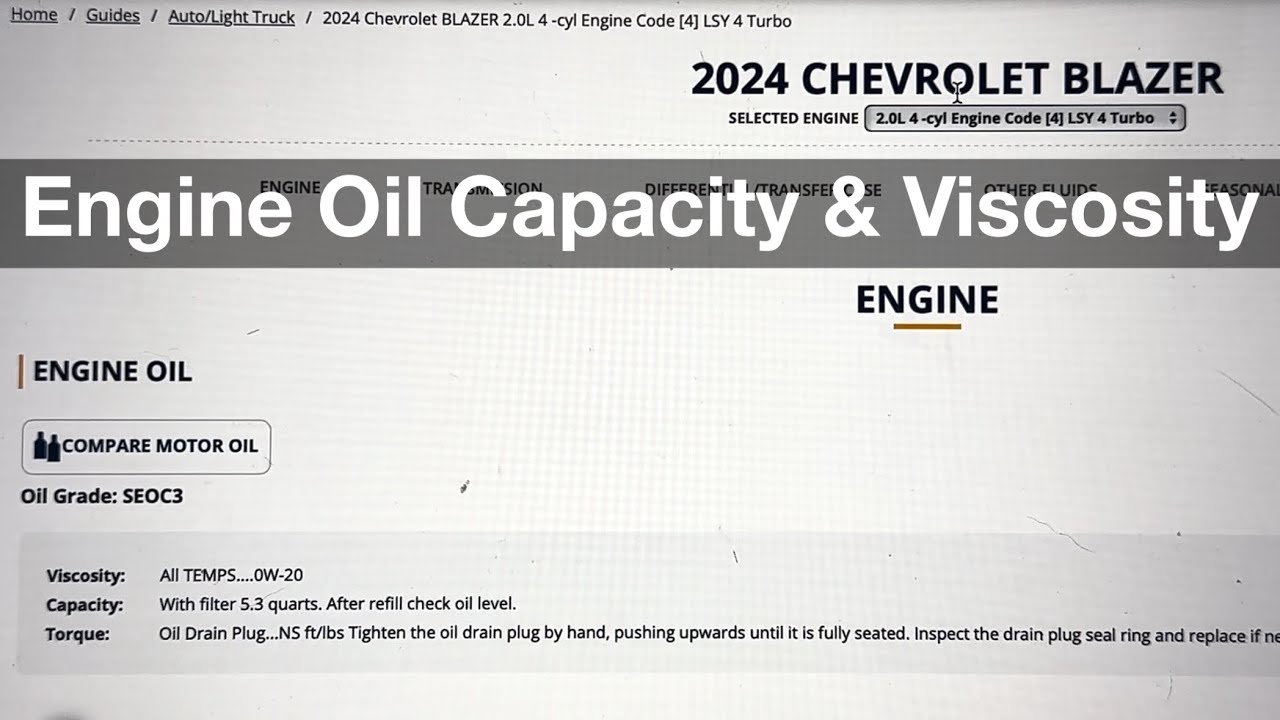
| 2.0L Turbo Inline-4 | 2020–Present | 5 quarts (4.7 L) | SAE 0W-20 |
| 3.6L V6 | 2019–Present | 6 quarts (5.7 L) | SAE 5W-30 |
Non-obvious Insight: The newer Blazers use thinner synthetic oils like 0W-20, which flow better at low temperatures. Don’t use older oil types in these engines.
Special Cases And Limited Editions
Some Blazers, especially those with performance or off-road packages, may have slightly different oil pans or filters. These can change the total oil capacity by up to half a quart. Always double-check your exact trim and option codes. If you’ve upgraded parts or swapped engines, the oil capacity may not match factory specs.
How To Check And Refill Your Chevy Blazer’s Oil
Knowing the oil capacity is just the first step. Checking and refilling your oil correctly is key to engine health.
Step-by-step Guide
- Park on a level surface. Wait at least 10 minutes after turning off the engine for the oil to settle.
- Pull out the dipstick. Wipe it clean, reinsert fully, then pull out again to check the level.
- Check the “full” line. The oil should be between “low” and “full.” If you’re below “full,” add oil in small amounts.
- Add oil slowly. Use a funnel to avoid spills. Add about half a quart at a time, then recheck.
- Do not overfill. Stop when the oil reaches the “full” mark.
Practical Example: If your 3.6L V6 Blazer calls for 6 quarts but you drain only 5.7 quarts during your oil change, top off slowly and keep checking. Small differences can come from old oil stuck in the engine.
Signs Of Incorrect Oil Level
- Low oil: Ticking noises, oil warning light, engine running hot.
- High oil: White smoke, rough idling, or leaks.
Pro Tip: Always check oil after an oil change. Even professional shops sometimes add too much or too little.
Choosing The Right Oil For Your Blazer
Oil capacity is only part of the story. Choosing the correct oil type is just as important. Blazers have used different oil types over the years:
- Older Blazers (pre-2000): Often use conventional 10W-30 or 5W-30 oil.
- Modern Blazers (2019+): Require synthetic oils like 0W-20 or 5W-30.
Conventional Vs. Synthetic Oil
- Conventional oil is cheaper but breaks down faster, especially in hot or cold weather.
- Synthetic oil lasts longer, resists extreme temperatures, and keeps engines cleaner.
Non-obvious Insight: Switching from conventional to synthetic oil can improve cold starts and protect high-mileage engines, but always use the viscosity recommended for your engine.
Oil Filter Choice
Every oil change should include a new filter. Using the wrong filter can cause leaks or poor oil flow. Buy filters designed for your Blazer’s engine year and size.
How Often Should You Change Your Chevy Blazer’s Oil?
There’s no one-size-fits-all answer. Oil change intervals depend on your engine, oil type, and driving habits.
General Guidelines
- Older Blazers (conventional oil): Every 3,000–5,000 miles (5,000–8,000 km)
- Modern Blazers (synthetic oil): Every 7,500–10,000 miles (12,000–16,000 km)
- Severe driving (towing, off-road, city traffic): Change oil more often
Tip: Always reset your oil life monitoring system after each oil change if your Blazer has one.
Real-world Examples Of Chevy Blazer Oil Capacity
To make things clearer, here are some practical scenarios Blazer owners might face:
Example 1: 1999 Chevy S-10 Blazer 4.3l V6
You own a 1999 S-10 Blazer with the common 4. 3L V6. After draining your oil and changing the filter, you add 4. 5 quarts of 5W-30. You check the dipstick, and the level is perfect. If you use a larger aftermarket oil filter, you may need to add an extra 0.
2 quarts.
Example 2: 2022 Chevy Blazer 3.6l V6
You drive a brand-new Blazer with the 3. 6L V6. The owner’s manual says 6 quarts of 5W-30 synthetic oil. After a change, you add exactly 6 quarts, and the dipstick reads “full. ” Your oil life monitor suggests changing oil every 7,500 miles, but you tow a trailer often, so you change it every 5,000 miles instead.
Example 3: 1987 Chevy K5 Blazer 5.7l V8
You’ve restored a classic K5 Blazer. The 5. 7L V8 takes 5 quarts of 10W-30. Since the engine has high mileage, you use a high-mileage formula oil. You check for leaks after each oil change, as older engines sometimes burn or leak oil more quickly.
Common Mistakes When Changing Blazer Oil
Many drivers make small errors that can lead to bigger problems. Avoid these mistakes:
- Ignoring the owner’s manual. Always check your manual for oil specs and capacity.
- Not changing the oil filter. A dirty filter can let debris circulate.
- Overfilling or underfilling. Both can damage your engine.
- Using the wrong oil weight. Modern engines are sensitive to oil viscosity.
- Not resetting the oil life monitor. This leads to missed changes.
Extra Tip: Don’t trust online forums blindly. Specs can change by year or region, so always confirm with official sources.
Understanding Oil Capacity Differences: Why Do They Exist?
You might notice that different sources give slightly different oil capacities. Here’s why:
- Filter size: Larger filters hold more oil.
- Oil pan shape: Some trims or 4WD models have different pans.
- Engine wear: Old engines can “consume” oil, requiring more top-off.
- Aftermarket parts: Custom pans or coolers may change total capacity.
Practical Example: If you swapped your Blazer’s engine or use an oversized oil filter, your capacity will differ from factory numbers.
Signs You Need To Add Or Change Oil
Sometimes, it’s not about miles or time. Watch for these signs:
- Oil warning light comes on.
- Engine noise increases, especially ticking or knocking.
- Oil looks dirty or smells burnt on the dipstick.
- Smoke from the exhaust.
If you notice these, check your oil right away—even if you’re not due for a change.

Credit: www.siddillongm.com
How Oil Capacity Affects Engine Performance
Proper oil capacity is more than just numbers. Here’s what it does for your Blazer:
- Lubrication: Oil forms a film between moving parts, preventing metal-to-metal contact.
- Heat removal: Oil absorbs and transfers heat away from the hottest engine areas.
- Cleaning: Oil carries dirt and combustion byproducts to the filter.
- Efficiency: Engines with the right oil run smoother and use less fuel.
Fact: Even half a quart too little oil can raise engine temperatures and wear, especially on long drives or in hot weather.
Blazer Engine Oil Capacity Quick Reference
For easy reference, here’s a summary of the most common Chevy Blazer engines and their oil capacities:
| Generation | Engine | Years | Oil Capacity |
|---|---|---|---|
| First Gen (K5) | 5.7L V8 | 1969–1991 | 5 quarts (4.7 L) |
| Second Gen (S-10) | 4.3L V6 | 1995–2005 | 4.5 quarts (4.3 L) |
| Third Gen | 3.6L V6 | 2019–Present | 6 quarts (5.7 L) |
Tip: Keep this chart in your glovebox or save a photo on your phone for quick access.
Where To Find Official Oil Capacity Specs
For the most accurate and up-to-date oil capacity information, check these sources:
- Your owner’s manual—the gold standard for your exact vehicle.
- Chevrolet’s official website—use your VIN for specifics.
- On the oil fill cap—some modern Blazers print the oil type and capacity right on the cap.
If you’re buying a used Blazer, ask for service records or check for any aftermarket modifications that might change oil needs.
Environmental Impact: Proper Oil Disposal
Changing oil at home saves money, but never pour old oil down drains or on the ground. Used oil is toxic and can pollute water sources. Most auto parts stores and service centers recycle oil for free.
Extra Insight: It’s illegal in many states to dispose of oil improperly. Recycling used oil is good for the environment and helps keep your local community safe.
Useful Tools And Tips For Diy Blazer Oil Changes
Doing your own oil changes? Make life easier with these tools:
- Oil filter wrench: Makes removing stubborn filters simple.
- Funnel: Reduces spills.
- Drain pan: Catches all old oil for recycling.
- Shop towels: Clean up drips and check for leaks.
- Gloves: Protect your hands from hot oil.
Pro Tip: Warm your engine for a few minutes before draining oil. Warm oil flows better and removes more old contaminants.
What To Do If You Overfill Or Underfill Oil
Mistakes happen. If you overfill your Blazer’s oil:
- Do not drive. Overfilled oil can damage the engine.
- Drain excess oil using the oil pan plug or a siphon tool.
- Recheck the level with the dipstick.
If you underfill:
- Add oil immediately until you reach the “full” mark.
- Monitor for leaks or burning, especially on older engines.
How Oil Capacity Affects Warranty And Maintenance
For newer Blazers, using the correct oil and capacity is required to keep your Chevrolet warranty valid. Keep all oil change receipts and record the mileage. If you ever have a warranty claim, proof of proper maintenance is essential.
Non-obvious Insight: Using the wrong oil type or capacity can void engine coverage, even if the problem isn’t caused by oil. Always stick to what’s recommended for your model.
Chevy Blazer Oil Capacity And Engine Upgrades
Some Blazer owners like to modify their engines for more power or off-road use. Swapping in a larger engine or adding an oil cooler will usually change your oil capacity.
- Aftermarket oil pans may hold more or less oil.
- Auxiliary coolers increase total system capacity.
Advice: Always measure your oil during the first fill after a major upgrade, and note the new amount for future changes.

The Importance Of Oil Viscosity
Oil viscosity (the “weight,” like 5W-30) affects how oil flows at different temperatures. Modern Blazers use thinner oils for better fuel economy and cold starts. Older engines may need thicker oil, especially in hot climates or when worn.
Tip: Never use oil that’s too thick or thin for your engine. It can cause poor lubrication or damage.
Blazer Oil Capacity Compared To Other Suvs
How does the Blazer stack up? Here’s a quick comparison:
| Model | Engine | Oil Capacity |
|---|---|---|
| Chevy Blazer (3.6L V6) | 3.6L V6 | 6 quarts |
| Ford Edge (2.0L EcoBoost) | 2.0L I4 | 5.7 quarts |
| Jeep Grand Cherokee (3.6L V6) | 3.6L V6 | 6 quarts |
| Toyota Highlander (3.5L V6) | 3.5L V6 | 5.8 quarts |
Observation: The Blazer’s oil capacity is right in line with other midsize SUVs, which means maintenance costs are similar.
Credit: www.youtube.com
Where To Learn More
For even deeper info about Chevy Blazers, including oil specs and other maintenance tips, visit the official Chevrolet Website. Here, you can search by your VIN, find owner’s manuals, and see the latest service bulletins.
Frequently Asked Questions
How Do I Know If My Chevy Blazer Is Low On Oil?
Check the oil dipstick regularly, especially if you notice warning lights or engine noises. The oil level should be between the “low” and “full” marks. If it’s below “low,” add oil immediately to prevent damage.
What Happens If I Overfill The Oil In My Blazer?
Too much oil can cause foaming, high pressure, leaks, or engine damage. If you overfill, drain the excess oil and recheck the level before driving.
Can I Use Synthetic Oil In An Older Blazer?
Yes, you can use synthetic oil in older Blazers. It provides better protection and lasts longer. However, always use the correct viscosity (like 5W-30 or 10W-30) for your engine.
How Often Should I Check My Blazer’s Oil Level?
Check your oil every month or before long trips. Older Blazers or high-mileage engines may burn or leak oil faster, so check more often if you notice drops in the oil level.
Does Towing Or Off-roading Affect Oil Capacity Or Change Intervals?
Towing and off-roading put more stress on the engine. While oil capacity stays the same, you should change oil more often under these conditions, usually every 3,000–5,000 miles, even with synthetic oil.
Keeping your Chevy Blazer running well is all about the details. Knowing your exact oil capacity, using the right oil, and changing it on time will keep your SUV strong and reliable for years to come. Take care of your engine, and your Blazer will take care of you on every road and trail ahead.