
The Ford Fusion has become a popular choice among car owners who want a reliable, fuel-efficient, and stylish sedan. One of the most critical aspects of keeping a Ford Fusion running smoothly is regular oil changes. Yet, many Fusion owners are unsure about the oil capacity of their specific model, which oil type to use, and how often to change it. If you want your Fusion to last longer, run better, and avoid costly repairs, knowing the exact oil capacity is essential.
In this article, you’ll learn everything you need to know about the Ford Fusion oil capacity for every engine type and model year. We’ll also cover oil types, practical tips for changing oil, how to check your oil level, common mistakes, and the impact of oil capacity on engine health. Whether you’re a new Fusion owner or an experienced DIY mechanic, you’ll find clear answers and confident guidance here.
Understanding Oil Capacity: What It Means And Why It Matters
Oil capacity is the total amount of oil your car’s engine needs for safe and efficient operation. If you add too little oil, your engine can overheat or wear out quickly. If you add too much, it can cause leaks or damage internal parts. For the Ford Fusion, the correct oil capacity depends on the engine size, model year, and sometimes the type of oil filter used.
The oil system works like the body’s bloodstream—oil flows to every moving part. If there’s not enough, friction increases, and parts can grind together. If there’s too much, the engine can’t move the oil properly, and pressure can build up in places it shouldn’t.
Many beginners make the mistake of guessing or using a “one size fits all” approach. But even a difference of half a quart can affect performance and longevity. That’s why it’s important to know the exact number for your specific Fusion.
Another point many miss: oil capacity is measured with the filter changed. If you forget the filter, you could underfill. This is especially important because a fresh filter holds dirty oil from your last change.
Ford Fusion Oil Capacity By Model Year And Engine
Over the years, the Ford Fusion has been offered with several engines. The oil capacity can vary from 4. 3 quarts to over 6 quarts, depending on the model and engine. Here’s a breakdown covering all major versions, so you’ll never have to guess.
2006–2009 Ford Fusion
These early models came with two main engine options: a 2.3L I4 and a 3.0L V6.
| Model Year | Engine | Oil Capacity (With Filter) | Recommended Oil Type |
|---|---|---|---|
| 2006-2009 | 2.3L I4 | 4.5 quarts (4.3 liters) | 5W-20 |
| 2006-2009 | 3.0L V6 | 6.0 quarts (5.7 liters) | 5W-20 |
Non-obvious insight: Many owners overlook that the oil filter itself holds extra oil. Always check your owner’s manual, as replacing the filter can change the total capacity by up to 0.3 quarts. Also, the older V6 engines tend to consume a bit more oil as they age, so regular checks are important even if you just changed the oil.
2010–2012 Ford Fusion
This generation introduced a 2. 5L I4, continued the 3. 0L V6, and added a 3. 5L V6 for the Fusion Sport.
| Model Year | Engine | Oil Capacity (With Filter) | Recommended Oil Type |
|---|---|---|---|
| 2010-2012 | 2.5L I4 | 5.3 quarts (5.0 liters) | 5W-20 |
| 2010-2012 | 3.0L V6 | 6.0 quarts (5.7 liters) | 5W-20 |
| 2010-2012 | 3.5L V6 | 5.5 quarts (5.2 liters) | 5W-20 |
It’s worth noting that the 3. 5L V6, while close in size to the 3. 0L, has a slightly lower oil capacity. This can catch some DIY mechanics off guard. Using the wrong number could lead to overfilling or underfilling, both of which can stress the engine.
2013–2020 Ford Fusion
These later models offered a wider range of turbocharged EcoBoost engines, hybrids, and a plug-in hybrid option. Oil capacity became more varied.
| Model Year | Engine | Oil Capacity (With Filter) | Recommended Oil Type |
|---|---|---|---|
| 2013-2020 | 1.5L EcoBoost | 4.3 quarts (4.1 liters) | 5W-20 |
| 2013-2020 | 1.6L EcoBoost | 4.3 quarts (4.1 liters) | 5W-20 |
| 2013-2020 | 2.0L EcoBoost | 5.7 quarts (5.4 liters) | 5W-30 |
| 2013-2020 | 2.5L I4 | 5.7 quarts (5.4 liters) | 5W-20 |
| 2013-2020 | 2.7L EcoBoost V6 | 6.0 quarts (5.7 liters) | 5W-30 |
| 2013-2020 | 2.0L Hybrid/Plug-in | 4.5 quarts (4.3 liters) | 0W-20 |
Practical tip: Many newer Fusions have EcoBoost engines, which run hotter and may need more frequent oil changes, even if the capacity is lower. Turbocharged engines, in particular, work under higher stress. If you drive aggressively or in hot climates, keep an eye on oil color and level. Don’t wait for the oil life monitor to tell you—it can’t sense oil condition, only mileage and time.
How To Check Your Ford Fusion’s Oil Level
Even with the correct oil capacity, it’s important to check your oil regularly. This helps catch leaks, burning oil, or other issues before they become serious.
- Park on a level surface. Wait at least 10 minutes after turning off the engine so the oil can settle.
- Open the hood. Find the oil dipstick (usually marked with a yellow or orange handle).
- Pull out the dipstick. Wipe it clean with a cloth.
- Reinsert the dipstick fully. Then pull it out again.
- Check the oil level. Look for oil between the “MIN” and “MAX” marks. The ideal level is close to “MAX” but never above.
It’s also smart to check the oil’s color and consistency. Clean oil looks amber or honey-colored and is almost transparent. If it’s thick, gritty, or very dark, it’s time for a change—regardless of mileage.
Beginner’s mistake: Overfilling the oil can cause foaming and reduce lubrication. If the oil is above “MAX,” remove some before driving. If it’s low, add small amounts and recheck—never add all at once.
A less obvious detail: If you’ve just driven, oil can splash up the dipstick tube, giving a false reading. Always let the car sit for a few minutes before checking.
Choosing The Right Oil Type For Your Fusion
The right oil type is just as important as the correct capacity. Using the wrong viscosity can lead to increased wear or even engine damage. Ford recommends specific oil types for each Fusion engine:
- 5W-20: Most Fusions from 2006-2012, and many 2.5L or EcoBoost engines
- 5W-30: 2.0L and 2.7L EcoBoost engines (2013+)
- 0W-20: Hybrid and plug-in hybrid models
The numbers refer to viscosity, or how easily oil flows at different temperatures. Lower numbers (like 0W-20) flow better in the cold, which is vital for hybrids or in winter climates.
Non-obvious insight: Synthetic oil is usually best for EcoBoost and hybrid engines. It resists heat better and provides longer protection, especially under hard driving or extreme weather. While conventional oil is cheaper, it can break down faster, especially in turbocharged engines. Spending a bit more on synthetic oil often saves money in the long run by protecting your engine.
If you live in an area with very hot or cold temperatures, stick closely to Ford’s oil recommendations. Using a different grade—even one that seems close—can affect starting, fuel economy, and long-term engine health.
The Impact Of Oil Capacity On Engine Health
Some drivers think oil changes are just routine. But the right oil capacity affects much more than just “running smoothly.” Here’s why it matters:
- Lubrication: Oil coats moving parts to reduce friction and wear. Without enough, even a few seconds of dry running can cause damage.
- Cooling: Oil carries heat away from pistons and bearings. Engines run very hot, especially turbocharged ones, and oil helps control temperatures.
- Cleaning: Oil picks up dirt, soot, and metal particles. Too little oil means less cleaning power. Dirty oil or low capacity allows debris to build up, forming sludge.
- Protection: Proper oil level prevents metal-on-metal contact, reducing risk of engine failure. Too much oil can create pressure that forces oil past seals, causing leaks or burning.
If you use too little oil, your engine can overheat, wear out faster, and develop sludge. If you use too much, seals may leak, or the crankshaft can “whip” the oil into foam, starving parts of lubrication.
An overlooked factor: old engines sometimes consume oil between changes. If you notice the level dropping, check for leaks or burning, and top up as needed to avoid damage.
How Often To Change Oil In A Ford Fusion
Most Ford Fusions need oil changes every 5,000 to 7,500 miles (8,000 to 12,000 km), depending on driving habits and oil type. If you drive in stop-and-go traffic, tow, or use your car in hot or cold climates, change the oil more often.
Highway driving is easier on oil, while short city trips are tougher. If you mostly drive short distances, your oil may not heat up enough to evaporate moisture and fuel. This can cause sludge or acid buildup.
Signs It’s Time To Change Your Oil
- The oil is dark and dirty on the dipstick
- The engine sounds louder or “tappier” than usual
- Your dashboard oil light comes on
- You notice a burning smell or see smoke from the exhaust
Practical tip: Many Fusion models have an oil life monitor in the dashboard. Trust this system, but check the oil manually too—sensors can fail.
Another detail: If you live in a dusty area or drive where roads are dirty, change your oil and filter more often. Dirt can enter the engine and speed up oil breakdown.
Ford Fusion Oil Change: Step-by-step Guide
Changing your oil at home can save money and help you learn more about your car. Here’s a simple guide for most Ford Fusion models:
Tools And Materials Needed
- Correct amount and type of engine oil (see tables above)
- New oil filter (specific to your engine)
- Oil drain pan
- Wrench or socket set
- Funnel
- Gloves and rags
Buying a quality oil filter is important. Cheap filters can clog or leak, reducing engine protection.
Steps To Change Oil
- Warm up the engine for a few minutes. This helps the oil drain more easily.
- Lift the car safely. Use ramps or a jack and jack stands.
- Place the drain pan under the oil pan.
- Remove the oil drain plug. Let all the old oil drain out.
- Replace the drain plug and tighten securely.
- Remove the old oil filter. Some oil will spill—be ready.
- Install the new oil filter. Wipe a little new oil on the rubber gasket first.
- Add new oil. Use a funnel, pour in the correct amount, and check the dipstick.
- Start the engine and let it run for 1-2 minutes.
- Check for leaks. Turn off the engine and recheck the oil level. Add more if needed.
If your Fusion has a plastic engine cover, you may need to remove it for access. Always dispose of old oil and filters properly—auto parts stores often accept used oil for recycling.
Approximate Time
Most oil changes on a Ford Fusion take 30 to 45 minutes for beginners. With practice, you may finish faster.
Beginner’s mistake: Forgetting to replace the oil drain plug or over-tightening the oil filter, which can cause leaks. Always hand-tighten filters, then give a final snug turn.
Another tip: After the first drive, recheck the oil level. Sometimes air pockets form during filling, and the level may drop after the engine runs.
Oil Filter: Does It Affect Oil Capacity?
The oil filter does affect the total oil capacity. Most manuals list two numbers: oil capacity “with filter” and “without filter.” Always change the filter with the oil and use the higher number. Using a different brand or size of oil filter can also change the capacity slightly.
If you use an aftermarket filter that’s larger or smaller than the factory filter, adjust the oil fill slightly to match—never blindly fill to the standard amount. Always check the dipstick after filling and running the engine.

Ford Fusion Hybrid And Plug-in Hybrid: Special Considerations
Hybrid and plug-in hybrid Fusions have smaller engines, but oil changes are just as important. Because these engines often stop and start, the oil may not heat up fully, leading to more moisture and contaminants. That’s why using 0W-20 synthetic oil is critical for these models.
Special tip: If you drive mostly short trips in a Fusion Hybrid, change your oil more often—even if the car hasn’t reached the mileage limit. Short trips can cause condensation and fuel to mix with oil, which is especially bad for hybrids.
Also, hybrids have electric motors that reduce engine use, but when the engine does run, it may see higher loads. This makes good oil and filter maintenance even more important.
Common Mistakes When Filling Oil
Many Fusion owners, especially beginners, make simple mistakes when topping up or changing oil:
- Guessing the amount: Always check the manual or use the tables above.
- Mixing oil brands or types: Stick to the same type for best results.
- Forgetting to check the level after filling: Always use the dipstick to confirm.
- Not replacing the oil filter: This leaves old, dirty oil in the system.
- Pouring oil too quickly: This can lead to spills and makes it hard to judge the level. Add slowly and recheck.
- Ignoring oil leaks: If you see oil under your car, don’t ignore it. Even a small leak can lead to a low oil level and engine damage.
Ford Fusion Oil Capacity: Comparison With Similar Sedans
It’s helpful to see how the Fusion’s oil capacity stacks up against other popular sedans in its class.
| Model | Engine | Oil Capacity (With Filter) |
|---|---|---|
| Ford Fusion (2018) | 2.0L EcoBoost | 5.7 quarts |
| Toyota Camry (2018) | 2.5L I4 | 4.8 quarts |
| Honda Accord (2018) | 1.5L Turbo | 3.7 quarts |
| Chevrolet Malibu (2018) | 1.5L Turbo | 4.2 quarts |
| Nissan Altima (2018) | 2.5L I4 | 4.9 quarts |
Insight: The Ford Fusion generally holds a bit more oil than some rivals, especially in turbocharged models. This can be an advantage for cooling and engine protection, but it’s important to keep a closer eye on the level.
A bigger oil capacity usually means a bigger “safety margin” if oil burns or leaks. However, more oil also means more to check and maintain.
What Happens If You Overfill Or Underfill Oil?
Both overfilling and underfilling can cause problems:
- Overfilling: Excess oil can be whipped into foam, reducing lubrication. It can also put pressure on gaskets and seals, causing leaks.
- Underfilling: Not enough oil means some engine parts may not get lubricated, leading to overheating, increased wear, or even engine failure.
If you realize you’ve made a mistake, drain some oil out or add more as needed. Don’t drive long distances until you’re sure the oil level is correct.
Here’s a tip many miss: If you’re unsure, add oil in small amounts and recheck. It’s much easier to add more than to remove excess.
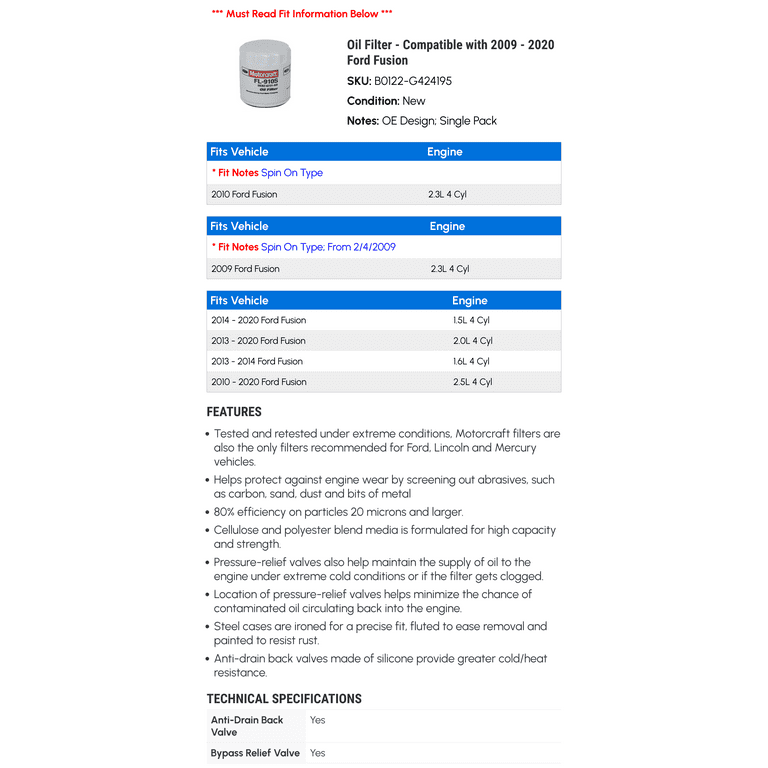
How To Find The Oil Capacity For Your Specific Fusion
If you’re unsure about your car’s engine type or oil capacity, here’s how to find the answer:
- Check your owner’s manual. It lists the exact numbers.
- Look under the hood. Most Fusions have an engine label with size and sometimes oil type.
- Use your VIN. You can enter your VIN on Ford’s official website for details.
- Ask a dealer or mechanic. They can look up your car’s specs quickly.
If you want more technical information, the Wikipedia page for Ford Fusion has full specs for every year and engine.
A less obvious trick: Some online auto parts stores let you enter your car’s year, make, and model to confirm the oil capacity and correct filter.
Tips For Extending Engine Life With Proper Oil Maintenance
If you want your Ford Fusion to last over 200,000 miles, these extra steps will make a difference:
- Stick to the recommended oil change schedule.
- Use high-quality synthetic oil for turbocharged or hybrid models.
- Check for leaks or oil consumption every month.
- Don’t ignore warning lights—they often signal low oil pressure or other issues.
- Use a good oil filter—cheap filters can let dirt into your engine.
- Keep records of oil changes. This helps with resale value and tracking maintenance.
One thing many drivers miss: If you drive mostly short trips, your oil gets dirty faster. In this case, change your oil more often than the manual suggests.
Another tip: Change your oil before long road trips, not after. Fresh oil protects better during highway driving, when the engine works harder and runs hotter.
Frequently Asked Questions
What Is The Oil Capacity Of A 2015 Ford Fusion 2.5l?
The 2015 Ford Fusion 2.5L engine takes 5.7 quarts (5.4 liters) of oil with a new filter. Always confirm with your owner’s manual.
Can I Use 5w-30 Oil In My Ford Fusion If It Calls For 5w-20?
It’s best to use the recommended oil viscosity. Using 5W-30 in a car designed for 5W-20 can affect fuel efficiency and wear. Only use a different oil type if approved by Ford or in an emergency.
How Often Should I Check My Fusion’s Oil Level?
Check your oil level at least once a month or before any long road trip. More frequent checks are wise if your car is older or you notice oil spots where you park.
Is It Okay To Mix Synthetic And Conventional Oil In My Fusion?
Mixing is not recommended. If you start using synthetic oil, continue with it for best results. Mixing different oils can reduce performance and protection.
What Happens If I Put Too Much Oil In My Ford Fusion?
Too much oil can cause foaming, leaks, or even engine damage. If you overfill, remove the excess oil as soon as possible and check for leaks or unusual noises.
Keeping your Ford Fusion running smoothly starts with knowing the correct oil capacity and following good maintenance habits. With the right information and a little care, your Fusion can deliver reliable service for many years.