
Owning a Nissan Frontier means you get a truck that’s tough, reliable, and ready for nearly any job. But to keep your Frontier running smoothly, there’s one simple thing you cannot ignore: the right engine oil and its capacity. Many truck owners overlook this detail until something goes wrong. Using the wrong oil amount can cause poor performance, reduce engine life, and even void your warranty. That’s why knowing the exact Nissan Frontier oil capacity for your model is so important.
This guide gives you everything you need about oil capacity for different Frontier generations and engines. You’ll learn how oil capacity affects performance, how to check and change your oil, common mistakes to avoid, and the best types of oil for your Frontier.
By the end, you’ll have the knowledge and confidence to keep your truck in top condition—saving you money, time, and headaches.
Why Oil Capacity Matters For The Nissan Frontier
Your engine oil is more than just a lubricant. It cools, cleans, seals, and protects moving parts inside your engine. If you run your Nissan Frontier with too little or too much oil, you risk serious problems.
- Too little oil: Parts rub together, overheat, and wear out faster. You could even damage the engine permanently.
- Too much oil: Can create foaming, leaks, or put extra stress on seals and gaskets, leading to costly repairs.
Getting the oil capacity right is a basic but powerful way to protect your truck’s heart. Even small mistakes can add up over time.
Nissan Frontier Oil Capacity By Generation
Over the years, the Nissan Frontier has come with different engines and updates. The oil capacity can change depending on the year, engine size, and whether you’re including the oil filter change. Below, you’ll find the details for every major generation of the Frontier sold in North America.
First Generation (1998–2004)
The first North American Nissan Frontier came with several engine options:
- 2.4L 4-cylinder (KA24DE)
- 3.3L V6 (VG33E/VG33ER)
Here’s a quick reference for oil capacity (with filter):
| Model Year | Engine | Oil Capacity (quarts/Liters) |
|---|---|---|
| 1998–2004 | 2.4L I4 | 3.4 quarts (3.2 L) |
| 1999–2004 | 3.3L V6 | 3.5 quarts (3.3 L) |
| 2001–2004 | 3.3L Supercharged V6 | 3.5 quarts (3.3 L) |
Insight: Many owners mistakenly believe all V6 engines take more oil. But for this generation, both the base and supercharged 3.3L V6 need the same amount.
Second Generation (2005–2021)
This generation saw big updates, including the introduction of new engines:
- 2.5L 4-cylinder (QR25DE)
- 4.0L V6 (VQ40DE)
- Limited 2.5L Diesel (not in US market)
The most common engines and their oil capacities (with filter):
| Model Year | Engine | Oil Capacity (quarts/Liters) |
|---|---|---|
| 2005–2019 | 2.5L I4 | 4.2 quarts (4.0 L) |
| 2005–2021 | 4.0L V6 | 5.4 quarts (5.1 L) |
| 2020 (only) | 3.8L V6 | 5.4 quarts (5.1 L) |
Tip: The 2020 Frontier used a brand-new 3.8L V6 engine for just one year before the third generation. Its oil capacity matches the earlier 4.0L V6—an easy detail to miss.
Third Generation (2022–present)
The newest Frontier gets the advanced 3.8L V6 across all trims. Here’s what you need to know:
- 3.8L V6 (VQ38DD)
Oil capacity (with filter): 5.4 quarts (5.1 L)
Non-obvious insight: Even if you upgrade to off-road or PRO-4X trims, the engine and oil capacity remain the same. Some drivers think the off-road models need more oil, but Nissan keeps it standard across the lineup.
Special Cases And International Models
While most Frontiers sold in the US and Canada use the engines above, international models sometimes feature different options, including small diesels or four-cylinder gasoline engines. Always check your owner’s manual if you have an imported or non-standard model.
How To Check Your Nissan Frontier’s Oil Level
Knowing the right oil capacity is only useful if you check your oil level correctly. Many truck owners get this step wrong, leading to confusion or mistakes during oil changes.
Step-by-step Oil Level Check
- Park on Level Ground: Make sure the truck is on a flat surface.
- Warm Up or Cool Down: Run the engine for a few minutes, then turn it off and wait 5–10 minutes. This lets the oil drain into the pan for an accurate reading.
- Locate the Dipstick: Pull out the engine oil dipstick (usually with a yellow or orange handle).
- Wipe and Reinsert: Wipe the stick clean with a rag, reinsert it fully, then pull it out again.
- Read the Level: Look at the oil on the stick. It should be between the “MIN” and “MAX” marks.
- Check Oil Color and Condition: Good oil is amber or light brown. Dark, gritty oil needs changing.
Non-obvious insight: Checking oil right after driving can give a false high reading, since some oil hasn’t drained back yet. Always wait a few minutes before checking.
How To Change The Oil In A Nissan Frontier
Doing your own oil change saves money and helps you learn more about your truck. Here’s how to do it safely and correctly.
Tools And Materials
- Correct amount and type of engine oil
- New oil filter
- Wrench or socket set
- Oil drain pan
- Funnel
- Gloves and rags
Oil Change Steps
- Warm up the Engine: Let it run for 2–3 minutes to thin the oil.
- Lift the Truck (if needed): For easier access, jack up the front or use ramps. Always use wheel chocks for safety.
- Remove the Drain Plug: Place the pan under the oil pan, then unscrew the drain plug. Let oil drain completely.
- Replace the Oil Filter: Use an oil filter wrench to remove the old filter. Rub a little new oil on the gasket of the new filter, then install it by hand.
- Reinstall the Drain Plug: Tighten it securely, but don’t over-tighten.
- Add New Oil: Pour in the right amount (see tables above) using a funnel.
- Check the Level: Start the engine for 30 seconds, turn it off, wait 5–10 minutes, and recheck the oil level. Top up if needed.
- Dispose of Old Oil Properly: Take used oil and filters to a recycling center.
Tip: Don’t overfill. Add oil in stages and check the level as you go, especially if you’ve replaced the filter or drained the engine for a long time.
Common Mistakes When Dealing With Oil Capacity
Even experienced DIYers and mechanics sometimes make errors that can harm the engine. Here are the most frequent mistakes:
- Guessing the Capacity: Never guess or rely on memory. Always check the manual or use the correct specs.
- Not Changing the Filter: The filter holds old oil. Skipping the filter change means you don’t get the full fresh oil capacity.
- Forgetting to Check Level After Fill: Oil levels can change after the first run. Always check after the engine has circulated the new oil.
- Mixing Oil Types: Don’t mix different oil weights (e.g., 5W-30 with 10W-30). It can affect viscosity and performance.
- Not Accounting for Oil Loss: Older engines may burn or leak small amounts. If you notice regular drops in oil level, check for leaks or engine problems.
Insight: Some mechanics add a little extra oil “just in case.” This is a bad habit—stick to the recommended capacity for best results.
Choosing The Right Oil For Your Nissan Frontier
Oil capacity is only part of the story. Picking the correct oil type is just as important for engine health and performance. Nissan recommends specific oil grades for each engine:
- 2.4L, 2.5L, 3.3L (Older models): 5W-30 or 10W-30 (check manual for climate)
- 4.0L V6 (2005–2019): 5W-30 synthetic or conventional
- 3.8L V6 (2020–present): 0W-20 full synthetic
Why Oil Type Matters
- Viscosity: This refers to how thick or thin the oil is at different temperatures. Modern engines need thinner oil for fuel efficiency and protection.
- Synthetic vs. Conventional: Synthetics last longer, protect better at extreme temperatures, and keep engines cleaner—but cost more.
- Additives: Modern oils have detergents, anti-wear agents, and other chemicals. Using the wrong formula can reduce these benefits.
Tip: Always choose oil with the “API” starburst symbol and “Resource Conserving” label. These meet industry standards for quality and engine protection.
Nissan Frontier Oil Change Intervals
How often should you change your oil? It depends on your engine, driving style, and oil type.
- Older Frontiers (Conventional Oil): Every 3,000–5,000 miles (4,800–8,000 km)
- Newer Frontiers (Synthetic Oil): Every 7,500–10,000 miles (12,000–16,000 km)
- Severe Conditions: If you tow, haul, or drive in extreme heat/cold, change oil more often.
Non-obvious insight: Short trips and lots of idling can be harder on oil than highway driving. Even if you don’t drive much, change your oil at least once a year.
Signs You Might Have The Wrong Oil Level
Sometimes, the symptoms of incorrect oil capacity are subtle. Watch for these warning signs:
- Low Oil Pressure Light: Indicates low oil or a problem with the oil system.
- Noisy Engine: Tapping or knocking sounds can mean not enough oil or poor lubrication.
- Oil Leaks: Overfilling can blow out seals or gaskets, causing leaks under the truck.
- Excess Exhaust Smoke: Too much oil can burn off, creating blue or gray smoke.
- Overheating: Oil helps cool the engine. Low oil means higher temperatures and possible damage.
If you spot any of these issues after an oil change, check the oil level immediately.
Nissan Frontier Oil Capacity Vs. Other Mid-size Trucks
How does the Frontier stack up against competitors? Here’s a quick look at oil capacities for similar trucks:
| Truck | Engine | Oil Capacity (quarts/Liters) |
|---|---|---|
| Nissan Frontier (2022+) | 3.8L V6 | 5.4 quarts (5.1 L) |
| Toyota Tacoma | 3.5L V6 | 6.1 quarts (5.8 L) |
| Ford Ranger | 2.3L Turbo I4 | 6.2 quarts (5.9 L) |
| Chevy Colorado | 3.6L V6 | 6.0 quarts (5.7 L) |
Insight: The Frontier’s oil capacity is a bit lower than some rivals. This is normal and does not mean it’s under-protected. Each engine is designed with its own cooling and lubrication needs.
What Happens If You Overfill Or Underfill Your Nissan Frontier?
Overfilling
- Can cause foaming, which reduces lubrication
- May blow out seals and cause oil leaks
- Increases pressure on gaskets
- May damage the catalytic converter if oil gets burned in the exhaust
Underfilling
- Reduces lubrication and cooling
- Increases wear on moving parts
- Higher risk of overheating or engine seizure
Tip: Always add oil in small amounts and check frequently. It’s much easier to add a little more than to remove excess oil.
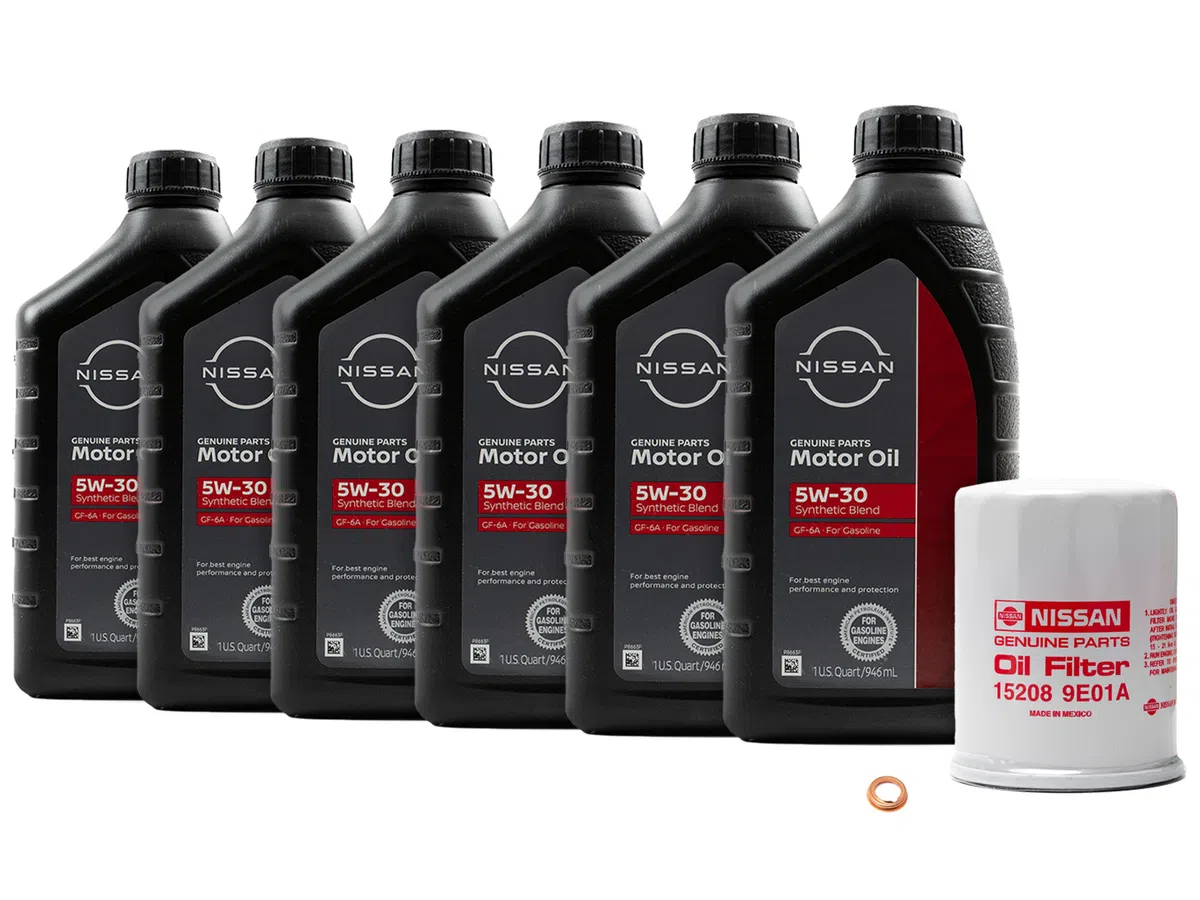
How To Fix An Overfilled Or Underfilled Engine
If you accidentally overfill:
- Do not drive if overfilled by more than 0.5 quarts (0.5 L).
- Drain out the extra oil using the drain plug or a vacuum pump.
- Check the dipstick until the level is in the safe zone.
If underfilled:
- Add oil slowly, check the level, and top up as needed.
Non-obvious insight: Some shops will “suck” oil out through the dipstick tube rather than removing the drain plug. This is cleaner but only works for small corrections.
Frontier Oil Capacity And Filter Size: What You Need To Know
Changing the oil filter is a key part of every oil change. But some owners are unsure which filter to use, or if it affects oil capacity.
- Oil filter size: Most Frontier engines use a standard Nissan filter, but some aftermarket filters are longer or wider. Larger filters may hold a bit more oil.
- Capacity change: The difference is usually small (0.1–0.2 quarts). Always check the oil level after changing to a non-standard filter.
Tip: For best results, use Nissan OEM filters or quality aftermarket brands with the same specs. Cheap filters can leak or clog, causing engine damage.
Tips For Extending Your Frontier’s Engine Life
- Stick to the right oil capacity and type. Don’t experiment with different weights or brands.
- Change oil on time. Skipping intervals increases wear and sludge.
- Check oil level often. Especially before long trips or towing.
- Fix leaks quickly. Even small leaks can lead to big problems.
- Use quality oil and filters. Saving a few dollars on cheap oil can cost you thousands in repairs.
Non-obvious insight: Many owners think synthetic oil means less maintenance. While synthetics last longer, you still need to check the oil level and change it regularly—especially if you drive in tough conditions.
Where To Find Official Nissan Oil Capacity Information
Your owner’s manual is always the final authority for your truck. If you’ve lost it, you can download manuals or find specs at the official Nissan website or trusted auto resources like Nissan USA.
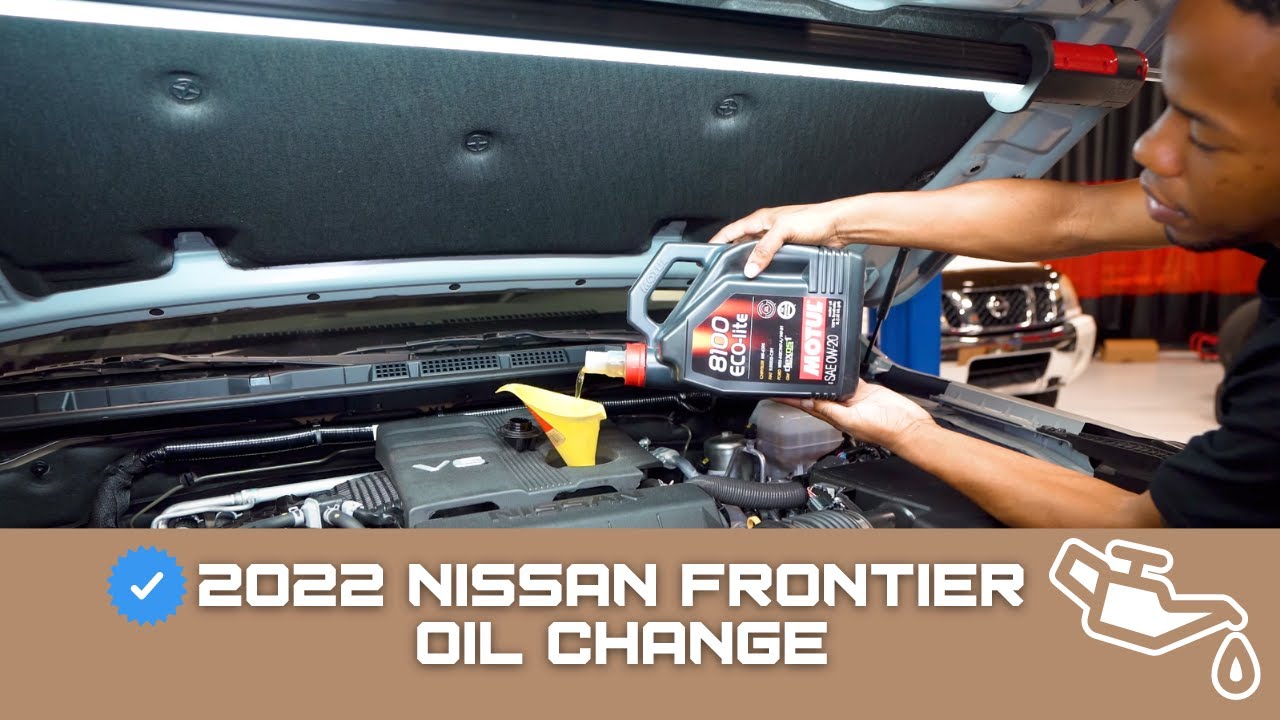
Credit: www.youtube.com
Frequently Asked Questions
What Is The Oil Capacity For The 2022 Nissan Frontier?
The 2022 Nissan Frontier uses the 3.8L V6 engine. Its oil capacity is 5.4 quarts (5.1 liters) with a new oil filter.
Can I Use 5w-30 Instead Of 0w-20 In My Newer Frontier?
Nissan recommends 0W-20 full synthetic for 2020 and newer 3.8L V6 Frontiers. Using 5W-30 may affect fuel economy and warranty coverage. Always use the recommended grade unless you have no other option in an emergency.
How Often Should I Check My Nissan Frontier’s Oil Level?
Check your oil at least once a month, or before long road trips, heavy towing, or after an oil change. More frequent checks are smart for older trucks or high-mileage engines.
Does Oil Capacity Include The Filter?
Yes, listed oil capacities are with a new oil filter installed. If you change only the oil, the required amount will be slightly less—but always top up and check the dipstick to confirm.
What Happens If I Use Too Much Oil In My Frontier?
Overfilling can cause foaming, leaks, and engine damage. If you add too much, drain the excess immediately and keep the oil level between the “MIN” and “MAX” marks on your dipstick.
The Nissan Frontier oil capacity may seem like a small detail, but getting it right helps your truck run better, last longer, and avoid expensive repairs. By following the guidance above, you’ll keep your Frontier ready for any adventure—on the job site or the open road.