
Pressure washers are powerful tools that make cleaning driveways, cars, patios, and houses much faster and easier. But like any machine, they can stop working or lose pressure. Many people feel frustrated when their pressure washer does not start, leaks water, or makes strange noises.
The good news is, most pressure washer problems can be fixed at home with some basic tools and a little know-how.
This guide walks you step-by-step through how to fix a pressure washer, whether it runs on gas or electricity. You will learn how to diagnose common issues, find the right solutions, and avoid mistakes that can make things worse. Even if you are a beginner, you can get your pressure washer running again and save money on repairs.
Let’s dig into the most common pressure washer problems and see how you can solve them yourself.
Safety First: What To Do Before Repairing
Before you start, always think about safety. Pressure washers use high pressure and sometimes electric power or gasoline. Here’s what to do:
- Unplug or turn off your machine before opening any part.
- Release pressure by squeezing the trigger after turning off the washer.
- Wear gloves and eye protection to avoid injury.
- For gas models, disconnect the spark plug wire to stop accidental starting.
- Always read your user manual for model-specific warnings.
Never skip these steps, as pressure washers can cause serious injury if mishandled.
Understanding How Pressure Washers Work
To fix a pressure washer, it helps to know how it works. Most pressure washers have four main parts:
- Motor or engine (electric or gas-powered)
- Water pump
- High-pressure hose
- Spray gun and nozzle
The motor powers the pump, which pushes water at high pressure through the hose and out the spray gun. Problems can happen in any of these parts.
Electric and gas models are similar, but gas models have extra parts like spark plugs, air filters, and carburetors.
Common Pressure Washer Problems And How To Fix Them
Let’s look at the most frequent problems people face and how you can fix each one.
1. Pressure Washer Won’t Start
This is one of the most common issues, especially with gas models. There are several reasons for this problem:
For Electric Pressure Washers
- Check the power supply: Make sure the cord is plugged in and the outlet works.
- Reset the GFCI: Many washers have a ground-fault circuit interrupter. Press the reset button.
- Look for blown fuses or tripped circuit breakers in your home.
For Gas Pressure Washers
- Check fuel level: Add fresh gasoline if low.
- Inspect the spark plug: Remove, clean, or replace if dirty or damaged.
- Air filter: Clean or replace a clogged air filter.
- Choke setting: Use the choke for a cold engine; turn it off after starting.
- Engine oil: Make sure there is enough and it’s clean.
If it still won’t start, check the carburetor for dirt or blockages.
2. Low Pressure Or No Pressure
A pressure washer that sprays weakly or not at all is frustrating. Here are key causes and fixes:
- Clogged nozzle: Dirt can block the nozzle tip. Remove and clean it with a small wire or nozzle cleaning tool.
- Air in the pump: Run the washer with the trigger pressed (machine off) to let water flow and remove air.
- Inlet filter blocked: Check and rinse the filter at the water connection.
- Hose kinks or leaks: Straighten hoses and replace if damaged.
- Wrong nozzle: Use the correct nozzle for the job (usually the green or yellow tip).
If water still does not flow, the pump may be damaged or the unloader valve may need cleaning.
3. Water Leaks
Leaks waste water and can damage your washer. Find out where the leak is:
- From the hose: Replace the hose or O-rings.
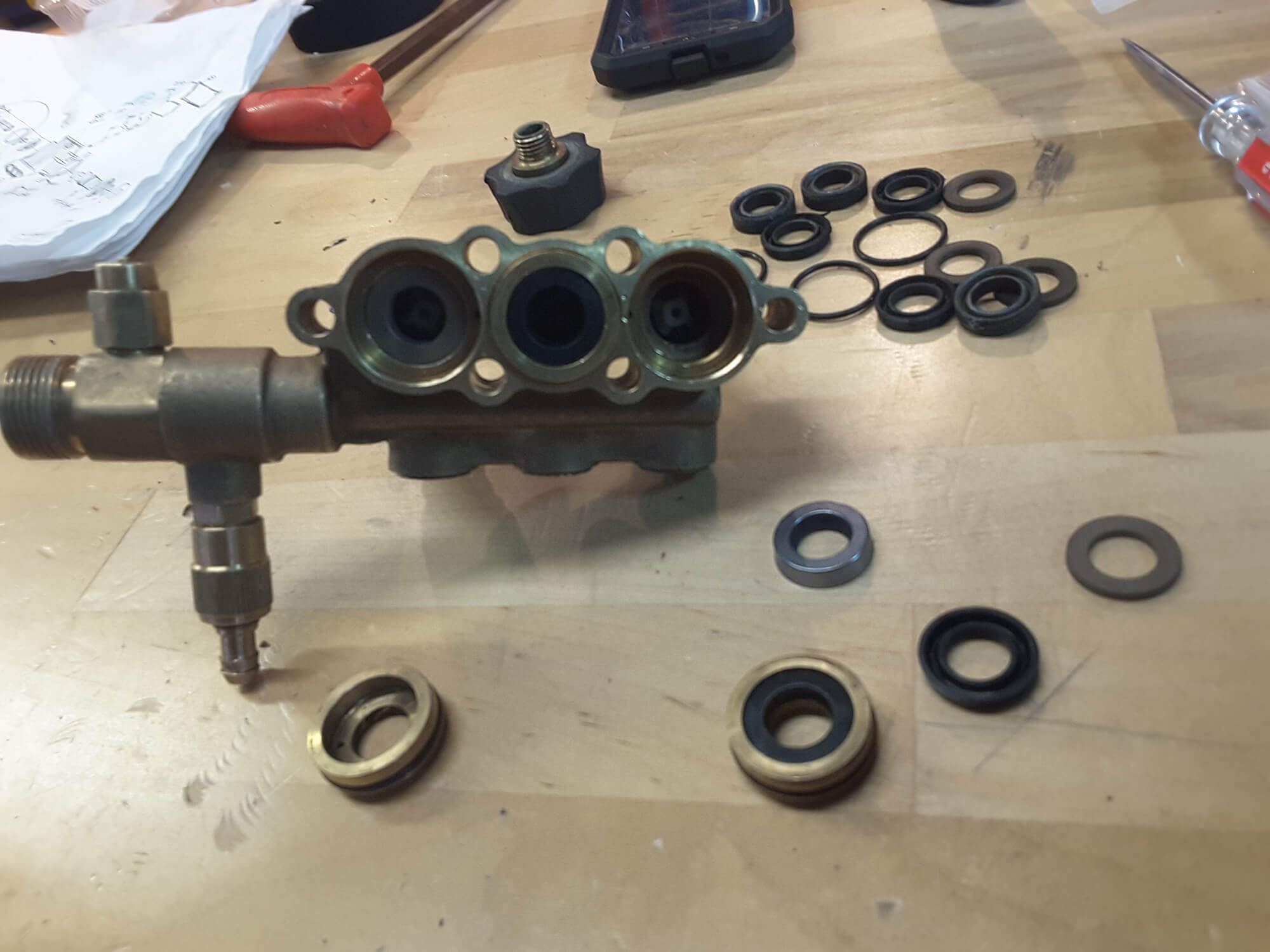
- From pump seals: Seals wear out over time. Replace with a seal kit for your model.
- At the spray gun: Tighten connections or replace washers.
Tip: Never ignore small leaks, as they can get worse quickly.
4. Pressure Washer Surges Or Pulses
If your washer’s pressure goes up and down or makes pulsing noises, check these:
- Nozzle blockages: Clean the nozzle.
- Inlet water supply: Make sure the hose is not kinked and water supply is strong.
- Pump inlet screen: Clean if dirty.
- Unloader valve: Sometimes the unloader valve sticks. Clean or replace it.
Many users forget to check water supply strength—most washers need at least 2 gallons per minute.
5. Soap Or Detergent Not Dispensing
Soap systems often clog. Here’s how to fix:
- Use correct nozzle: Most washers only draw soap with the black, low-pressure nozzle.
- Check soap tube: Make sure it’s in the detergent and not cracked.
- Rinse soap injector: Remove and flush with water to clear blockages.
Using thick or old detergent is a common mistake; always use fresh, pressure washer-safe soap.
6. Pump Makes Strange Noises
If your pump whines, rattles, or grinds, act quickly:
- Low water supply: Make sure the water tap is fully open.
- Pump running dry: Always connect water before starting.
- Air trapped: Bleed air by running water with the trigger open.
- Worn pump parts: Replace worn valves or seals.
Running a pump without water, even for a few seconds, can cause serious damage.
7. Unit Shuts Off During Use
A washer that stops mid-job can be annoying. Causes include:
- Overheating: Electric motors or pumps have thermal shut-off. Let it cool for 20-30 minutes.
- Electrical issues: For electric models, check the cord, plug, and breakers.
- Fuel problems: For gas models, check for dirty fuel or clogged carburetor.
If it happens often, the motor or pump may be failing.
8. Spray Pattern Problems
If your spray is uneven or sprays in strange directions:
- Nozzle damage: Replace worn or cracked nozzles.
- Clogged nozzle: Clean the nozzle tip.
- Wrong nozzle angle: Try a different nozzle for a different pattern.
Always store nozzles in a dry, clean place to prevent blockages.
9. Engine Runs, But Pump Doesn’t Work (gas Models)
If the engine is fine but no water comes out:
- Broken pump drive: The part connecting the engine and pump may be worn out.
- Pump oil low: Add oil if needed (not all pumps need oil; check your manual).
- Internal pump failure: Sometimes the pump needs rebuilding or replacing.
10. Pressure Washer Smokes Or Smells
This is rare but serious:
- Electrical smell: Unplug immediately—there could be a motor short.
- Burning oil: Gas models may have oil leaks or overfilled oil.
- Smoke from engine: Stop and check for oil, fuel leaks, or blocked cooling fins.
Never ignore smoke, as it can lead to fire or major damage.
Key Maintenance Steps To Prevent Future Problems
A little maintenance can prevent most breakdowns. Here’s what you should do regularly:
- Flush the system: After each use, run clean water to remove detergent and dirt.
- Store properly: Keep in a dry, covered place. In winter, use pump saver antifreeze to prevent freeze damage.
- Check oil levels: For gas models, check and change engine and pump oil as recommended.
- Clean air filter: For gas engines, clean or replace the air filter every few uses.
- Inspect hoses and O-rings: Replace if cracked or leaking.
- Use clean water: Dirty water ruins pumps quickly.
- Winterize: Never let water freeze inside the machine.
These steps extend the life of your pressure washer and reduce repair costs.
Comparing Electric Vs Gas Pressure Washer Repairs
Some repairs depend on whether you have an electric or gas model. Here’s how they compare:
| Issue | Electric Pressure Washer | Gas Pressure Washer |
|---|---|---|
| Startup Problems | Check power, GFCI, cord | Check fuel, spark plug, air filter |
| Pump Issues | Usually simple; replace unit if failed | Pump rebuild possible; more complex |
| Maintenance | Low (mainly hoses, nozzles) | High (engine oil, spark plug, air filter) |
| Noise/Smoke | Usually motor issue; unplug immediately | Check engine oil and fuel; can be dangerous |
| Cost of Parts | Lower | Higher |
If you want simple maintenance, electric washers are easier. Gas models need more checks but are more powerful.
Essential Tools And Parts For Pressure Washer Repair
If you want to fix your own pressure washer, you’ll need some basic tools and parts:
- Screwdrivers (flat and Phillips)
- Adjustable wrench
- Pliers
- Needle or nozzle cleaning tool
- Replacement O-rings and seals
- Pump oil (for gas models)
- Spark plug wrench (for gas models)
- Replacement hoses or nozzles
Most parts are affordable and available online or at hardware stores.
Step-by-step Guide To Fixing Key Problems
Let’s walk through how to fix some of the most common pressure washer issues in detail.
Fixing A Clogged Nozzle
- Turn off the pressure washer and unplug (or disconnect spark plug for gas).
- Remove the nozzle from the spray gun.
- Insert a nozzle cleaning tool or straightened paperclip into the nozzle hole.
- Rinse with water and repeat if needed.
- Reattach the nozzle and test.
This simple fix solves many pressure and spray pattern problems.
Replacing A Damaged Hose
- Turn off the pressure washer and release pressure.
- Unscrew both ends of the hose from the pump and spray gun.
- Inspect O-rings; replace if cracked.
- Attach new hose and tighten connections by hand.
- Test for leaks by running water with the machine off.
Never use a damaged hose—high-pressure leaks can be dangerous.
Cleaning The Water Inlet Filter
- Locate the inlet filter where your garden hose connects.
- Pull out the filter using pliers if needed.
- Rinse under running water to remove dirt.
- Reinstall filter and reconnect hose.
A blocked inlet filter can cause low pressure and damage the pump.
Servicing A Gas Engine (spark Plug And Air Filter)
- Remove spark plug wire for safety.
- Unscrew spark plug using a wrench.
- Inspect for carbon build-up or cracks. Clean or replace.
- Check air filter: Remove, tap out dust, or replace if very dirty.
- Reinstall spark plug and air filter, then reconnect wire.
Many starting problems are caused by dirty spark plugs or air filters.
Pump Maintenance (for Gas Models)
Not all pumps are serviceable, but for those that are:
- Check oil level: Open the pump oil cap.
- Change oil every 50 hours or as recommended.
- Look for leaks around seals.
- Replace seals using a seal kit if you see water or oil leaking.
Never use car motor oil; always use pump-specific oil.
When To Call A Professional
Sometimes, you can’t fix the problem yourself. Call a repair shop if:
- The motor or engine makes loud, strange noises
- You see smoke or smell burning plastic or oil
- Water leaks from the pump housing (not just hoses)
- The machine is under warranty
Trying to fix complex pump or engine problems without training can make things worse and void your warranty.
How To Choose Replacement Parts
Not all parts fit all machines. Here’s how to choose the right ones:
- Check model number: Find this on your washer’s label.
- Buy OEM (Original Equipment Manufacturer) parts for best fit.
- Avoid universal parts unless your manual says they’re okay.
- Match hose and nozzle ratings to your washer’s PSI and GPM.
Here’s a quick comparison of nozzle types and uses:
| Nozzle Color | Spray Angle | Best Use |
|---|---|---|
| Red | 0° | Heavy-duty cleaning; tough stains (use with caution) |
| Yellow | 15° | Concrete, brick, stripping paint |
| Green | 25° | General cleaning: cars, decks, siding |
| White | 40° | Delicate surfaces: windows, garden furniture |
| Black | 65° | Soap application |
Using the wrong nozzle can damage surfaces or your washer.
Non-obvious Insights For Beginners
Many new users make mistakes that can easily be avoided:
- Don’t run the washer for long periods without spraying. The pump builds up pressure and can overheat or leak.
- Let the engine or motor rest every 20-30 minutes. This prevents thermal shut-off and extends life.
- Always use a water filter if your water source has sand or grit. This simple step can save your pump.
Another tip: if your pressure washer is not used for months, always flush it with clean water before storing and after taking it out of storage.

Common Mistakes And How To Avoid Them
Many pressure washer failures come from these errors:
- Using hot water in a cold-water washer: This can melt seals and damage the pump.
- Ignoring unusual noises or smells: Always stop and investigate instead of hoping it will go away.
- Using the wrong detergent: Only use soaps made for pressure washers.
- Leaving water in the pump during winter: Freezing can crack the pump.
Being careful with these points will save you expensive repairs.
Where To Find Reliable Repair Information
Apart from your user manual, some websites offer reliable repair guides and videos. For example, Family Handyman explains common DIY fixes with photos and tips.
Always cross-check parts and instructions with your washer’s brand to avoid mistakes.
Frequently Asked Questions
Why Does My Pressure Washer Lose Pressure After A Few Minutes?
This usually happens when the nozzle is clogged, the inlet filter is dirty, or the unloader valve is sticking. Clean the nozzle and filter, and make sure your water supply is strong and steady.
Can I Use Car Soap Or Dish Soap In My Pressure Washer?
No, always use pressure washer-safe detergent. Other soaps can foam too much, clog the system, or damage seals. Use only soaps labeled for pressure washers.
How Often Should I Change The Oil In My Gas Pressure Washer?
Change the engine oil after the first 5 hours of use, then every 50 hours or once per season. For pump oil (if your pump is serviceable), follow the manual, usually every 50-100 hours.
Why Won’t My Electric Pressure Washer Turn On?
Check if the GFCI plug has tripped, if the outlet has power, and if the power cord is damaged. Also, make sure the trigger safety lock is not engaged.
Is It Safe To Repair A Leaking Pump Myself?
Small leaks from hoses or O-rings are safe to fix at home. However, if water leaks from the main pump housing or you see oil leaks, it’s better to have a professional repair it, especially if your machine is still under warranty.
Pressure washers are valuable tools, but they need care and maintenance to keep working well. With the steps above, you can solve most problems yourself and know when it’s time to call an expert. Start with the simple fixes, use the right parts, and always think about safety first.
With a little attention, your pressure washer will stay powerful for years to come.